
Nature of Business: What It Means and Why It Matters for Your Philippine Enterprise
The nature of business refers to the category of commercial activity a company engages in, describing what it sells, how it operates, and the industry it belongs to. In the Philippines, declaring it accurately is a legal and regulatory requirement that affects everything from your business permit to your tax classification.
Key Takeaways
- The nature of business is not just a description — it is a legal declaration that shapes your registration, permits, and tax obligations.
- Misclassifying your business activity can lead to penalties, permit denials, or complications during Bureau of Internal Revenue (BIR) audits.
- Philippine regulators, including the Department of Trade and Industry (DTI), Securities and Exchange Commission (SEC), and local government units (LGUs), all require this declaration during registration.
- Your industry category (trade, services, manufacturing, or mixed) determines which tax codes and permit categories apply to you.
- Updating your declared nature of business is possible but requires formal amendment filings with the relevant agencies.
- Understanding this concept early saves you significant time and compliance costs as your business grows.
Table of Contents
What the Nature of Business Actually Covers
When a government agency, bank, or investor asks about the nature of business, they are asking three interconnected questions: what do you sell or provide, how do you generate revenue, and which industry sector do you belong to?
In the Philippine context, this declaration typically falls under one of four broad categories:
- Trade or commerce: Buying and reselling goods, whether retail or wholesale. A sari-sari store owner in Quezon City and a hardware distributor in Cebu both fall under this category.
- Services: Providing skills, expertise, or time rather than physical products. Freelance graphic designers, BPO companies, and accounting firms are examples.
- Manufacturing or production: Transforming raw materials into finished goods. Food processors in Pampanga or garment factories in Laguna represent this category.
- Mixed or combined: Businesses that sell both products and services simultaneously. A restaurant, for instance, manufactures food, retails it, and provides service all at once.
The category you declare shapes which Philippine Standard Industrial Classification (PSIC) code gets assigned to your account by the Philippine Statistics Authority (PSA) and carried over into your BIR tax type registration.
Why Declaring It Correctly Matters During Registration
Every legal business entity in the Philippines goes through at least one government registration process, and the nature of business declaration appears on nearly every form involved. For a sole proprietor, it appears on the DTI application. For a corporation or partnership, it is embedded in the articles of incorporation filed with the SEC. For cooperatives, the Cooperative Development Authority (CDA) requires it as well.
Getting this declaration wrong is not a minor clerical issue. Local government units issue business permits based on the declared activity, and zoning rules differ by business type. A business registered as a trading company but operating as a food manufacturer may face violations during LGU inspection because the permitted use of the space does not match actual operations.
If you are still deciding how to structure your enterprise, reviewing the forms of business organization in the Philippines will help you align your chosen legal structure with the correct activity classification from the start.
The BIR also uses your declared activity to assign you to the appropriate tax type. Value Added Tax (VAT) thresholds, percentage tax applicability, and even the type of official receipts or invoices you are required to issue all depend on what type of business activity you have declared.

How It Affects Your Tax Obligations
Tax compliance in the Philippines is directly tied to what kind of business you run. The BIR’s Revenue Memorandum Orders and the National Internal Revenue Code establish different tax treatments for different activity types.
Here is a simplified breakdown of how the nature of business connects to tax obligations:
| Business Activity | Common Tax Type | VAT Applicability | Key BIR Form |
|---|---|---|---|
| Retail Trade | Income Tax + Percentage Tax or VAT | If annual gross exceeds ₱3 million | BIR Form 2551Q or 2550Q |
| Services | Income Tax + Percentage Tax or VAT | Same ₱3 million threshold | BIR Form 2551Q or 2550Q |
| Manufacturing | Income Tax + VAT | Usually VAT-registered from the start | BIR Form 2550M/Q |
| Mixed (e.g., restaurant) | Income Tax + VAT or Percentage Tax | Depends on revenue and registration | Multiple forms may apply |
| Export-oriented | Income Tax + Zero-rated VAT | VAT-registered with zero-rating benefits | BIR Form 2550Q with attachments |
If you are VAT-registered because your gross annual sales exceeded ₱3 million, you must issue VAT official receipts and file monthly and quarterly VAT returns. If you remain below that threshold and opted for non-VAT status, you file quarterly percentage tax instead. Both paths begin with accurately declaring what your business does.
For freelancers or sole practitioners offering professional services, the classification as a professional service provider rather than a trader changes which columns you complete on BIR Form 1701 (the annual income tax return for individuals).
How Banks and Financial Institutions Use This Information
Beyond government agencies, banks and lending institutions in the Philippines treat the nature of business as a risk classification tool. When you apply for a business loan from a commercial bank like BDO, Metrobank, or a rural cooperative bank, the loan officer assesses your industry category before setting terms.
Banks typically view manufacturing businesses as higher risk due to inventory and equipment exposure. Service businesses may face scrutiny over revenue consistency. Retail traders are evaluated on turnover and margin patterns. None of this means one category is better than another; it means your declared activity directly shapes the credit terms you are offered.
The Bangko Sentral ng Pilipinas (BSP) also requires banks to classify their loan portfolios by borrower industry, so your business category affects how banks report you in their books. If your registered nature of business does not match your actual operations, this can complicate loan renewals or trigger additional documentation requirements.
Small business owners applying through government lending windows, such as those offered by the Small Business Corporation (SBCorp) or the Department of Agriculture for agri-based enterprises, also face industry-specific eligibility criteria tied to their declared activity.

Changing or Amending Your Declared Activity
Business activities evolve. A sole proprietor who started as a freelance writer may eventually launch an online retail store. A small food stall may expand into catering and event services. When your actual operations shift significantly, you are legally expected to update your registration accordingly.
For DTI-registered sole proprietors, an amendment to your Certificate of Business Name Registration requires filing a new application reflecting the updated description. The DTI’s online portal, currently accessible through the Philippine Business Registry, allows for this kind of update.
For SEC-registered entities, amending the primary purpose stated in your articles of incorporation is a more formal process. It typically requires a board resolution, an amended articles of incorporation, and a filing fee. The SEC may also require a General Information Sheet (GIS) update for the same registration year.
At the LGU level, your business permit may need to be reissued if the change in activity affects your zoning compliance or the nature of the fees assessed. Some barangay permits also specify the permitted use, so updating at the barangay hall is necessary before your LGU will accept a permit amendment.
With the BIR, you file BIR Form 1905 to update your registration information, including any change in the line of business. This is important because your tax type, whether you pay percentage tax or VAT, may also need to change alongside the nature of your activity.
Practical Tips for Getting This Right the First Time
Many first-time business registrants in the Philippines underestimate how much thought should go into this declaration before they file. Here are practical considerations that help avoid common mistakes:
- Be specific but not overly narrow. Writing “selling goods” is too vague. Writing “retail sale of pharmaceutical products and health supplements” is specific enough to pass LGU zoning checks and BIR classification without boxing you into one product line.
- Use the PSIC code list as a reference. The PSA publishes the Philippine Standard Industrial Classification codes online. Matching your description to the correct code from the beginning ensures consistency across DTI, SEC, and BIR records.
- Account for future activities. If you plan to add a service component to a trading business within a year or two, consider registering as a mixed-activity business from the start rather than going through an amendment process later.
- Ask about local zoning rules before committing. LGUs in areas like Makati, Taguig, or Parañaque have detailed land use plans. Confirming that your declared activity is permitted in your registered address avoids permit denial after you have already filed with the national agencies.
- Get a professional review if your business model is unusual. If you operate a platform, a franchise, or a hybrid digital-physical business, a licensed accountant or business consultant familiar with Philippine registration can help you frame your declaration in terms that regulators recognize and accept.

The Role of PSIC Codes in Standardising Business Classification
The Philippine Standard Industrial Classification system is the government’s formal framework for categorising every economic activity conducted in the country. Developed by the PSA, the PSIC mirrors international standards while incorporating activity types specific to the Philippine economy, including those tied to agriculture, fishing, small-scale mining, and the informal sector.
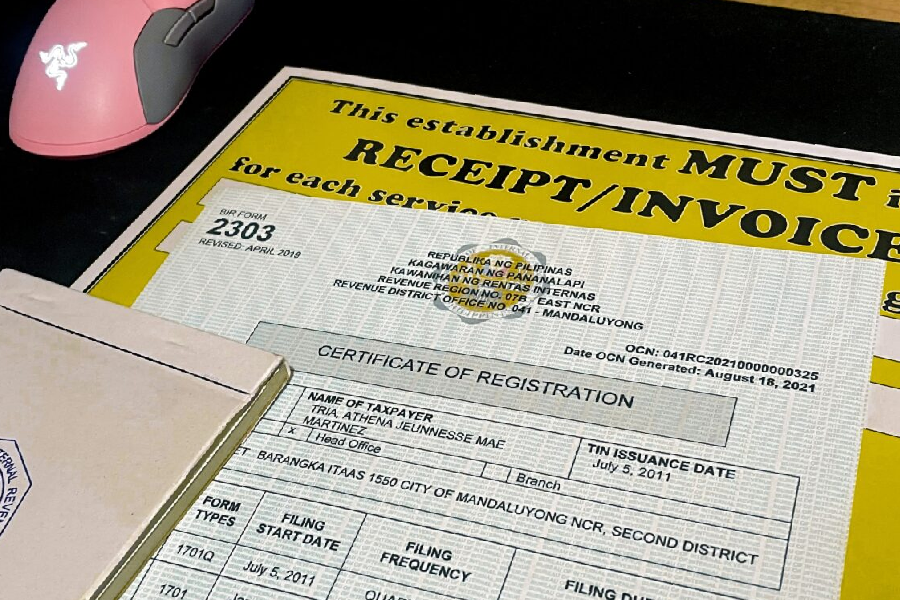
When you register your nature of business, the registering agency assigns a PSIC code to your account. This code is used in national statistical reporting, which feeds into economic planning done by agencies like NEDA and the Department of Finance. It also appears in your BIR Certificate of Registration and in PhilSys-linked business databases.
For practical purposes, knowing your PSIC code is useful when applying for government contracts, participating in PhilGEPS (Philippine Government Electronic Procurement System) bidding, or fulfilling disclosure requirements under the Philippine Competition Act for larger enterprises.
Understanding the nature of business is ultimately about understanding where your enterprise fits within the Philippine economy’s formal structure, not just as a bureaucratic label, but as a legal identity that protects your operations and opens doors to financing, licensing, and growth.
Things to Know
- The nature of business declaration is not the same as your business name. Your business name is a brand identity, while your declared activity is a legal classification that determines your regulatory obligations.
- A single enterprise can have a primary nature of business and secondary activities. The BIR allows you to register multiple lines of business, but your primary classification drives your main tax type assignment.
- If you operate an online business through platforms like Lazada, Shopee, or your own website, you are still required to declare a nature of business and register with the BIR, DTI, or SEC depending on your structure. The digital channel does not exempt you from this requirement.
- LGUs assess business permit fees differently based on declared activity. Manufacturers, retailers, and service providers are often placed in different fee brackets, so an incorrect declaration can result in either overpaying or underpaying, both of which create compliance risks.
- The description you write on your registration forms becomes part of the public record. For SEC-registered corporations, your primary purpose clause in the articles of incorporation is publicly searchable and visible to investors, partners, and clients.
- Seasonal or project-based businesses still need a permanent nature of business declaration. Even if you only operate during the Christmas season or for specific contracts, your registered activity remains on file year-round and carries annual compliance obligations.
Declare Your Business Activity Accurately Before You Register
Getting your nature of business classification right before you file your first registration form is one of the most cost-effective decisions you can make as a Philippine entrepreneur. A misclassification discovered during a BIR audit or an LGU inspection can mean back taxes, penalty surcharges, and the time cost of filing amendments across multiple agencies simultaneously.
Take the time to match your actual operations to the correct PSIC code, confirm zoning compatibility with your LGU, and consult a licensed accountant if your business model involves more than one type of activity. The upfront effort is far smaller than the correction process later.
Review your intended business activities carefully, cross-reference them with the PSA’s PSIC code list, and file your registration with a clear, specific, and accurate description from day one.
Frequently Asked Questions
Q: What should I write in the nature of business field on a DTI or BIR registration form?
Write a specific description of your primary commercial activity, not a vague label.
Avoid generic phrases like “general merchandise” unless your business genuinely covers a wide range of unrelated goods. Instead, describe what you actually sell or provide, for example, “retail sale of clothing and accessories” or “provision of digital marketing services.” The more precise your description, the less likely you are to face questions from BIR examiners or LGU inspectors during renewals or audits.
Q: Can I register two different types of business activities under one business entity in the Philippines?
Yes, Philippine registrations allow for a primary activity and one or more secondary activities.
For sole proprietors registered with the DTI, the business name certificate typically reflects the primary activity, but you can note additional activities when registering with the BIR using Form 1901. For corporations, secondary purposes are listed separately in the articles of incorporation filed with the SEC. Keep in mind that each declared activity may carry its own permit and zoning requirements at the LGU level.
Q: Does the nature of business affect whether I need to register for VAT in the Philippines?
Your activity type interacts with your revenue level to determine VAT registration requirements.
Under the National Internal Revenue Code as amended by the TRAIN Law, businesses with annual gross sales or receipts exceeding ₱3 million are generally required to register for VAT. However, certain activity types, such as those under specific export categories or those listed as VAT-exempt under the Tax Code, have different rules regardless of revenue. A service business and a manufacturing business crossing the same revenue threshold may have different VAT filing obligations, so confirming with a registered tax agent is advisable.
Q: What happens if my actual business operations no longer match my registered nature of business?
You are legally required to update your registration to reflect your current operations.
Operating under a classification that does not match your actual activity exposes you to findings during BIR audit examinations and LGU inspection visits. To correct this, file BIR Form 1905 to update your line of business with the BIR, submit an amendment request to the DTI or SEC depending on your structure, and update your barangay and city or municipal business permit. Doing this proactively, before an audit, demonstrates good faith and typically avoids penalties.
Q: Is the nature of business the same thing as the industry sector listed on government statistical surveys?
They are related but not identical concepts.
The industry sector on PSA surveys refers to broad economic groupings such as agriculture, industry, or services used for national statistics. Your declared nature of business is a more specific, legally binding description tied to your individual registration and assigned a PSIC code. The PSIC code links your specific declaration to the broader statistical category, but the two serve different purposes: one is for macroeconomic measurement and the other is for regulatory compliance and tax administration at the enterprise level.
The Bottom Line on Nature of Business
Your nature of business is one of the foundational decisions you make when formalising any enterprise in the Philippines. It is the lens through which regulators, banks, and partners understand what your company actually does, and it carries legal weight from the moment you file your first registration form. Treating it as a throwaway field on a government document is a mistake that many first-time entrepreneurs only recognise when they face a compliance issue months or years later.
Start with an honest and specific description of your primary activity, cross-check it against the PSA’s PSIC code list, verify zoning compatibility with your LGU, and revisit the declaration whenever your business model changes in a meaningful way. Taking these steps seriously from the beginning puts your enterprise on a stable regulatory foundation and makes every subsequent compliance task, from annual BIR filing to permit renewal, significantly more straightforward.