Local Festivals in the Philippines: 25 Celebrations That Showcase Filipino Culture and Heritage
Local festivals in the Philippines — known in Filipino as pista or fiesta — are vibrant, community-driven celebrations that bring towns and cities to life with color, music, dance, and devotion. Rooted in centuries of tradition, these festivals serve as living expressions of the Filipino soul: deeply spiritual, joyfully communal, and proudly proud of local identity.
Every Filipino festival tells a story. Some honor patron saints with prayers, pageantry, and processions. Others give thanks for bountiful harvests of rice, fruits, or seafood. Many celebrate historical milestones, indigenous heritage, or locally cherished products — from milkfish in Dagupan to lanzones in Camiguin. Together, they paint a richly diverse portrait of a nation with more than 7,000 islands, hundreds of dialects, and dozens of distinct cultures coexisting in colorful harmony.
Every province, city, and municipality in the Philippines has its own unique festival, and many of these events now attract thousands of domestic and international visitors each year. From Cebu’s world-famous Sinulog to the intimate hammock-making tradition of Tayabas, these celebrations are a magnet for cultural tourism, a lifeline for local economies, and a powerful reminder of who Filipinos are and where they come from.
Local festivals also serve a vital economic role. They drive foot traffic to local markets, showcase handcrafted goods, spotlight regional cuisine, and fund community projects. For small business owners, street vendors, craftspeople, and performers, the festival season represents both a cultural obligation and a livelihood. In this way, every fiesta is not just a party — it is a pillar of the community.
This guide covers 25 of the most significant local festivals in the Philippines, exploring their origins, highlights, and the best times to visit. Whether you are a curious traveler, a cultural enthusiast, or a proud Filipino rediscovering your roots, this article will inspire you to experience the Philippines one festival at a time.
Key Takeaways
- Local festivals in the Philippines celebrate culture, history, religion, and community traditions that span centuries.
- Many festivals attract tens of thousands of local and international tourists every year, making them major events on the global cultural calendar.
- Festivals help promote local businesses, regional cuisine, handicrafts, performing arts, and sustainable tourism.
- Every region offers unique celebrations that authentically reflect its heritage, beliefs, and identity.
- Visiting local festivals is one of the most immersive and rewarding ways to experience authentic Filipino culture firsthand.
Table of Contents
What Are Local Festivals in the Philippines?
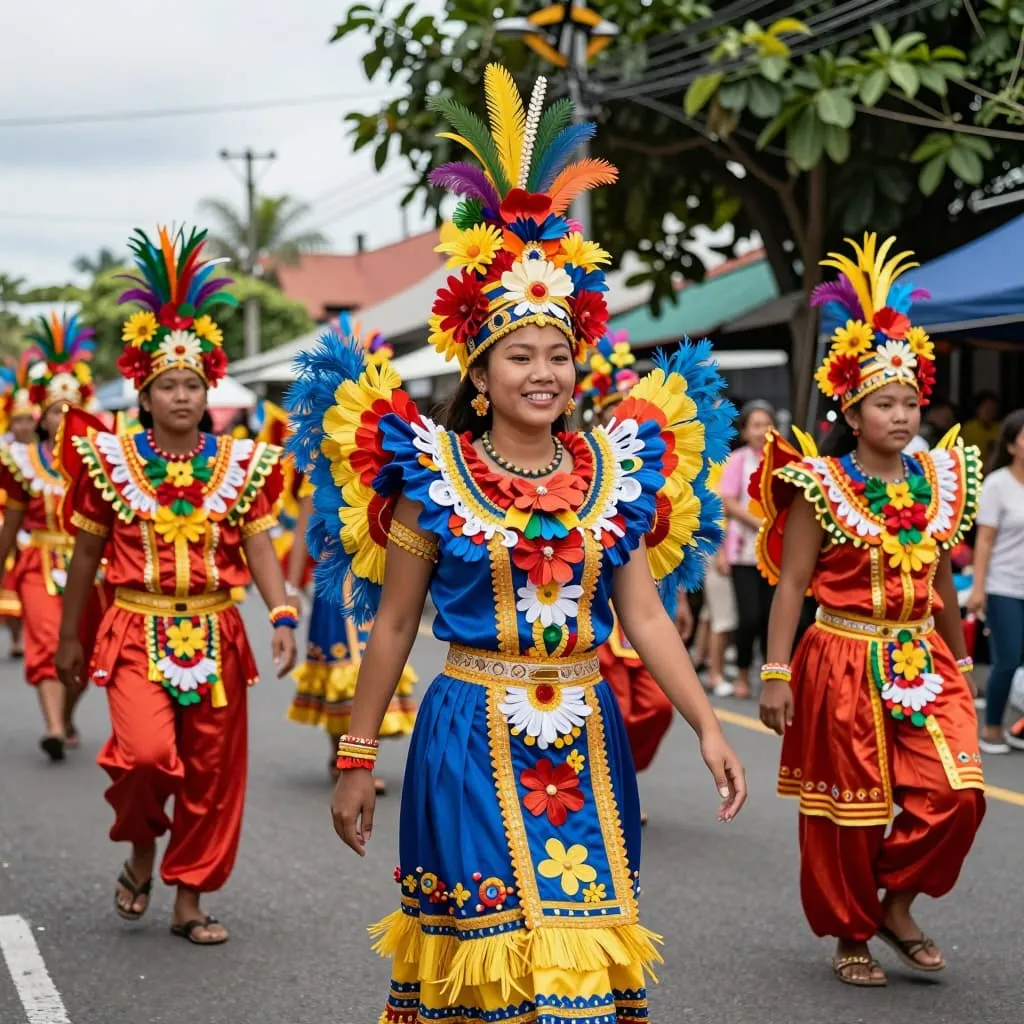
A local festival in the Philippines is a structured community celebration organized by a city, municipality, or province to honor a specific occasion — whether religious, historical, agricultural, or cultural. These events typically feature street dancing, parades, beauty pageants, live music, food fairs, trade exhibits, and ritual ceremonies. They are often anchored in the liturgical calendar of the Catholic Church, the agricultural cycle, or significant dates in local or national history.
Festivals are declared and organized by local government units (LGUs), often with support from the Department of Tourism (DOT) and private sponsors. Some, like Sinulog and Panagbenga, have grown into internationally recognized events. Others remain intimate, community-focused gatherings that preserve indigenous or ancestral practices away from the commercial spotlight.
Why Festivals Are Important to Filipino Culture
Festivals are woven into the very fabric of Filipino identity. The Philippines is one of the most festive nations on Earth — it is said that there is a festival happening somewhere in the country every single day of the year. This is not an exaggeration; the DOT has documented thousands of festivals across the archipelago.
For Filipinos, festivals are acts of faith, expressions of gratitude, and celebrations of community solidarity — a cultural value known as bayanihan. They reinforce social bonds, pass down oral histories and folk traditions to younger generations, and give communities a shared sense of pride and purpose. In regions where indigenous groups still practice ancestral customs, festivals are a critical tool for cultural preservation and identity assertion.
Festivals also reflect the syncretic nature of Filipino culture — the fusion of indigenous, Spanish colonial, Chinese, and American influences that makes Filipino identity so layered and distinctive.
How Festivals Support Tourism and Local Economies
Tourism economists estimate that major Philippine festivals generate billions of pesos in economic activity each year. Hotels fill up weeks in advance. Airlines add extra flights. Local vendors and artisans earn a significant portion of their annual income during festival week. Restaurants showcase regional specialties to visitors from across the country and around the world.
Beyond direct spending, festivals increase brand awareness for their host cities. A tourist who attends the MassKara Festival in Bacolod is likely to return — and to tell others. The ripple effect of one festival visit can translate into years of repeat visits and word-of-mouth promotion that no marketing budget could replicate.
The Department of Tourism actively promotes Philippine festivals through its “It’s More Fun in the Philippines” campaign, recognizing them as among the country’s most powerful tourism assets.
25 Local Festivals in the Philippines
1. Sinulog Festival (Cebu)
Festival Overview
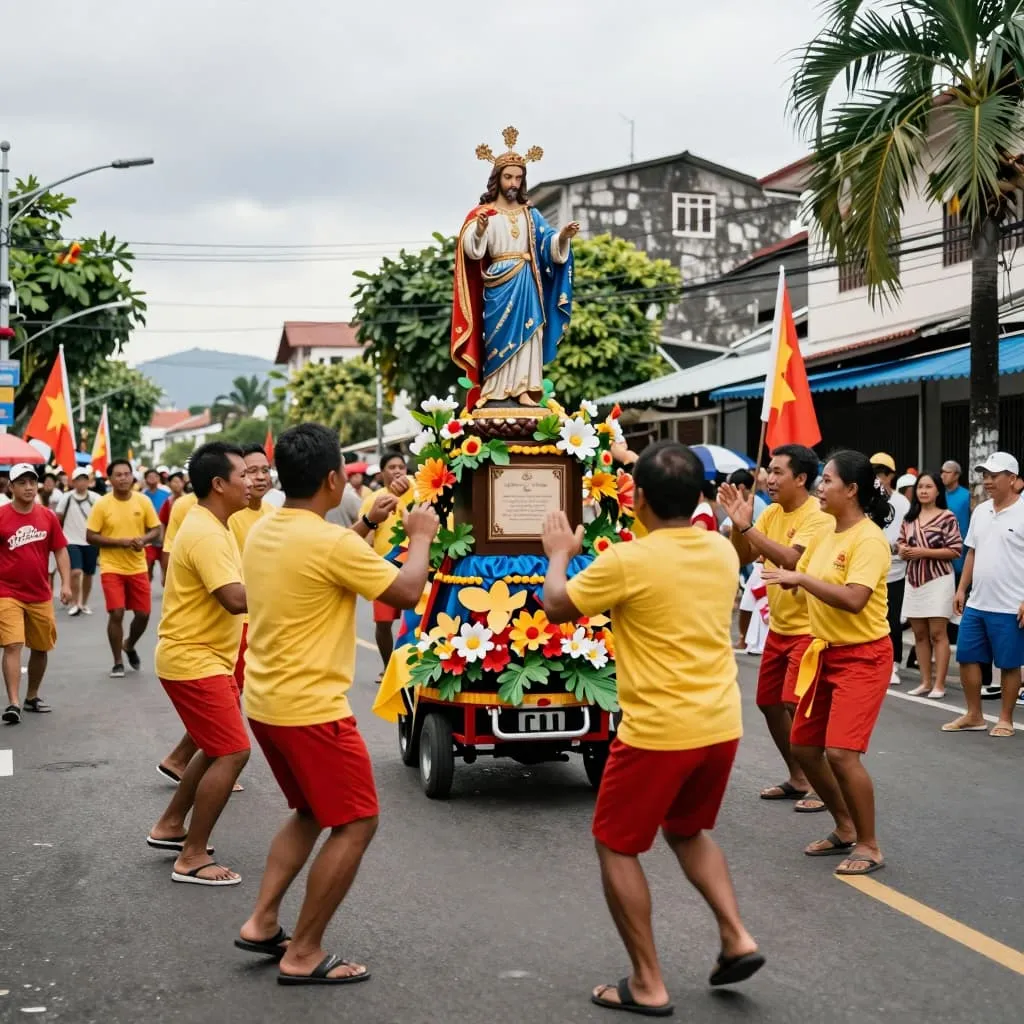
The Sinulog Festival is the grandest and most internationally recognized festival in the Philippines. Held every third Sunday of January in Cebu City, it honors the Santo Niño — the image of the Child Jesus brought to the Philippines by Portuguese explorer Ferdinand Magellan in 1521 and given to Queen Juana of Cebu. The name “Sinulog” comes from the Cebuano word sulog, meaning “water current,” a reference to the back-and-forth dance movements that mimic the flow of a river.
Main Attractions
The centerpiece of Sinulog is the Grand Parade, a massive street-dancing competition where contingents from different barangays and schools perform elaborately choreographed routines to the beat of drums and the cry of “Pit Señor!” — a devotional salute to the Santo Niño. Participants wear dazzling costumes adorned with bright colors, feathers, and sequins. The Basilica Minore del Santo Niño holds solemn Masses throughout the week, drawing hundreds of thousands of devotees. Cultural nights, trade fairs, fireworks, and beauty pageants round out the festivities.
Best Time to Visit
The festival is held annually on the third Sunday of January. Book your accommodations in Cebu at least three to six months in advance, as the entire city fills up during this period.
2. Ati-Atihan Festival (Aklan)
Festival Overview
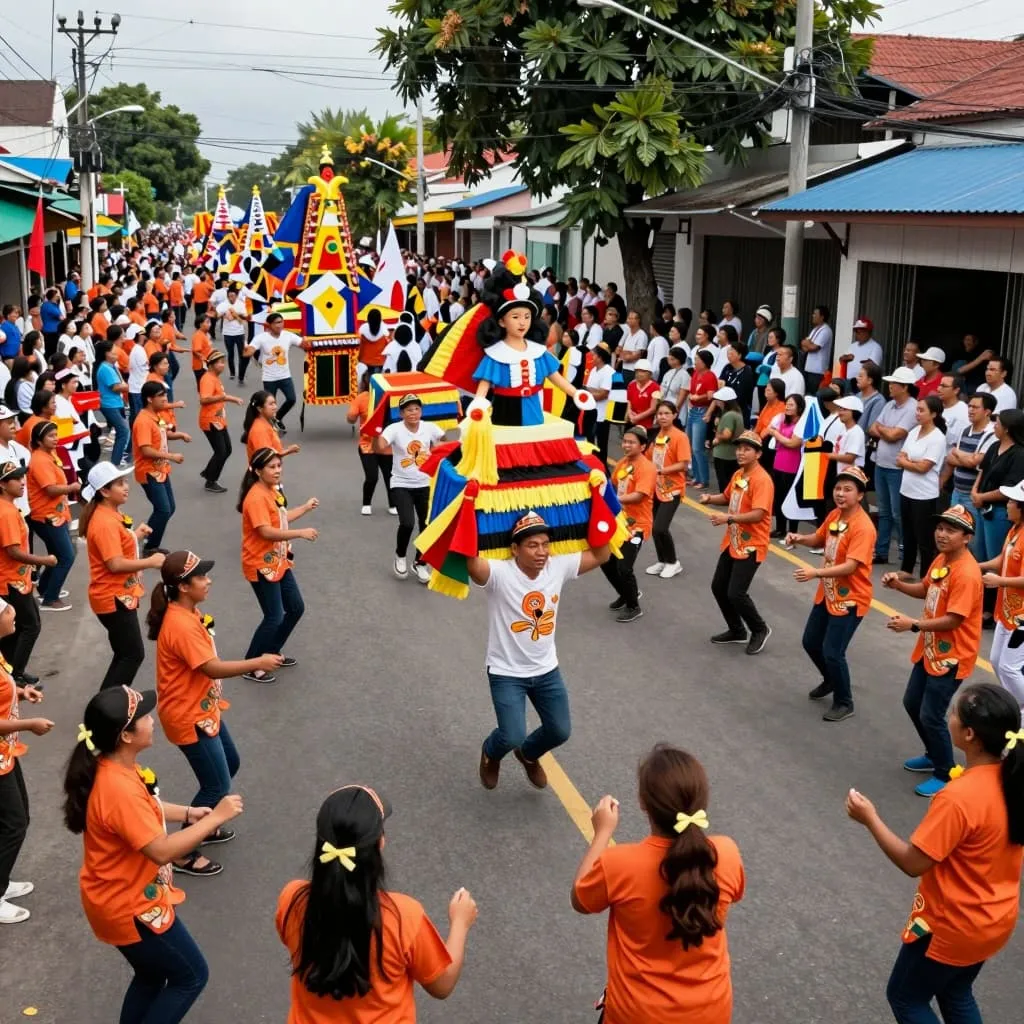
Known as the “mother of all Philippine festivals,” the Ati-Atihan Festival is celebrated in Kalibo, Aklan, every third weekend of January. It honors the Santo Niño and commemorates the legendary arrival of the Malay settlers in Panay, who were welcomed by the indigenous Ati people. Participants paint their faces and bodies black, wear elaborate tribal costumes, and dance through the streets in a joyful, often ecstatic celebration of both faith and cultural heritage.
Main Attractions
The most distinctive feature of Ati-Atihan is the sadsad — a free-form, non-stop street dancing ritual where participants merge in a massive, moving crowd, chanting “Hala Bira! Pwera Pasma!” (meaning roughly, “Go on! No stopping!”) The festival includes cultural performances, tribal parades, and a solemn religious procession in honor of the Santo Niño. The atmosphere is electric, participatory, and deeply communal — anyone in the streets is welcome to join the dancing.
Best Time to Visit
Ati-Atihan is held every third week of January. Kalibo’s airport serves direct flights from Manila, making it an accessible destination during festival season.
3. Dinagyang Festival (Iloilo)
Festival Overview
The Dinagyang Festival of Iloilo City takes place on the fourth Sunday of January, one week after Sinulog. Like its Visayan counterparts, it honors the Santo Niño and celebrates the cultural heritage of the Ilonggo people. The name dinagyang is an Ilonggo word meaning “revelry” or “merrymaking.” First held in 1968, it has grown into one of the Philippines’ most acclaimed street-dancing competitions, consistently winning national tourism awards.
Main Attractions
Dinagyang is famous for the intensity and artistry of its street-dancing competition, judged by national and international experts. Competing tribes — organized groups of performers — present meticulously rehearsed performances that blend religious devotion with artistic storytelling, music, and acrobatics. The Kasadyahan Cultural Competition showcases Ilonggo traditions in song, dance, and costume. Iloilo’s vibrant food scene, from La Paz Batchoy to fresh seafood, is also a major draw for festival visitors.
Best Time to Visit
The fourth Sunday of January is the main event. Iloilo is accessible by air and by ferry from Manila, Cebu, and Bacolod.
4. Panagbenga Festival (Baguio)
Festival Overview
Panagbenga — a Kankanaey word meaning “a season of blooming” — is Baguio City’s celebrated Flower Festival, held every February to coincide with the blooming season of highland flowers. Inaugurated in 1996 as a way to help Baguio recover from the devastating 1990 earthquake, Panagbenga has grown into one of the most beloved festivals in Luzon, drawing visitors from across the country and abroad to the cool highlands of the Cordillera.
Main Attractions
The festival’s signature events are the Flower Float Parade — where massive, intricately designed floats carpeted in fresh flowers roll down Session Road — and the Street Dancing Parade, where performers in floral costumes dance through the city. Burnham Park transforms into an open-air garden exhibition, showcasing flowers, plants, and landscape art. The month-long celebration also includes cultural performances, trade fairs, concerts, and the much-loved Baguio Night Market.
Best Time to Visit
Panagbenga spans the entire month of February, with the grand parades typically held on the first and last Sundays of the month. Baguio’s cool February weather (as low as 14°C) makes it an especially refreshing destination.
5. Pahiyas Festival (Lucban, Quezon)
Festival Overview
The Pahiyas Festival is one of the Philippines’ most photographed events, held every May 15 in Lucban, Quezon, to honor San Isidro Labrador, the patron saint of farmers. Homeowners decorate the facades of their houses with colorful kiping — leaf-shaped wafers made from rice flour — along with vegetables, fruits, rice grains, and handicrafts. The result is a breathtakingly colorful streetscape that turns the entire town into an open-air art gallery.
Main Attractions
The main attraction is the decorated houses themselves — a stunning, community-wide display of creativity and thanksgiving. Visitors walk through Lucban’s narrow streets, marveling at the intricate designs and abundant harvests on display. After the procession of San Isidro, residents take down the decorations and distribute the food to onlookers — a tradition that embodies Filipino generosity. Local delicacies like longganisang Lucban, pancit habhab, and tikoy are widely available throughout the festival.
Best Time to Visit
May 15 every year. Lucban is about 130 kilometers from Manila and is accessible by bus from Cubao or Buendia.
6. Kadayawan Festival (Davao)
Festival Overview
Kadayawan is Davao City’s premier festival, celebrated every third week of August. The word kadayawan comes from the Obo Manobo greeting madayaw, meaning “good,” “beautiful,” or “valuable.” The festival gives thanks for life, a bountiful harvest, and the natural gifts of Davao — its fruits, flowers, and indigenous peoples. It is a multi-day celebration that unites all of Davao’s diverse communities, including indigenous peoples such as the Bagobo, Manobo, Ata, and Mandaya.
Main Attractions
Kadayawan’s centerpiece is the Indak-Indak sa Kadalanan (street dancing competition), where competing tribes and barangays fill the streets with tribal costumes, indigenous music, and choreographed dances that tell stories of Davao’s heritage. The Pamulak sa Kadayawan features floats adorned with the region’s tropical fruits and flowers — particularly durian, pomelo, mangosteen, and orchids. Cultural nights, indigenous craft exhibits, and food festivals highlighting Mindanao cuisine are also major draws.
Best Time to Visit
The third week of August. Davao Francisco Bangoy International Airport is well-served by flights from Manila, Cebu, and other major Philippine cities.
7. MassKara Festival (Bacolod)
Festival Overview
The MassKara Festival, held every October in Bacolod City (the “City of Smiles”), is one of the Philippines’ most iconic cultural celebrations. Launched in 1980 during a period of economic crisis and tragedy — the city had just lost many residents in the MV Don Juan maritime disaster — the festival was conceived as a way to lift community spirits and showcase Bacolod’s resilience. The name is a play on maskara (mask) and masa (masses), representing a city that chooses joy even in adversity.
Main Attractions
MassKara is defined by its smiling masks — vibrant, sequin-studded masks worn by performers throughout the festival. The Street Dance Competition is the highlight, with competing contingents wearing matching masks and costumes, dancing to upbeat music along Lacson Street. The Electric MassKara — an evening parade with LED-lit floats and performers — is a spectacular modern addition. Food fairs, cultural exhibits, and the Bacolod City Festival Queen pageant round out the celebration. Bacolod’s famous chicken inasal and piaya are must-tries during the visit.
Best Time to Visit
The festival spans most of October, with major events in the third and fourth weeks. The Electric MassKara is typically held on a Saturday evening near the October 19 city anniversary.
8. Higantes Festival (Angono, Rizal)
Festival Overview
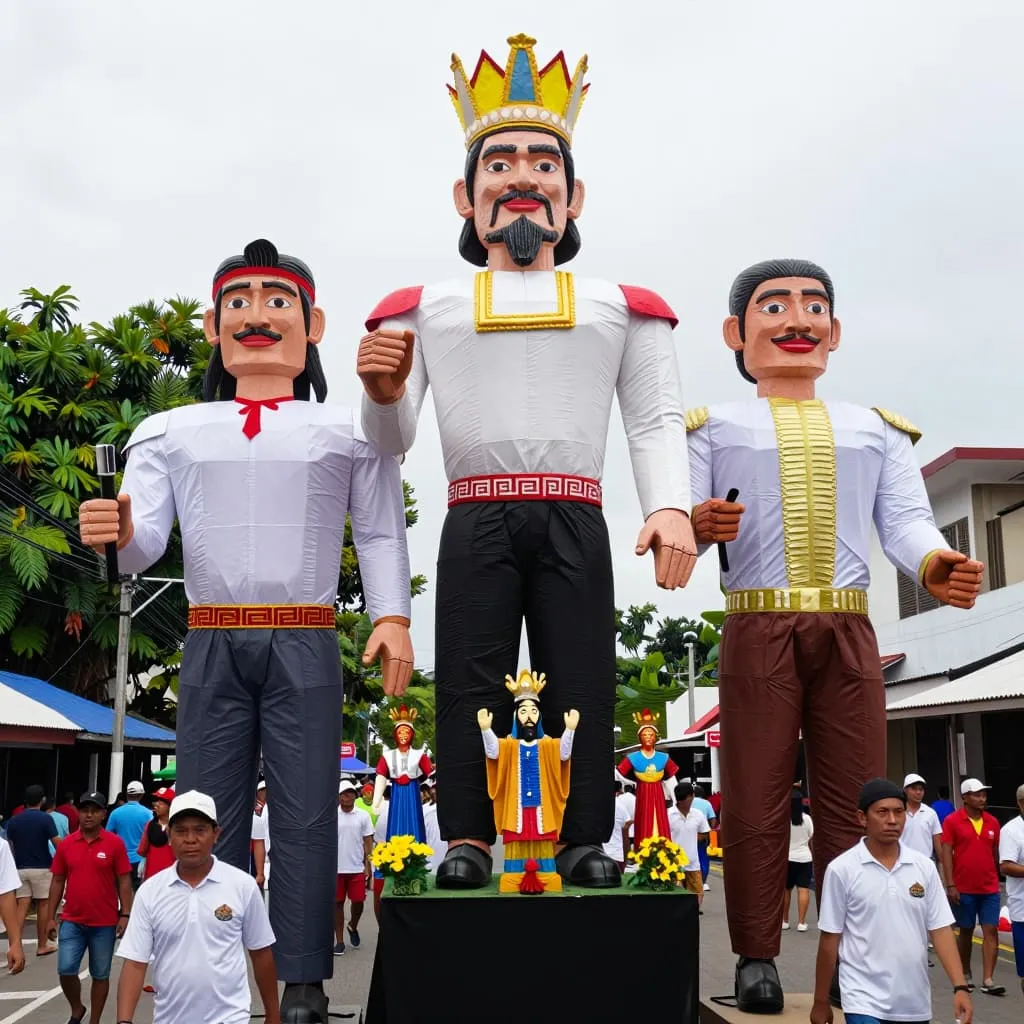
The Higantes Festival of Angono, Rizal, is unlike any other festival in the Philippines. Held every November 22–23 in honor of San Clemente, the patron saint of fishermen, it is known for its procession of higantes — giant papier-mâché effigies standing four to five feet wide and ten to twelve feet tall, each bearing the grotesque, caricatured face of a public figure, celebrity, or imaginary character.
Main Attractions
The procession of hundreds of higantes through Angono’s streets is a surreal and joyful spectacle. The figures, carried on the shoulders of handlers beneath their hollow skirts, sway and bob through the crowd, sometimes “chasing” onlookers in playful mock attacks. As Angono is known as the “Art Capital of the Philippines,” the festival also showcases local visual arts, street painting, and cultural performances. A fluvial parade along the lake, honoring San Clemente as patron of fishermen, adds a solemn counterpoint to the festivity.
Best Time to Visit
November 22–23. Angono is easily accessible from Metro Manila by car (about one hour via SLEX and Marcos Highway) or by bus from Cubao.
9. Moriones Festival (Marinduque)
Festival Overview
The Moriones Festival is one of the Philippines’ most unique and dramatic Holy Week traditions, celebrated on the island province of Marinduque during the week of Lent. Morion refers to the crested helmets worn by participants, who dress as Roman soldiers and reenact the legend of Longinus — the blind centurion who, according to tradition, was cured of his blindness when drops of Christ’s blood touched his eyes during the Crucifixion.
Main Attractions
Throughout Holy Week, costumed Moriones wander the streets, interacting with locals and tourists, playfully chasing onlookers, and performing dramatic scenes from the Longinus story. The climax comes on Easter Sunday with the dramatic capture and “beheading” of Longinus, reenacted in the town plaza. The costumes — hand-crafted wooden masks painted with fierce expressions, Roman armor, cloaks, and helmets — are works of folk art in their own right and are sold as collector’s items.
Best Time to Visit
Holy Week (Semana Santa), which falls in March or April depending on the liturgical calendar. Marinduque is accessible by ferry from Lucena Port or by small aircraft from Manila.
10. Pintados-Kasadyaan Festival (Leyte)
Festival Overview
The Pintados-Kasadyaan Festival is celebrated every June 29 in Tacloban City, Leyte. The term pintados refers to the ancient tattooed warriors of Leyte and Samar, who were among the most feared fighters encountered by Spanish conquistadors in the 16th century. Their bodies were covered in intricate tattoos signifying valor, lineage, and status. Today’s festival brings these ancient warriors back to life through elaborate body painting and cultural performances.
Main Attractions
The street dancing competition features performers adorned with painted tattoo-like designs covering their bodies, channeling the ancient pintados tradition. The Kasadyaan portion showcases the rich cultural diversity of Eastern Visayas, with contingents performing dances, music, and rituals from various towns. The festival also commemorates the Feast of Saints Peter and Paul and includes religious processions and cultural exhibits.
Best Time to Visit
June 29. Tacloban Daniel Z. Romualdez Airport is served by direct flights from Manila and Cebu.
11. Lanzones Festival (Camiguin)
Festival Overview
The Lanzones Festival of Camiguin island, held every third week of October, is a joyful harvest celebration dedicated to the island’s most prized agricultural product — the lanzones fruit. Camiguin lanzones are renowned throughout the Philippines for their unusually sweet flavor, attributed to the island’s volcanic soil. The festival gives thanks for the harvest and celebrates the fruit that has become synonymous with Camiguin’s identity.
Main Attractions
Participants don elaborate costumes fashioned from lanzones leaves, bunches of the golden fruit, and other natural materials. Street dancing competitions, cultural performances, and agricultural trade fairs fill the week’s schedule. Visitors can sample freshly harvested lanzones, along with other Camiguin delicacies like puso ng saging (banana blossom) dishes and pastel (sweet buns). The scenic island backdrop — volcanic peaks, waterfalls, white-sand beaches, and the submerged cemetery — makes Camiguin a breathtaking destination beyond the festival itself.
Best Time to Visit
Third week of October. Camiguin is accessible by ferry from Balingoan Port in Misamis Oriental (Mindanao), or by air via Camiguin Airport.
12. Bangus Festival (Dagupan)
Festival Overview
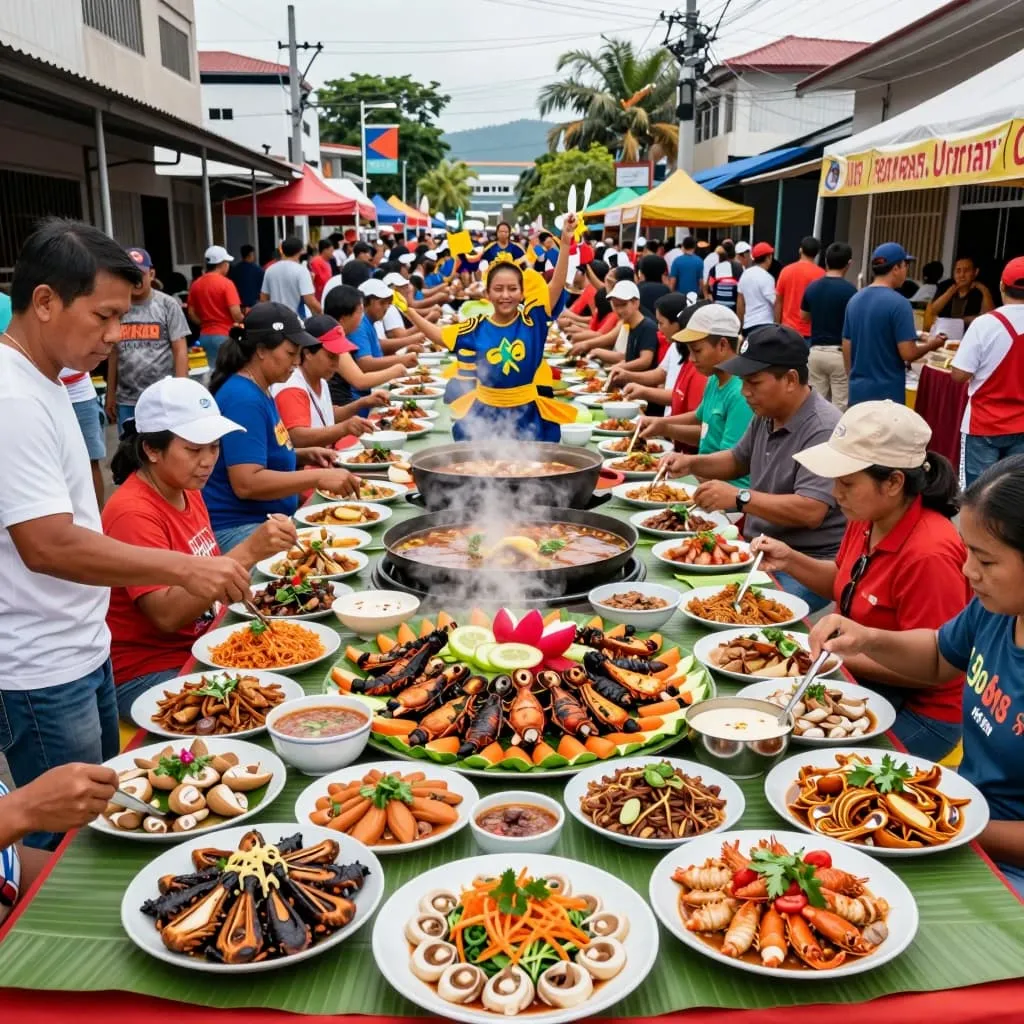
The Bangus (milkfish) Festival of Dagupan City, Pangasinan, held every April, celebrates the city’s identity as the “Bangus Capital of the World.” Dagupan is renowned for producing the finest milkfish in the Philippines, thanks to its brackish fishponds and traditional aquaculture practices. The festival showcases this prized fish through cooking competitions, street performances, and community events that unite fishpond operators, vendors, chefs, and food lovers.
Main Attractions
The highlight of the Bangus Festival is the Bibingkahan at Sardinahan — a massive simultaneous cooking event where thousands of residents cook bangus dishes at the same time along the city’s main streets. Visitors can sample dozens of bangus preparations, from the classic grilled bangus to boneless bangus, bangus sisig, daing na bangus, and innovative fusion dishes. The festival also features trade fairs highlighting Pangasinan products, cultural performances, and street-dancing competitions.
Best Time to Visit
April. Dagupan City is accessible from Manila via Tarlac-Pangasinan-La Union Expressway (TPLEX) and is served by several bus lines.
13. Tuna Festival (General Santos)
Festival Overview
The Tuna Festival of General Santos City in South Cotabato — dubbed the “Tuna Capital of the Philippines” — is held every third week of September. General Santos is the country’s leading producer and exporter of yellowfin tuna, supplying major international markets including Japan, the United States, and Europe. The festival celebrates this vital industry through cultural events, trade exhibitions, and a spectacular fishing tournament.
Main Attractions
The festival’s defining event is the Tuna Auction and Cooking Competition, where chefs compete to create the most creative and delicious tuna dishes — from raw sashimi and tuna kinilaw to cooked specialties. The Tuna Run Fun Dash draws fitness enthusiasts, while the International Fishing Tournament attracts competitive anglers from across the region. Street dancing, cultural performances, and a trade fair featuring the city’s fishing industry and local businesses round out the program.
Best Time to Visit
Third week of September. General Santos International Airport serves flights from Manila, Cebu, and other key hubs.
14. Kaamulan Festival (Bukidnon)
Festival Overview
Kaamulan is Bukidnon Province’s grand celebration of its seven indigenous peoples: the Bukidnon, Higaonon, Talaandig, Manobo, Matigsalug, Tigwahanon, and Umayamnon tribes. Held in Malaybalay City from late February through early March, kaamulan means “gathering of tribes” in the local dialect. It is one of the Philippines’ most authentic and significant indigenous cultural festivals, dedicated to the preservation of ancestral traditions, rituals, and arts.
Main Attractions
Kaamulan features traditional tribal rituals, indigenous games, weaving and crafts demonstrations, and performances of age-old dances and music using traditional instruments. The Tribe Ritual Competition is a particularly moving event, where each tribe presents its sacred ceremonies — some of which are rarely performed outside of the festival context. The trade fair showcases indigenous handicrafts, hand-woven textiles, beadwork, and agricultural products. For those interested in ethnographic tourism, Kaamulan is unmatched in depth and authenticity.
Best Time to Visit
Late February to early March, culminating in the province’s anniversary celebration on March 10. Bukidnon is accessible from Cagayan de Oro City (about two hours by bus).
15. Sandugo Festival (Bohol)
Festival Overview
The Sandugo (“blood compact”) Festival of Tagbilaran City, Bohol, commemorates one of the most significant events in Philippine history: the blood compact (sandugo) between Rajah Sikatuna of Bohol and Spanish conquistador Miguel López de Legazpi on March 16, 1565. This solemn pact — in which both men mixed their blood in wine and drank it — was the first formal treaty of friendship between the Philippines and Spain, and it has become a defining symbol of Filipino-Spanish relations.
Main Attractions
The festival features a dramatic reenactment of the blood compact on a replica of the historic site, complete with period costumes and ceremonial rituals. Street dancing competitions, cultural performances, and heritage exhibits bring Bohol’s rich history to life. The Tagbilaran City Fair features local delicacies like calamay (a sticky sweet made from glutinous rice and coconut), dried mangoes, and peanut kisses. Bohol’s world-class tourist attractions — the Chocolate Hills, tarsier sanctuaries, and Loboc River — make it an ideal festival-plus-tourism destination.
Best Time to Visit
The third week of July, centered around the July 16 feast day. Bohol Panglao International Airport serves flights from Manila, Cebu, and other cities.
16. Binatbatan Festival (Ilocos Sur)
Festival Overview
The Binatbatan Festival of Vigan, Ilocos Sur, celebrated in May, honors the Ilocano weaving tradition — specifically the craft of making inabel, hand-woven textiles produced on traditional wooden looms. The word binatbatan refers to the sound of the weaving loom at work. The festival showcases this centuries-old craft that is an integral part of Ilocano identity and has recently been inscribed in the UNESCO Intangible Cultural Heritage list.
Main Attractions
The street dancing competition features performers dressed in costumes styled after traditional Ilocano textiles, with movements that mimic the rhythms and gestures of weaving. Cultural exhibits and live demonstrations allow visitors to watch master weavers at their looms and purchase authentic inabel products. Vigan’s Spanish colonial architecture, cobblestone streets, and Calle Crisologo make the festival even more atmospheric. Calesa (horse-drawn carriage) rides and Ilocano food — bagnet, empanada, pinakbet — complete the experience.
Best Time to Visit
First week of May. Vigan is a UNESCO World Heritage City, accessible from Manila by bus (eight to nine hours) or by air via Laoag International Airport (one hour from Vigan by land).
17. Ibalong Festival (Legazpi)
Festival Overview
The Ibalong Festival of Legazpi City, Albay, held every August, celebrates the ancient Bicolano epic Ibalong — an oral narrative that chronicles the legendary heroes who civilized the Bicol region. Named after the ancient name of Bicol, the festival brings these mythological figures to life through elaborate street theater, dance performances, and artistic storytelling on a massive scale.
Main Attractions
The grand parade features performers portraying the epic’s legendary heroes — Handiong, Baltog, and Bantong — in dramatic, highly choreographed sequences that retell the story of how civilization was brought to the Bicol land. Costume design and stagecraft are of the highest quality, making the parade a genuine visual spectacle. The festival also includes cultural exhibits, art competitions, and Bicolano food fairs featuring the region’s famous fiery cuisine — bicol express, laing, pinangat, and tinutungan.
Best Time to Visit
Third week of August. Legazpi City Airport serves flights from Manila, and the iconic Mayon Volcano in the background provides one of the Philippines’ most dramatic festival settings.
18. Peñafrancia Festival (Naga)
Festival Overview
The Peñafrancia Festival of Naga City, Camarines Sur, held every September, is one of the largest Marian religious festivals in Asia. Centered on the veneration of Our Lady of Peñafrancia — the patroness of the Bicolano people — the festival draws millions of devotees from across the Philippines and the diaspora. The image of the Virgin, enshrined at the Basilica of Our Lady of Peñafrancia in Naga, has been venerated since 1710.
Main Attractions
The festival’s most dramatic event is the Fluvial Procession (traslacion), in which the image of the Virgin is transported by a barge along the Naga River amid a massive flotilla of boats carrying hundreds of thousands of devotees, all chanting “Ina! Ina!” (Mother! Mother!) The riverside fills with millions of faithful reaching toward the image in prayer. The return procession on foot through the city streets is equally moving. Cultural events, concerts, and regional food fairs accompany the religious observances throughout the nine-day celebration.
Best Time to Visit
The third Saturday of September. Naga is accessible by air (Naga Airport from Manila) and by bus from Manila (about seven to eight hours via the Maharlika Highway).
19. Bambanti Festival (Isabela)
Festival Overview
The Bambanti Festival of Isabela Province, held every January, is a uniquely playful celebration named after the bambanti — the scarecrows Isabela’s farmers use to guard their rice and corn fields. As one of the Philippines’ top rice-producing provinces, Isabela celebrates agricultural abundance and the farming heritage of its communities through this cheerful, creative festival.
Main Attractions
The street dancing competition features performers costumed as bambanti, incorporating scarecrow-inspired designs — straw, patches, colorful rags, and farm implements — into inventive costumes and dances. A Bambanti Village (agricultural fair) showcases the province’s agricultural products, handicrafts, and local delicacies. Cultural performances, a trade fair, and the Bambanti Queen pageant add variety to the week-long program. For those interested in agri-tourism, Isabela’s vast farm landscapes and heritage sites are worth exploring.
Best Time to Visit
Third week of January in Santiago City, the festival’s host. Isabela is accessible by bus from Manila (eight to ten hours) or by air via Cauayan Airport.
20. Hamaka Festival (Tayabas)
Festival Overview
The Hamaka Festival of Tayabas City, Quezon, is a unique cultural celebration centered on the hammock — the hamaka — a traditional craft and symbol of rest and leisure historically associated with the city. Tayabas is known for its skilled hamakers (hammock weavers), who produce intricately woven hammocks that have been part of the local industry for generations. The festival honors this craft heritage alongside the city’s patron, San Pablo Apostol.
Main Attractions
The festival features demonstrations of hammock weaving, competitive craftsmanship exhibits, and a parade of performers carrying and displaying handcrafted hammocks. Cultural performances draw on Tayabas’s colonial history — it is one of the oldest towns in Quezon Province — and its Tagalog heritage. Local delicacies, particularly the distinctive Quezon sweets (pastillas, panutsa, uraro), are available throughout the celebration. The city’s baroque church, heritage homes, and scenic surroundings add to the appeal.
Best Time to Visit
January, around the feast of San Pablo Apostol. Tayabas is accessible from Manila via bus (about three to four hours by SLEX) or from Lucena City by local transport.
21. Kalilangan Festival (Sultan Kudarat)
Festival Overview
The Kalilangan Festival of Sultan Kudarat Province in Mindanao, held every February, is a cultural celebration that showcases the rich diversity of the province’s indigenous peoples, Muslim communities, and Christian settlers who coexist in one of Mindanao’s most multicultural provinces. Kalilangan is a local word meaning “for everyone” — a fitting description of a festival that deliberately bridges cultural and religious divides.
Main Attractions
The festival features tribal performances, Muslim cultural dances such as the singkil and pagapir, and presentations by lumad (indigenous) communities showcasing their traditional arts, music, and rituals. Agricultural trade fairs highlight Sultan Kudarat’s produce, including corn, coconut, sugarcane, and livestock. The festival’s spirit of interfaith unity and cultural sharing makes it a particularly meaningful celebration in a region that has often been associated in the national imagination with conflict rather than community.
Best Time to Visit
February. Sultan Kudarat is accessible from General Santos City by land (about two to three hours).
22. Balangay Festival (Butuan)
Festival Overview
The Balangay Festival of Butuan City, Agusan del Norte, celebrates Butuan’s claim as the oldest recorded settlement in the Philippines. Balangay refers to the ancient plank-built wooden boats discovered in Butuan in 1976 — the oldest watercraft found in Southeast Asia, dating back to around 320 AD. These boats confirm Butuan’s status as an ancient center of trade and maritime civilization long before Spanish colonization.
Main Attractions
The festival features reenactments of ancient seafaring and trade voyages, with replica balangay boats launched on the Agusan River. Cultural performances portray the lives of pre-colonial Butuan’s Rajahnate civilization. Exhibits at the Balangay Heritage Museum allow visitors to see the actual excavated boats and artifacts. The festival is as much an archaeological and historical education as it is a cultural celebration, making it ideal for history enthusiasts and cultural travelers.
Best Time to Visit
January, centered around the Feast of the Santo Niño. Butuan Francisco Bangoy Airport serves flights from Manila and Cebu.
23. Carabao Festival (Pulilan, Bulacan)
Festival Overview
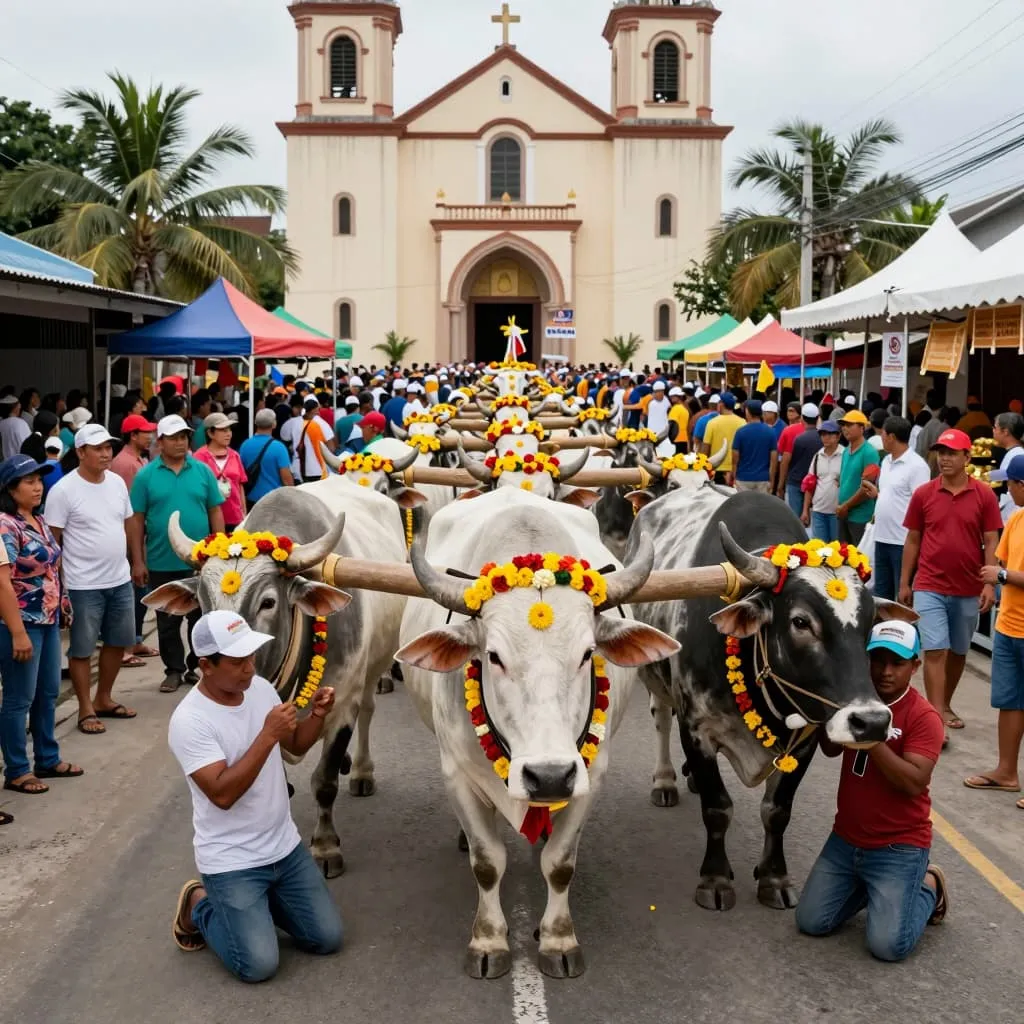
The Carabao Festival of Pulilan, Bulacan, celebrated every May 14 to honor San Isidro Labrador, is one of the most charming and distinctive agricultural festivals in the Philippines. The carabao (water buffalo) is the Filipino farmer’s most essential partner — a symbol of hard work, patience, and agricultural life. On this day, hundreds of carabaos are brought to the town church, dressed with colorful garlands and ribbons, and made to kneel before the image of San Isidro in a display of gratitude and faith that is unique in the world.
Main Attractions
The sight of dozens — sometimes hundreds — of kneeling, flower-adorned carabaos parading before the church is both surreal and deeply moving. Farmers bring their best animals, competing informally for the most beautifully decorated carabao. The procession through Pulilan’s streets, with the carabaos leading the way, draws large crowds of local devotees and curious tourists. Agricultural trade fairs and local food booths round out the celebration.
Best Time to Visit
May 14. Pulilan is about 50 kilometers from Manila and is accessible via NLEX and Bulacan provincial roads.
24. Binirayan Festival (Antique)
Festival Overview
The Binirayan Festival of Antique Province, held every December, commemorates the legendary arrival of ten Malay datus (chieftains) from Borneo on the shores of Panay around the 13th century. These datus, led by Datu Sumakwel, purchased the lowlands of Panay from the indigenous Ati people in exchange for a golden salakot (hat) and a long gold necklace — an event considered one of the founding stories of Visayan civilization.
Main Attractions
The festival features a dramatic seafront reenactment of the Malay datus’ arrival, complete with replica balangay boats, period costumes, and ceremonial exchanges. Cultural performances draw on the rich traditions of Antique’s kinaray-a-speaking communities. The Binanog ethnic dance — a sacred ceremonial dance of the Panay Bukidnon indigenous group — is one of the festival’s most captivating presentations. Antique’s pristine beaches, waterfalls, and natural attractions offer added incentive to visit.
Best Time to Visit
Third week of December. Antique is accessible from Iloilo by land (about two hours) via the scenic Pan-Philippine Highway along Panay’s west coast.
25. Pamulinawen Festival (Laoag)
Festival Overview
The Pamulinawen Festival of Laoag City, Ilocos Norte, celebrated every February, takes its name from the Ilocano word pamulinawen — meaning “have a change of heart” or “soften your heart.” The festival celebrates Ilocano culture, heritage, and the province’s rich history through music, dance, and theatrical performances inspired by traditional Ilocano courtship, romance, and community life.
Main Attractions
The festival features street dancing competitions where performers wear traditional Ilocano baro’t saya and barong costumes, performing dances inspired by Ilocano folk songs and courtship rituals. Cultural exhibits showcase Ilocano weaving, pottery, and culinary traditions. Laoag’s historic churches — including the famous Paoay Church, a UNESCO World Heritage Site — provide a magnificent backdrop. The nearby Paoay Sand Dunes, Marcos Museum, and Cape Bojeador Lighthouse make Laoag an ideal base for a cultural and heritage travel itinerary.
Best Time to Visit
February, timed with the Feast of San Guillermo. Laoag International Airport serves direct flights from Manila and charter flights from Taiwan and South Korea.
Types of Local Festivals in the Philippines
Religious Festivals
The majority of Philippine festivals have religious roots, reflecting the country’s deep Catholic faith. These festivals honor patron saints, celebrate Marian apparitions, and reenact biblical events. Sinulog, Ati-Atihan, Dinagyang, and Peñafrancia are prime examples of festivals where faith and festivity are inseparably intertwined.
Harvest Festivals
Harvest festivals give thanks for agricultural abundance and honor the labor of farmers, fishermen, and aquaculture workers. Pahiyas, Kadayawan, Lanzones, Bangus, and Tuna festivals all celebrate specific crops or products that define the economic and cultural identity of their host communities.
Cultural and Historical Festivals
Some festivals are anchored in historical events or legendary narratives. Sandugo (the blood compact), Binirayan (the Malay datus), Balangay (ancient seafaring), and Moriones (the Longinus legend) all use living performance to keep history alive in the collective memory of communities.
Product and Agricultural Festivals
Product festivals spotlight locally produced goods — from fish and fruit to handicrafts and textiles. Binatbatan (weaving), Bambanti (rice farming), Bangus (milkfish), Tuna, and Hamaka (hammock-making) all use the festival format to promote local industries and artisans to wider audiences.
Tribal and Indigenous Festivals
Kaamulan, Kalilangan, Kadayawan, and Binirayan are among the festivals that explicitly celebrate the traditions, rituals, and identity of indigenous peoples. These events are among the most culturally significant and least commercialized, offering visitors a rare window into pre-colonial Filipino life.
Why You Should Experience Local Festivals
Learn About Filipino Culture
No textbook or documentary can replicate the experience of standing in the middle of a Sinulog street parade, feeling the drumbeats in your chest, or watching hundreds of carabaos kneel before a church. Festivals offer direct, embodied encounters with Filipino history, spirituality, and community values that stay with you long after you leave.
Support Local Businesses and Tourism
Every peso spent at a festival — on food, souvenirs, accommodation, or transport — goes directly into the local economy. Attending festivals is one of the most impactful forms of sustainable tourism, with economic benefits distributed across a wide range of small businesses and individual vendors.
Experience Traditional Food and Delicacies
Philippine festivals are a feast for the palate. Every region showcases its culinary heritage during festival season — from Bacolod’s chicken inasal and Naga’s Bicol express to Vigan’s bagnet and Lucban’s longganisa. Festival food fairs are among the best opportunities to taste authentic regional cuisine prepared by local hands.
Enjoy Music, Dance, and Street Performances
Philippine festivals are spectacular performing arts events. The choreography, costuming, musical arrangements, and theatrical storytelling on display rival professional stage productions — yet they happen in open streets, accessible to everyone. The communal energy of tens of thousands of people dancing and celebrating together is an experience unlike any other.
Discover Regional Arts and Crafts
Festivals are prime venues for encountering regional handicrafts — from Ilocano woven textiles and Marinduque Moriones masks to Bukidnon beadwork and Angono papier-mâché higantes. Many artisans sell their work directly at festival fairs, giving buyers a chance to meet the makers and understand the cultural significance of what they are purchasing.
Tips for Attending Festivals in the Philippines
Plan Your Trip Early
Popular festivals like Sinulog, Panagbenga, and Dinagyang attract hundreds of thousands of visitors. Research festival dates (which can shift slightly year to year), book transportation, and plan your itinerary well in advance — ideally three to six months ahead for the most popular events.
Book Accommodation in Advance
Hotels, guesthouses, and vacation rentals in festival cities fill up weeks before the main events. For Sinulog in Cebu or Panagbenga in Baguio, reservations made six months ahead are not unusual. Consider staying in nearby cities and commuting to the festival venue if accommodations in the host city are unavailable.
Wear Comfortable Clothing
Festival environments are hot, crowded, and physically active. Wear breathable, lightweight clothing and comfortable walking shoes. If you plan to join the dancing or parades, check in advance whether a specific costume or color scheme is expected.
Respect Local Customs and Traditions
Many festivals have deep religious or cultural significance. Dress modestly when entering churches or attending ritual ceremonies. Ask permission before photographing indigenous participants in traditional attire. Follow the guidance of local organizers and community members, and observe rather than intrude on sacred rituals.
Bring Cash and Stay Hydrated
Many festival vendors — street food stalls, craft sellers, and small shops — do not accept credit cards or digital payments. Bring sufficient cash in small denominations. Drink plenty of water, especially during outdoor daytime events, and know the location of the nearest medical aid station.
Support Local Vendors
Choose to buy food, souvenirs, and handicrafts from local vendors and artisans rather than large commercial establishments. This ensures that your spending contributes directly to the community that has invited you to share in their celebration.
Things to Know Before Visiting Local Festivals
Festival Dates May Change Each Year
Many Philippine festivals are tied to the liturgical calendar, agricultural seasons, or local government schedules. Dates can shift by a week or fall on different days of the week each year. Always verify the exact dates of any festival you plan to attend through the official website of the host city’s local government unit or the Department of Tourism.
Expect Large Crowds
Major festivals draw enormous crowds — Sinulog alone attracts an estimated two million visitors annually. Be prepared for traffic congestion, long queues at restaurants and ATMs, and densely packed festival grounds. Arrive early at key events, use the buddy system in large crowds, and keep your belongings secure.
Check Weather Conditions
The Philippine climate can be unpredictable. Many festivals occur during the dry season (November to May), but some are held during the rainy season (June to October). Check weather forecasts and be prepared for tropical rain showers, especially at outdoor events. Always have a compact umbrella or rain jacket handy.
Follow Local Government Guidelines
Local government units may issue health and safety guidelines, crowd management protocols, or restrictions on alcohol and noise during festival periods. Follow these guidelines as a sign of respect for the host community and to ensure a safe and enjoyable experience for everyone.
Practice Responsible Tourism
As a visitor, you are a guest in someone else’s community. Leave no trace of your visit — dispose of waste properly, avoid damaging festival installations or decorations, and treat all community members, performers, and vendors with courtesy and respect. Responsible tourism ensures that festivals remain vibrant for future generations.
Ready to Explore the Best Local Festivals in the Philippines?
The Philippines’ calendar of festivals is a treasure trove waiting to be explored. Here’s how to make the most of it:
Choose Festivals Based on Your Interests
Are you a religious devotee seeking spiritual experiences? Consider Sinulog, Peñafrancia, or Moriones. A nature lover interested in harvest traditions? Pahiyas, Lanzones, or Panagbenga will delight you. A history and culture enthusiast? Sandugo, Balangay, and Kaamulan offer unparalleled depth. Align your festival choices with what moves you, and the experience will be far more meaningful.
Build a Festival Travel Itinerary
The Philippines’ festival calendar makes it possible to plan a year-round cultural road trip. Start January with Sinulog in Cebu, swing to Baguio in February for Panagbenga, hit Lucban in May for Pahiyas, and head to Davao in August for Kadayawan. With thoughtful planning, you can attend multiple festivals across different regions without backtracking unnecessarily.
Experience Local Food and Culture
Use the festival as your entry point to deeper regional exploration. Stay an extra day or two after the main events to explore the host city’s heritage sites, natural attractions, and culinary scene. The festival is the headline — the rest of the destination is the feature presentation.
Support Local Communities During Your Visit
Purchase locally made crafts and products, dine at family-run restaurants, hire local guides, and share your experience on social media to promote the host community. Small acts of intentional spending and storytelling can have a significant positive impact on the communities that work hard to share their heritage with the world.
Frequently Asked Questions
What are local festivals in the Philippines?
Local festivals in the Philippines are community-organized celebrations held in cities, municipalities, and provinces throughout the archipelago. They honor patron saints, mark historical events, celebrate harvests, and showcase the cultural identity of their host communities through music, dance, food, arts, and ritual performances.
What is the most famous festival in the Philippines?
The Sinulog Festival in Cebu City is widely considered the most famous festival in the Philippines. Held every third Sunday of January, it draws an estimated two million visitors annually and is internationally recognized as one of Asia’s premier cultural celebrations.
Why are festivals important in Filipino culture?
Festivals are central to Filipino cultural life because they reinforce community bonds, preserve ancestral traditions, express religious devotion, celebrate local identity, and stimulate local economies. They are living embodiments of the Filipino values of bayanihan (communal unity) and pasasalamat (gratitude).
When is the best time to visit Philippine festivals?
Philippine festivals are held year-round, but the heaviest concentration falls in January (Sinulog, Ati-Atihan, Dinagyang), February (Panagbenga, Kaamulan), May (Pahiyas, Bangus), and October (MassKara, Lanzones). The dry season (November to May) generally offers more comfortable travel conditions.
Which festivals celebrate local products?
Several Philippine festivals are explicitly dedicated to local products: the Bangus Festival (Dagupan) celebrates milkfish, the Tuna Festival (General Santos) celebrates yellowfin tuna, the Lanzones Festival (Camiguin) celebrates the lanzones fruit, the Binatbatan Festival (Vigan) celebrates hand-woven inabel textiles, and the Carabao Festival (Pulilan) celebrates the water buffalo — the symbol of Filipino farming.
Are Philippine festivals family-friendly?
Most Philippine festivals are highly family-friendly, featuring street performances, food fairs, cultural exhibits, and activities suitable for all ages. Some events, such as evening concerts, may be better suited to older audiences. Always review the festival program in advance and accompany young children in large crowd environments.
Bottom Line
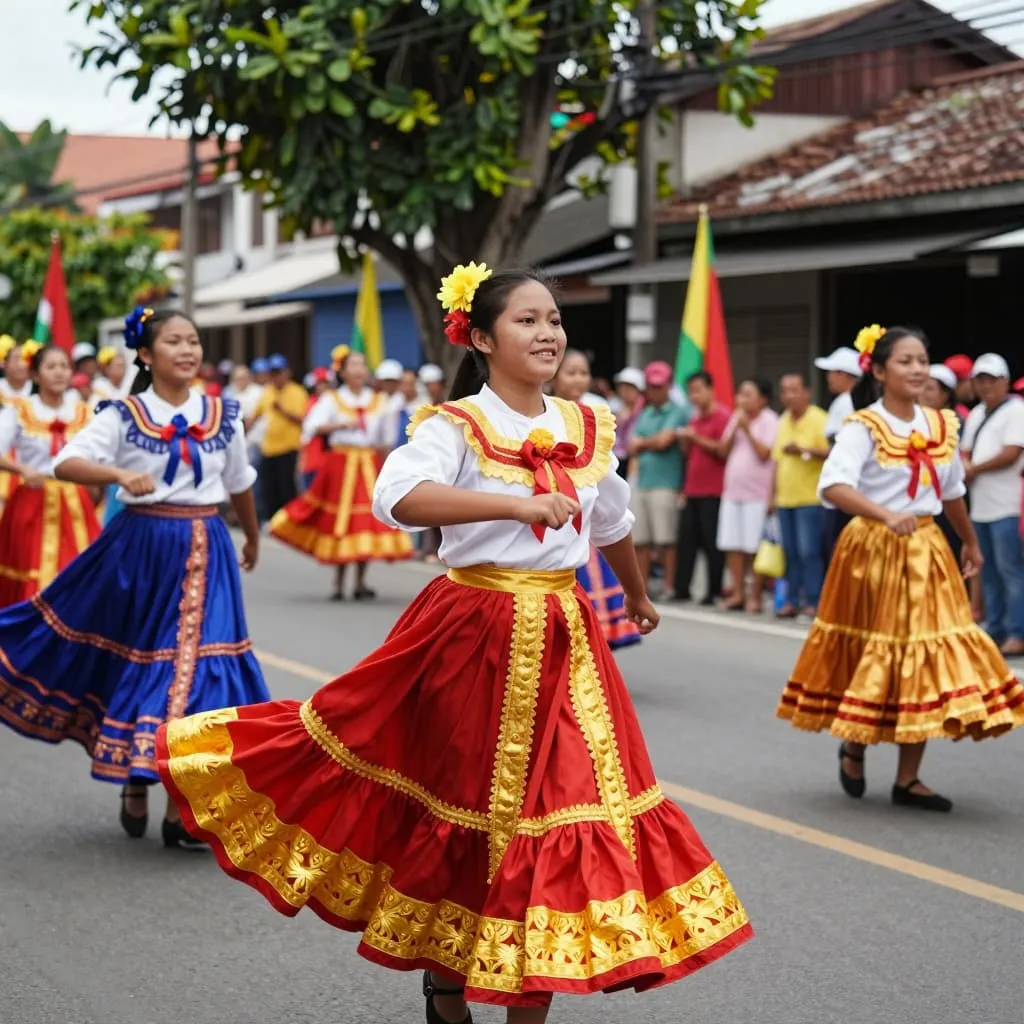
Why Local Festivals in the Philippines Are a Must-Experience Celebration of Culture, Heritage, and Community
The local festivals of the Philippines are far more than parties — they are the living heartbeat of a nation that celebrates life with extraordinary passion, creativity, and faith. In a country as geographically fragmented and culturally diverse as the Philippines, festivals serve as the common language through which communities express who they are, where they come from, and what they believe.
From the thunderous pageantry of Sinulog to the quiet artistry of Binatbatan weavers at their looms, from the kneeling carabaos of Pulilan to the painted bodies of ancient pintados warriors reborn in Tacloban’s streets — every Filipino festival is an act of collective memory, a refusal to let the past be forgotten, and an affirmation that culture is not a museum artifact but a living, breathing, dancing thing.
For travelers, attending a Philippine festival is among the most rewarding experiences available in Southeast Asia. You will eat food that tells a story, watch performances that carry centuries of meaning, and share in a communal joy that transcends language and culture. You will leave with memories that outlast any souvenir.
For Filipinos, these festivals are a reminder of an extraordinary inheritance — a rich, layered, and deeply human culture built by generations of farmers, fishermen, warriors, artisans, saints, and storytellers. Every festival is a gift from the past to the present, and from the present to the future.
Visit the Philippines. Attend a festival. Bring nothing but curiosity, and leave with everything.