
EPR Law in the Philippines: What Businesses and Brands Need to Know About RA 11898
The EPR law, or Republic Act 11898, requires producers, importers, and brand owners of plastic packaging to manage the end-of-life of their products through recovery and diversion programs. Signed into law in July 2022 and implemented by the Department of Environment and Natural Resources (DENR), it is one of the most significant pieces of environmental legislation the Philippines has passed in years.
Key Takeaways
- RA 11898 makes the Philippines one of the first countries in Southeast Asia to enact a mandatory extended producer responsibility framework for plastic packaging.
- Covered companies must register with the DENR and submit EPR programs that include measurable plastic footprint reduction targets.
- Large enterprises were required to comply first, with staggered timelines giving medium and small enterprises additional time to prepare.
- Non-compliance carries financial penalties and can affect a business’s operating permits and market access.
- The law places responsibility on producers, importers, and brand owners, not just waste haulers or local government units.
- Businesses that act early can position themselves as sustainable brands, which resonates strongly with Filipino consumers increasingly concerned about plastic pollution.
Table of Contents
Why the Philippines Needed a Law Like This
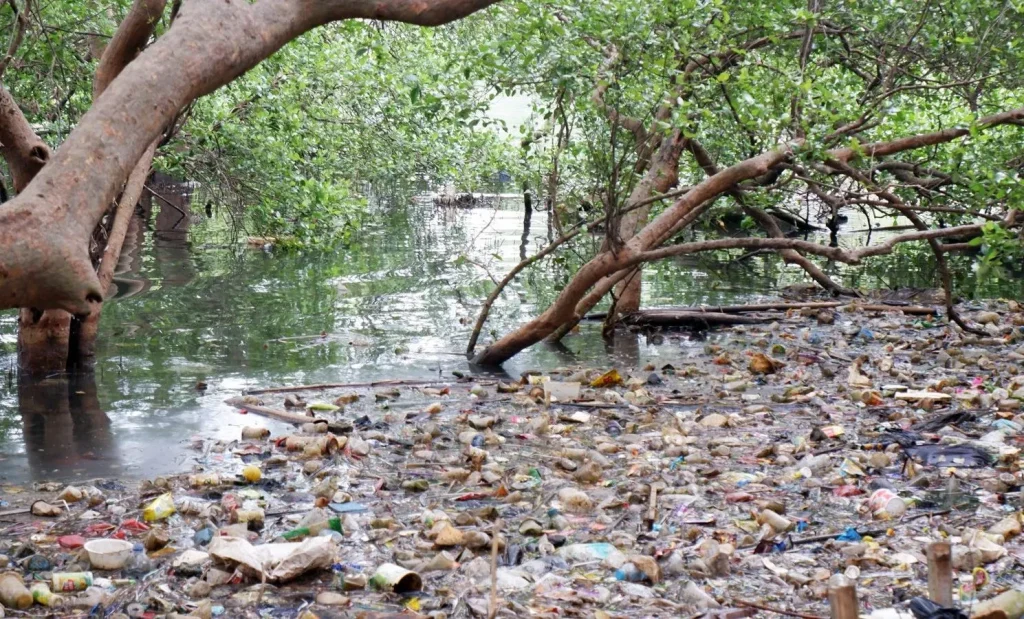
The Philippines has long been identified as one of the world’s top contributors to ocean plastic pollution, largely due to the widespread use of single-use sachets and multilayer packaging that cannot be recycled through existing infrastructure. Local government units (LGUs) have carried most of the burden of waste collection for decades, but the volume of plastic waste generated by commerce has outpaced their capacity.
The EPR law shifts a significant portion of that responsibility upstream. Instead of leaving disposal entirely to consumers and LGUs, the law holds the companies that place plastic packaging into the market accountable for what happens to it afterward. This approach, known internationally as extended producer responsibility, is already in use in the European Union, Japan, South Korea, and several other countries. The Philippine version is tailored to local conditions, acknowledging the dominance of sachet-format products in the fast-moving consumer goods (FMCG) sector.
The social and environmental stakes are high. Plastic waste clogs drainage systems in Metro Manila, contaminates coastal ecosystems in places like Palawan and Cebu, and contributes to flooding in low-lying urban areas during typhoon season. The law recognizes that voluntary corporate commitments, while well-intentioned, were not producing consistent results at the scale needed.
Who Is Covered and What They Must Do
The law covers three main categories of obliged enterprises: producers, importers, and brand owners of plastic packaging. The DENR’s implementing rules and regulations (IRR) further categorize covered enterprises by size, which determines their compliance timeline.
Large enterprises were the first group required to register and submit EPR programs. Under the IRR, a large enterprise is generally defined by its asset size and revenue thresholds as classified by the Department of Trade and Industry (DTI). These companies were required to submit their EPR programs to the DENR within one year of the IRR’s effectivity.
Medium enterprises followed with a later deadline, and micro and small enterprises were given the longest runway, with the DENR providing additional guidance for this segment given their limited capacity to absorb compliance costs independently.
Here is a simplified breakdown of the key obligations under RA 11898:
| Obligation | Details |
|---|---|
| Registration | Submit company profile and plastic footprint data to DENR |
| EPR Program Submission | Outline recovery, diversion, or reduction strategies |
| Plastic Footprint Reporting | Annual disclosure of total plastic packaging placed on the market |
| Recovery Targets | Meet percentage-based targets for plastic recovery or diversion |
| Labeling Requirements | Packaging must include information to help consumers with proper disposal |
| Annual Reporting | Submit progress reports to DENR for monitoring and verification |
The law allows companies to comply individually or through a third-party EPR program operator. This means businesses can join industry-led or DENR-accredited schemes, which pool resources to build collection infrastructure, fund materials recovery facilities, or support waste picker communities. This is particularly useful for medium-sized businesses that cannot justify building their own recovery network.
How Recovery and Diversion Programs Work in Practice
One of the most practical questions businesses ask is: what does an EPR program actually look like on the ground? The law does not prescribe a single method. Companies have flexibility in choosing how they meet their recovery targets, and several approaches are already being piloted across the country.
Collection partnerships are among the most common approaches. Companies partner with LGUs, materials recovery facilities (MRFs), junk shops, or non-governmental organizations to collect post-consumer plastic packaging. The company funds the collection activity and counts the volume recovered toward its annual targets.
Reverse logistics systems are used by some larger brands, particularly in beverages and consumer care. Customers return used packaging at designated drop-off points, which can be at retail stores, company offices, or community centers. Collected materials are then channeled to recyclers or co-processors.
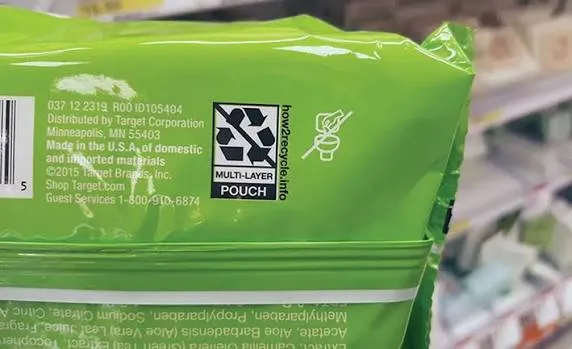
Chemical recycling and co-processing are emerging options for packaging types that cannot be mechanically recycled, such as multilayer sachets. Some cement manufacturers in the Philippines have begun accepting mixed plastic waste as a substitute fuel in their kilns, which counts as diversion under the law’s framework.
Product redesign is also explicitly encouraged. Companies that reformulate their packaging to eliminate or reduce plastic content, switch to recyclable mono-materials, or refill-and-reuse systems can factor these changes into their footprint calculations. This creates a direct financial incentive to invest in more sustainable packaging design, not just end-of-life management.
For brands operating across multiple regions, coordinating these programs requires logistics planning, data tracking systems, and reliable third-party verifiers. The DENR has outlined accreditation processes for EPR program operators, giving businesses a clear pathway to partner with specialized organizations rather than building everything in-house.
Penalties, Enforcement, and What Non-Compliance Looks Like
The EPR law carries real consequences for businesses that fail to register, submit programs, or meet their targets. Penalties can include fines that escalate with repeat violations, and in more serious cases, suspension or revocation of business permits.
The DENR is the primary enforcement body, with the Environmental Management Bureau (EMB) handling registration, monitoring, and compliance verification. Businesses are required to submit annual progress reports, and the DENR has the authority to conduct audits of reported plastic footprint data.
There is also reputational exposure. The DENR has indicated that compliance status may be made publicly accessible, which means consumers, investors, and procurement officers can check whether a brand is meeting its obligations. For companies selling to international buyers or listed on the Philippine Stock Exchange, this transparency layer adds another layer of accountability beyond regulatory fines.
It is important to note that the law does not expect zero plastic use overnight. The recovery targets are set on a graduated scale, increasing each year toward a long-term goal. This gives businesses time to build infrastructure and adjust their supply chains, while still requiring meaningful progress year-on-year.

How Businesses Can Build a Compliant EPR Program
Getting compliant with the epr law is less about ticking boxes and more about building a system that can generate reliable data, execute recovery activities, and improve over time. Here is a practical sequence businesses typically follow:
- Calculate your plastic footprint. Before you can set targets, you need to know how much plastic packaging your company places on the Philippine market each year. This includes all product lines, all packaging layers, and all formats, from primary packaging to transit packaging.
- Register with the DENR. Submit your company information and footprint data through the DENR’s EPR registry. Large enterprises who have not yet registered should treat this as the most urgent first step.
- Choose your compliance pathway. Decide whether you will build an individual EPR program, join an accredited third-party scheme, or combine both approaches for different parts of your portfolio.
- Design or join recovery activities. Map out how you will recover or divert plastic from the waste stream. This could involve community-based collection, retail take-back, LGU partnerships, or engagement with informal waste pickers.
- Set up data tracking systems. Your annual report to the DENR needs to be backed by verifiable data. Invest in tracking tools, chain-of-custody documentation, and third-party verification early.
- Engage your packaging suppliers. Redesigning packaging to use fewer materials or more recyclable formats is often more cost-effective than paying to recover hard-to-recycle waste. Work with suppliers to identify viable alternatives.
- Monitor, report, and improve. Submit your annual progress report on schedule and use the results to refine your program for the following year.
The Role of Industry Groups and Third-Party Operators
No business operates in isolation, and the EPR law’s framework acknowledges this. Industry associations such as the Philippine Chamber of Commerce and Industry (PCCI), the Consumer Goods Forum Philippines, and sector-specific groups in food and beverage or personal care have been active in developing collective compliance approaches.
Third-party EPR program operators are companies or organizations accredited by the DENR to administer recovery programs on behalf of multiple obliged enterprises. These operators build and manage collection networks, MRFs, or other infrastructure, allowing smaller brands to participate in a shared system rather than funding their own standalone operations.
This model has precedents in countries like Germany, where the dual system (Duales System Deutschland) pools producer contributions to fund national packaging recovery. In the Philippines, several operators have already applied for or received accreditation, and the ecosystem is expected to grow significantly as more companies enter the compliance cycle.
For companies that are uncertain about where to start, engaging with an accredited third-party operator is often the fastest path to formal compliance, especially for those with limited in-house sustainability teams.

What Sustainable Packaging Looks Like Under RA 11898
The law does not define one correct type of sustainable packaging. Instead, it creates a framework where companies are rewarded for packaging choices that reduce overall plastic burden, whether through material reduction, recyclability, reusability, or compostability.
Mono-material packaging, such as all-polyethylene pouches instead of multilayer laminates, is easier to recycle and scores better under many EPR accounting frameworks. Refillable formats, which are already culturally familiar in the Philippines through the traditional “tingi” system of small-quantity retail, can qualify for credits under footprint calculations when properly documented.
Companies that invest in packaging innovation now are not just building compliance buffers. They are also responding to a growing segment of Filipino consumers who prefer brands that take environmental accountability seriously, particularly among urban millennials and Gen Z shoppers in Metro Manila, Cebu, and Davao.
Staying ahead of the curve on packaging design also future-proofs your supply chain. As the DENR raises annual recovery targets over time and as export markets increasingly demand environmental credentials, having a credible EPR program already in place is a significant commercial advantage.
- The law’s full title is the Extended Producer Responsibility Act of 2022, and it was signed by President Ferdinand Marcos Jr.’s predecessor, President Rodrigo Duterte, just before the end of his term in July 2022.
- “Extended producer responsibility” does not mean producers must physically collect all their plastic themselves. The law allows for financial contributions to accredited third-party operators who manage collection and recovery on your behalf.
- Plastic footprint calculations must account for all plastic packaging placed on the Philippine market, not just what is sold in Metro Manila. Distribution across Visayas and Mindanao regions must be included in your annual footprint data.
- The law specifically covers plastic packaging, not all packaging types. Glass, metal, and paper packaging are not currently subject to the same mandatory recovery targets, though this may evolve with future amendments.
- Informal waste pickers, known locally as “basureros” or “eco-aides,” are explicitly recognized in the law’s framework. EPR programs that engage and compensate these workers can count their collection activities toward recovery targets, creating a social co-benefit alongside environmental outcomes.
- The DENR’s Environmental Management Bureau (EMB) maintains a registry of accredited EPR program operators, which is publicly accessible. Checking this registry before signing any compliance partnership agreement is a practical step that many businesses overlook.
Take Control of Your Compliance Before Penalties Catch Up
Every month without a registered EPR program is a month of regulatory exposure that could result in fines, permit complications, or public disclosure of non-compliance. The DENR’s enforcement timelines are moving, and the window for first-mover preparation is narrowing fast.
Start by calculating your plastic footprint today, then reach out to a DENR-accredited EPR program operator to explore your compliance options. Acting now gives your business time to build a credible program rather than scrambling to meet a deadline under pressure.
Register with the DENR’s EPR registry and request a consultation with an accredited third-party operator this quarter so your compliance program is in place before your next reporting period.
Frequently Asked Questions
Q: What types of plastic packaging are covered under RA 11898?
The law covers all plastic packaging used to contain, protect, handle, or deliver goods placed on the Philippine market, including sachets, pouches, wrappers, bottles, containers, and bags.
This includes both rigid and flexible plastic formats. Multilayer packaging, such as the sachets commonly used in shampoo, condiments, and instant coffee, is explicitly covered even though it is notoriously difficult to recycle. The law does not exempt any packaging type based on difficulty of recovery, which means brands relying heavily on sachets face some of the most complex compliance challenges.
Q: When did the compliance deadlines begin, and does my business size affect my timeline?
Yes, company size directly affects your compliance timeline, with large enterprises required to register and submit EPR programs first, followed by medium and then micro and small enterprises on a staggered schedule.
The DENR’s implementing rules and regulations set out these timelines based on DTI asset and revenue classifications. Large enterprises had the earliest registration deadlines, typically within one year of the IRR’s effectivity. If you are unsure of your classification, the DTI’s SME definition guidelines provide the thresholds used, and your compliance timeline flows directly from that classification.
Q: Can small businesses join a shared EPR program instead of building their own?
Yes, the law explicitly allows obliged enterprises to comply through DENR-accredited third-party EPR program operators, which pool resources from multiple companies to fund shared collection and recovery infrastructure.
This is the most practical route for micro, small, and medium enterprises that do not have the logistics capacity or budget to operate standalone recovery networks. When joining a third-party scheme, make sure the operator is listed on the DENR-EMB’s accredited operators registry. Membership fees and contribution structures vary by operator, so compare at least two or three options before committing.
Q: What happens if a company misses its plastic recovery targets for the year?
Companies that fail to meet their annual recovery targets face escalating financial penalties under RA 11898, and repeated non-compliance can trigger suspension or revocation of business permits.
The DENR has the authority to verify reported data through audits, and discrepancies between claimed recovery volumes and verifiable documentation can result in additional penalties. Beyond regulatory consequences, the DENR has signaled that compliance status may be made publicly available, creating reputational risk with consumers, business partners, and investors. The safest approach is to build a buffer into your recovery targets so that operational disruptions do not push you below the minimum threshold.
Q: Does the EPR law apply to imported products sold in the Philippines?
Yes, importers of goods packaged in plastic are considered obliged enterprises under RA 11898 and must register and comply with the same EPR requirements as domestic producers and brand owners.
If your business imports finished goods into the Philippines, whether food products, personal care items, electronics accessories, or any other consumer goods in plastic packaging, you are required to account for that packaging in your plastic footprint calculation. This catches many importers off guard, particularly those who assumed the law only applied to local manufacturers. The entity that places the plastic packaging on the Philippine market, regardless of where production occurred, carries the obligation.
The Bottom Line on EPR Law Compliance in the Philippines
RA 11898 represents a fundamental shift in how the Philippine government distributes responsibility for plastic waste. The burden no longer falls exclusively on consumers and local governments. If your business places plastic packaging on the Philippine market, you are part of the solution the law is designed to build, and the compliance framework gives you multiple pathways to get there without dismantling your existing operations overnight.
The most important action you can take right now is to start with your plastic footprint calculation. Without that baseline number, you cannot register properly, you cannot set meaningful targets, and you cannot choose the right compliance pathway for your business size and packaging portfolio. Once you have that data, everything else, from choosing a third-party operator to redesigning your packaging, becomes a clearer and more manageable decision.