
Popular Snack Brands in the Philippines: 30 Filipino Favorites You Should Try
Popular snack brands are the companies and product lines behind the chips, crackers, biscuits, candies, and other ready-to-eat treats that Filipinos reach for every day, whether during a mid-afternoon merienda, a study break, or a get-together with friends. In the Philippines, snacking isn’t just a habit — it’s woven into daily routines, family traditions, and even childhood memories, which is exactly why these brands hold such a special place in the country’s food culture.
The Philippines is home to a remarkably deep and varied snack industry. Walk into any sari-sari store, supermarket, or convenience store and you’ll find shelves packed with chips, crackers, biscuits, candies, nuts, and corn-based treats from both homegrown companies and international names that have built a local following of their own. Some of these brands have been household staples for 50 years or more, built on recipes and packaging that Filipino families still recognize instantly. Others have carved out their popularity more recently, riding changing tastes, bold flavor innovation, and savvy marketing to win over a new generation of snackers.
This guide walks through 30 of the most popular snack brands in the Philippines, the products that made each one a household name, and why Filipinos keep coming back to them. Along the way, we’ll also look at the types of snacks and flavors that define the local market, how these brands built their loyal followings, and what to know if you’re thinking about getting into the snack business yourself.
Key Takeaways
- The Philippines has a diverse snack industry featuring both local and international brands.
- Many Filipino snack brands have become household names through affordable, flavorful, and innovative products.
- Popular snack brands produce chips, crackers, biscuits, candies, corn snacks, nuts, and healthy snack options.
- Consumer preferences continue to evolve toward healthier and premium snacks.
- Many Filipino snack brands are also expanding into international markets.
Table of Contents
What Are Snack Brands?
A snack brand is a company or product line built specifically around convenient, ready-to-eat food meant to be enjoyed between meals rather than as a full meal on its own. In the Philippine context, this covers a wide range of categories: salty snacks like potato and corn chips, crackers and biscuits, chocolate-based treats, candies, nuts and mixed snack blends, and, increasingly, healthier alternatives like baked or air-dried options. What separates a “brand” from a generic product is consistency — a recognizable name, packaging, and flavor profile that consumers come to trust and specifically look for on the shelf.
Why Snack Brands Are Popular in the Philippines
Snacking is deeply embedded in Filipino daily life. The tradition of merienda, or the mid-morning and mid-afternoon snack break, gives packaged snacks a built-in, recurring occasion almost every single day. Add to that the ubiquity of the sari-sari store — the small neighborhood shop found on nearly every street corner — and snack brands gain a level of everyday accessibility that few other product categories enjoy. Affordability also plays a major role: many snacks are sold in small, budget-friendly “tingi” packs priced at just a few pesos, making them accessible to households across every income level. Finally, decades of consistent branding, jingles, and mascots have made many of these products feel less like purchases and more like childhood memories.
How Filipino Snack Brands Continue to Innovate
Filipino snack makers haven’t stood still. Companies like Universal Robina Corporation (URC), Rebisco, and Liwayway (Oishi) regularly introduce new flavors tailored to local palates — think salted egg, adobo, and sisig-inspired seasonings — while also launching healthier variants with less sodium, baked instead of fried preparation, or added fiber and protein. Packaging has evolved too, from resealable pouches to export-ready formats designed for the growing overseas Filipino market. Many of these companies have also expanded into new categories entirely, moving from simple chips into cookies, cakes, beverages, and even plant-based or fortified snack lines, all while keeping the core flavors that built their original fan base.
30 Popular Snack Brands in the Philippines
1. Jack ‘n Jill
Brand Overview
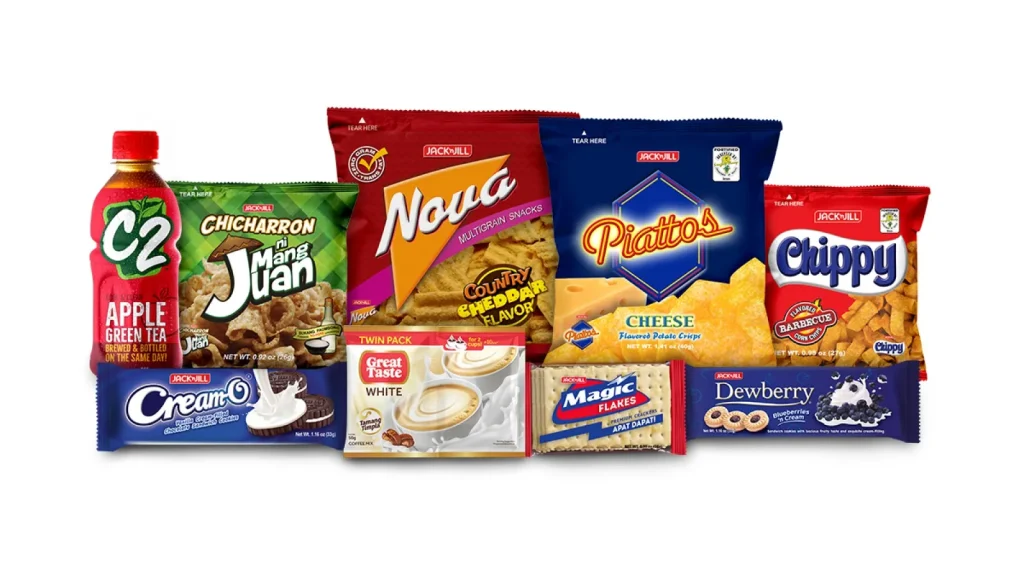
Jack ‘n Jill is the flagship snack food brand of Universal Robina Corporation (URC), the company John Gokongwei Jr. built starting in 1954. It serves as the umbrella under which many of the country’s best-known chips, candies, biscuits, and chocolates are sold, making URC the largest snack food company in the Philippines.
Popular Products
Jack ‘n Jill’s portfolio includes Piattos, Chippy, Nova, V-Cut, Roller Coaster, Mr. Chips, Presto, Dewberry, Cloud 9, Magic Flakes, and Hello!, among dozens of other snack lines spanning nearly every category on the shelf.
Why Filipinos Love It
Few names carry as much snack-aisle trust in the Philippines. The sheer breadth of the Jack ‘n Jill lineup means there’s a product for every craving, and its nationwide distribution means it’s rarely more than a short walk away, even in the smallest barangay.
2. Oishi
Brand Overview
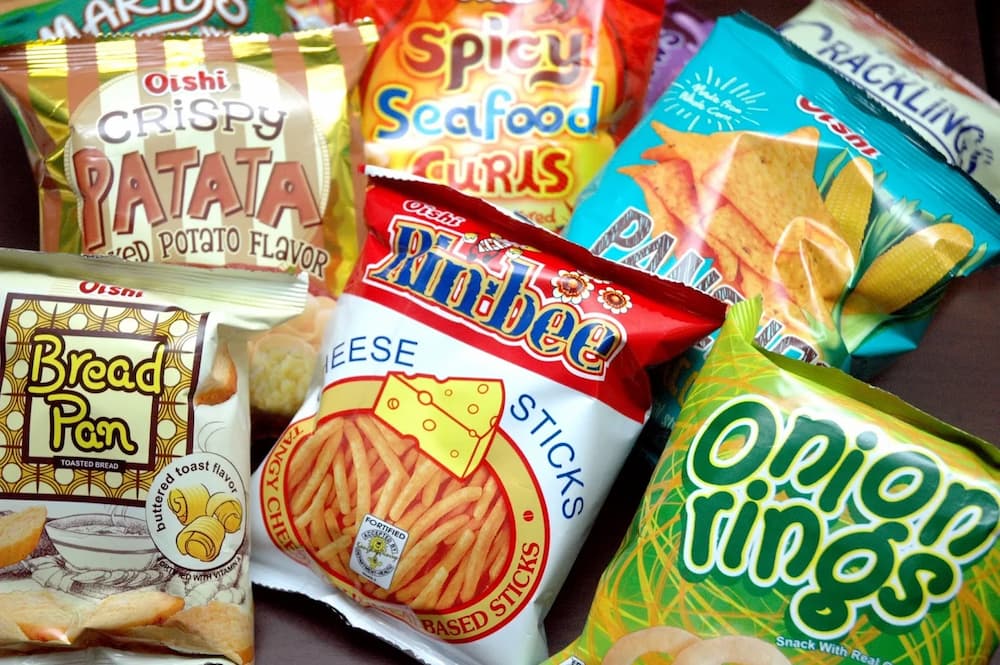
Oishi is the signature snack brand of Liwayway Marketing Corporation, a company that began in 1946 as a small cornstarch and coffee repacking business in post-war Manila. In the mid-1970s, the company invested in Japanese food-processing technology and launched its now-famous prawn crackers under the Japanese-inspired name “Oishi,” meaning delicious.
Popular Products
The lineup includes Oishi Prawn Crackers, Oishi Potato Fries, Oishi Ridges, Kirei Yummy Flakes, and Marty’s Cracklin’, among many other savory and sweet snacks.
Why Filipinos Love It
Oishi built its name on bold, satisfying flavor and a distinctive crunch that’s hard to replicate. Its rise from a small Filipino family business to a snack brand with major operations in China and beyond has also made it a genuine source of national pride.
3. Nova
Brand Overview
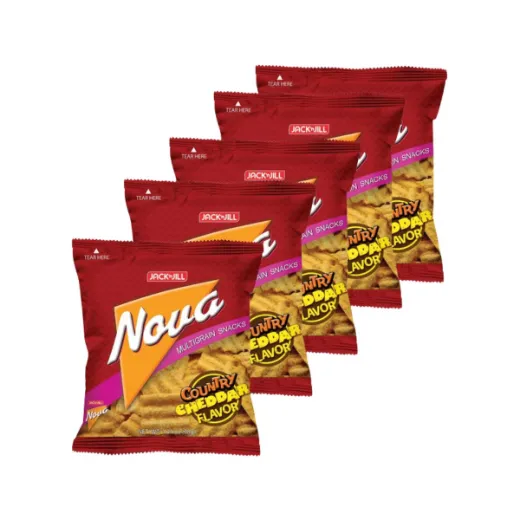
Nova is one of Jack ‘n Jill’s long-running corn snack lines from Universal Robina Corporation, built around a multigrain chip format positioned as a crunchier, more substantial alternative to standard corn chips.
Popular Products
Nova Multigrain Chips come in flavors such as Cheese and Barbecue, sold in both everyday tingi packs and larger sharing bags.
Why Filipinos Love It
Nova’s thicker, sturdier chip delivers a satisfying crunch that holds up well for dipping and sharing, making it a common choice for both solo snacking and get-togethers.
4. Piattos
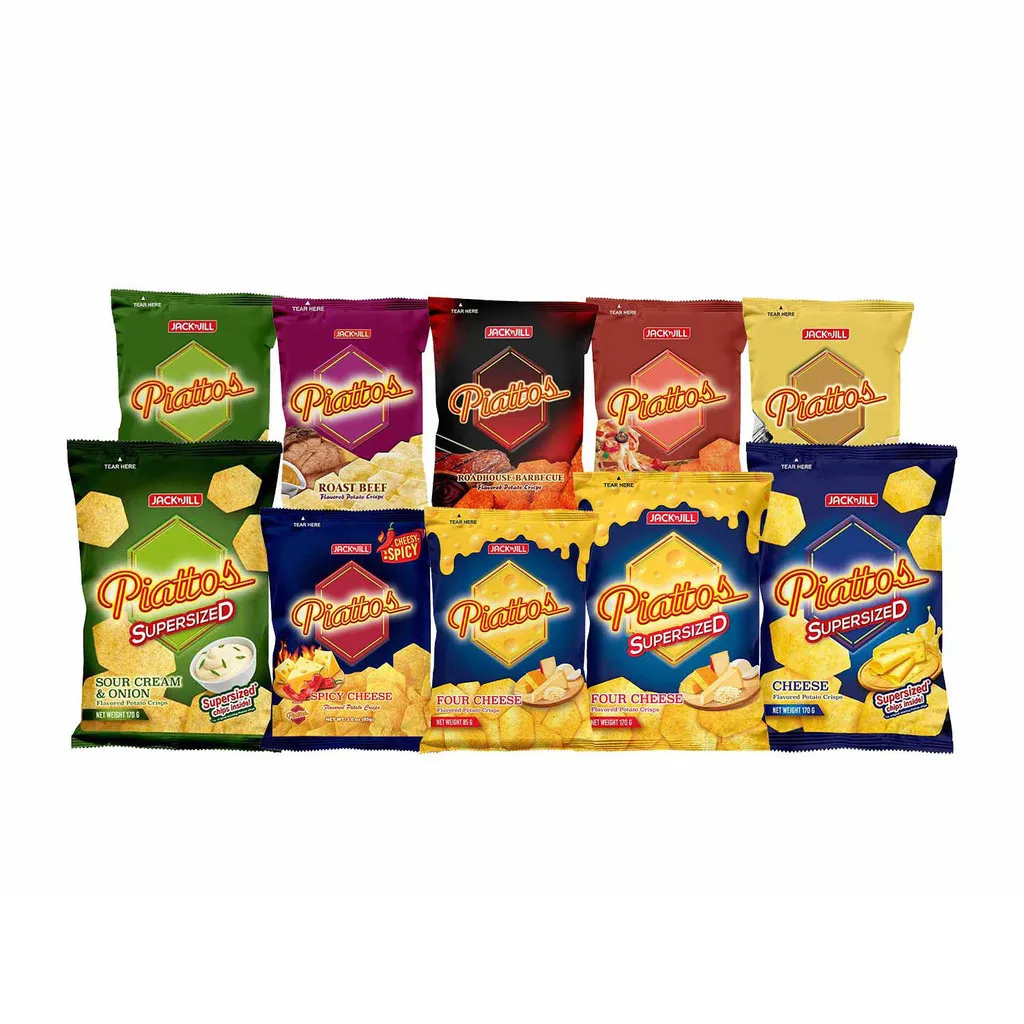
Brand Overview
Piattos is one of Universal Robina’s flagship potato chip brands, instantly recognizable for its hexagon-shaped, ridged chips — a distinctive design choice that sets it apart from ordinary round or wavy potato chips.
Popular Products
Piattos is best known for its Cheese and Sour Cream flavors, along with Barbecue and other limited-edition variants released over the years.
Why Filipinos Love It
The hexagonal shape and pronounced ridges give Piattos an extra-crunchy bite that fans specifically look for, and decades of memorable advertising have made it one of the most recognizable chip brands on Philippine shelves.
5. Clover Chips
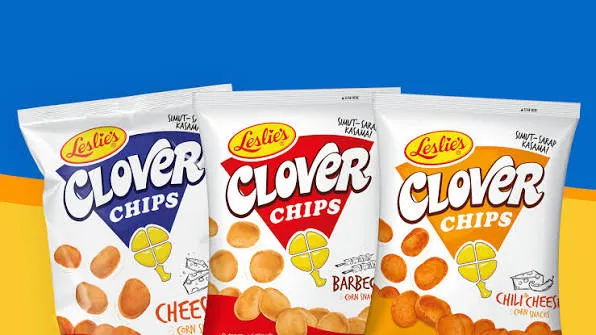
Brand Overview
Clover Chips is the flagship snack brand of Leslie Corporation, a Filipino food manufacturer founded in 1960 that has grown into one of the country’s largest snack producers.
Popular Products
Beyond the original Clover Chips corn snack, the line includes Clover Bits, Clover Chips Ham & Cheese, Spicy Beef, and other corn-based flavor variants.
Why Filipinos Love It
Clover Chips has been a fixture in sari-sari stores for generations, and its clover-shaped corn curls carry a nostalgic charm that keeps loyal customers — including a devoted younger fan base drawn in by newer flavors — coming back.
6. Boy Bawang
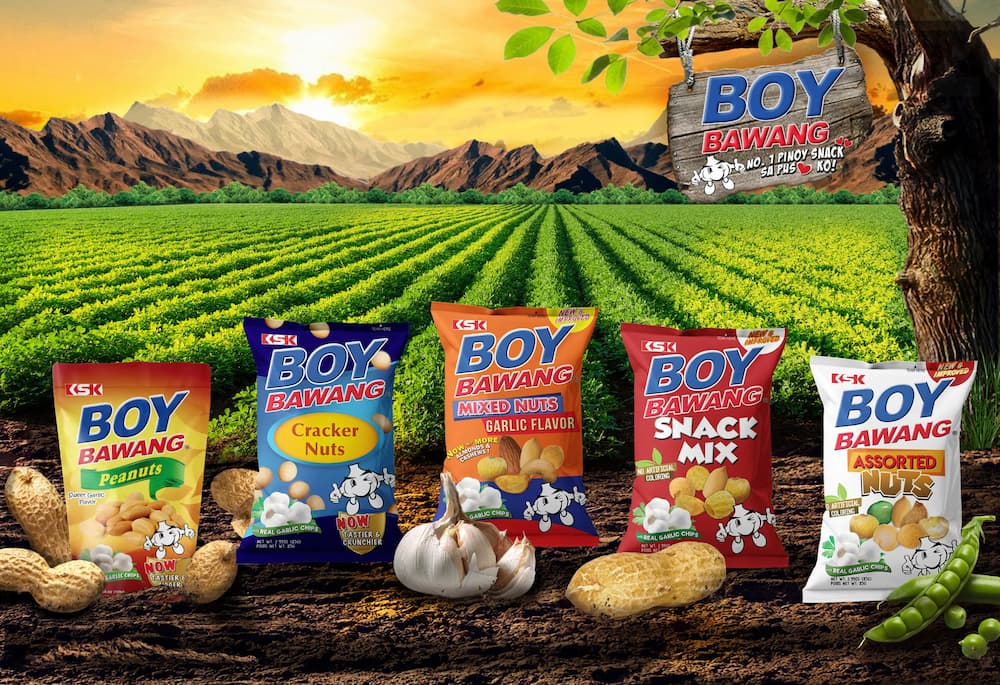
Brand Overview
Boy Bawang is the leading cornick (fried corn kernel) brand from KSK Food Products, a company established in 1990 that hit major commercial success when it launched Boy Bawang in 2003.
Popular Products
The brand is best known for its Garlic-flavored cornick, along with Barbecue, Chili Cheese, and other seasoned variants made from top-grade corn.
Why Filipinos Love It
Boy Bawang delivers an intensely garlicky, crunchy bite that makes it a favorite pulutan, or beer accompaniment, at gatherings. Its popularity has helped it become one of the few Filipino cornick brands with a genuine international export footprint.
7. Ding Dong
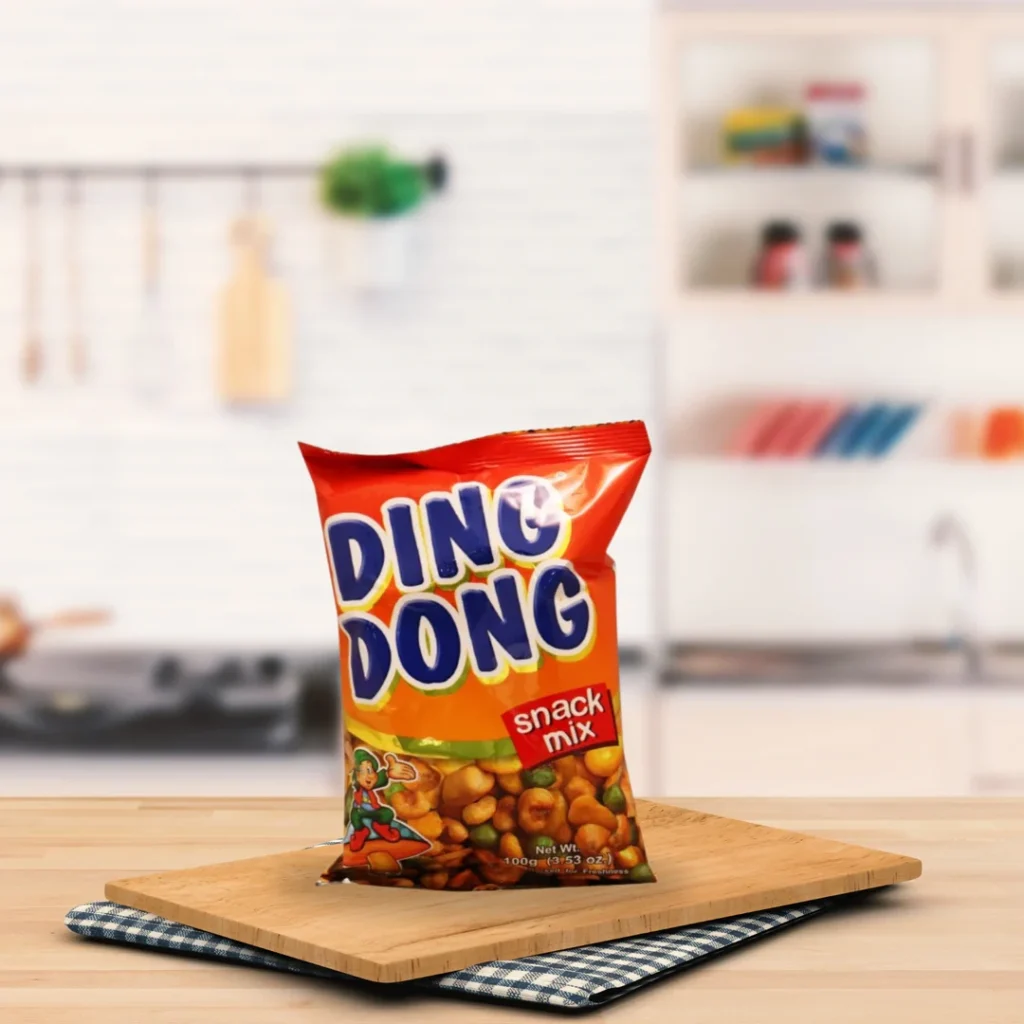
Brand Overview
Ding Dong is a classic Filipino mixed-nut snack manufactured by JBC Food Corporation, a partner company within the Rebisco group.
Popular Products
Ding Dong Mixed Nuts combines peanuts, corn bits, green peas, and corn chips and curls, available in Original, Garlic, Hot & Spicy, and Sweet Barbecue variants.
Why Filipinos Love It
The playful mix of textures — crunchy corn, roasted peanuts, and crisp curls in one pack — makes Ding Dong a favorite for both everyday snacking and shared drinking sessions, backed by a name Filipinos find genuinely fun to say.
8. Chippy
Brand Overview
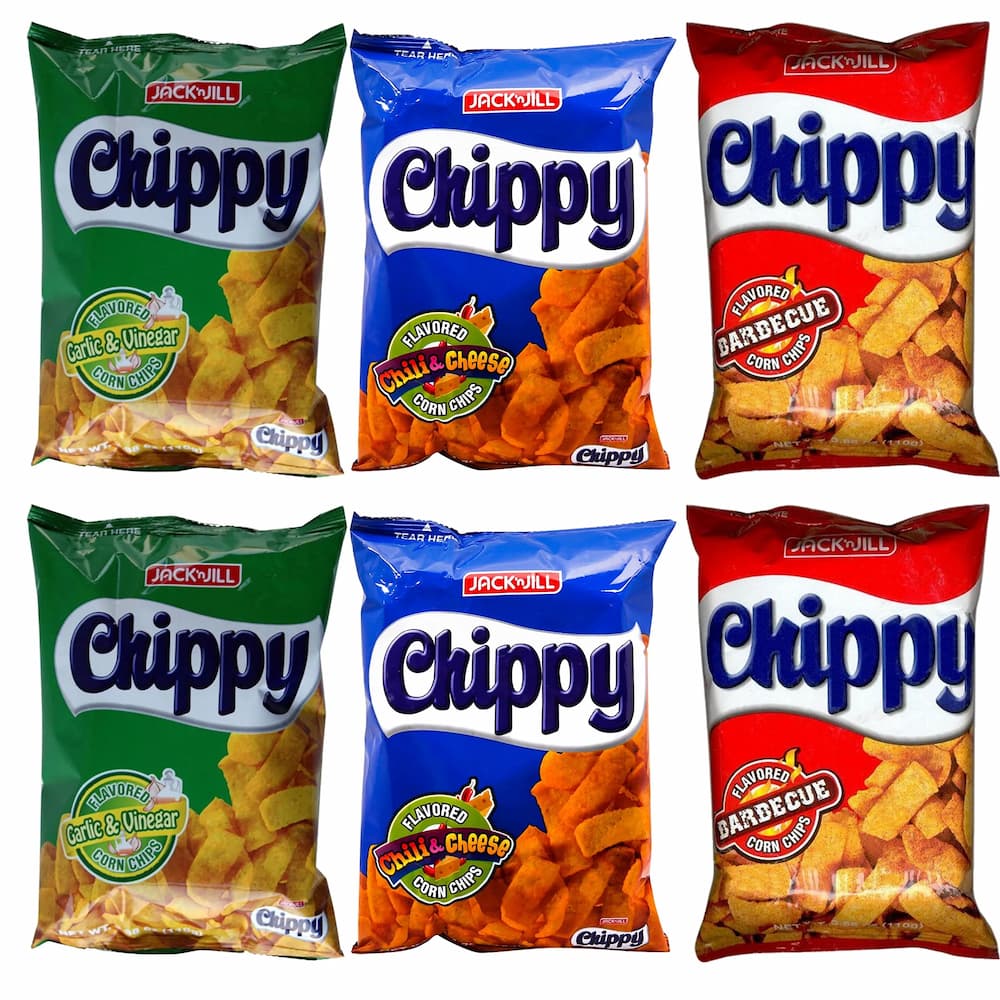
Chippy is one of Universal Robina’s longest-running corn chip brands, marketed under the Jack ‘n Jill umbrella and sold as a rectangular, extruded corn chip.
Popular Products
Chippy comes in Barbecue, Chili & Cheese, Beef & Chili, and Garlic & Vinegar flavors, along with a lower-sodium “Mild & Tasty” version.
Why Filipinos Love It
Chippy’s bold, tangy barbecue flavor has become almost synonymous with Filipino corn chips in general, and its affordable pricing keeps it a go-to option for students and families alike.
9. Nagaraya
Brand Overview
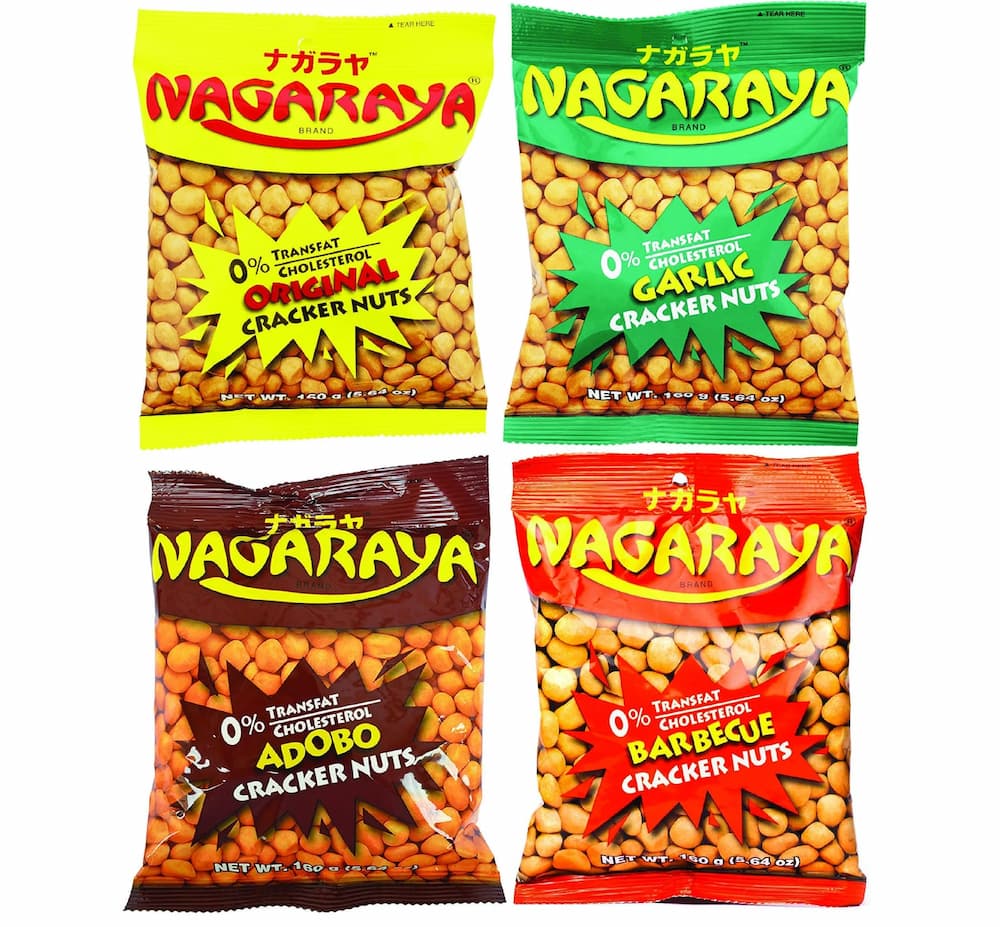
Nagaraya is a snack brand from Food Industries, Inc. that introduced cracker nuts — peanuts encased in a crunchy, seasoned wheat flour coating — to the Philippine market in 1968, popularizing the very term “cracker nuts” locally.
Popular Products
Nagaraya Cracker Nuts come in Original (Butter), Adobo, Barbecue, Garlic, and Hot & Spicy flavors, alongside Nagaraya’s Kabaya-branded pretzel sticks.
Why Filipinos Love It
The contrast between the crisp, savory coating and the soft peanut inside gives Nagaraya a satisfying two-texture crunch, and its zero-cholesterol, low-sodium profile has helped it stay relevant with more health-conscious snackers.
10. Leslie’s
Brand Overview
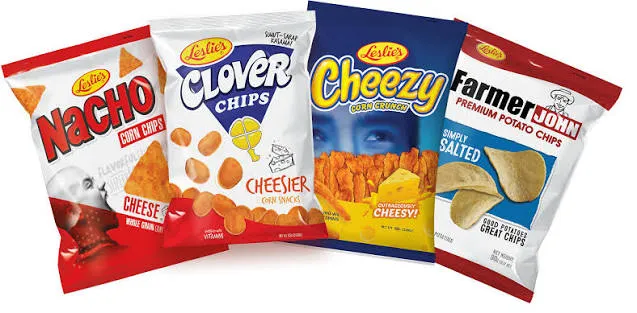
Leslie’s is the house name of Leslie Corporation, the same company behind Clover Chips, and covers a broader range of corn- and potato-based snacks sold directly under the Leslie’s label.
Popular Products
The lineup includes Cheezy Corn Crunch, Farmer John’s Potato Chips, Thin & Crispy Banana Chips, and Wild Willys Chicharon.
Why Filipinos Love It
Leslie’s has built a reputation for consistent quality across a wide product range, and its snacks are stocked in well over a hundred thousand stores nationwide, making it one of the most physically accessible brands on this list.
11. Rebisco
Brand Overview
Rebisco, short for Republic Biscuit Corporation, was founded on August 15, 1963 by Jacinto L. Ng Sr. as the England Biscuit Factory, a small rented bakery that grew into one of the Philippines’ largest snack food conglomerates.
Popular Products
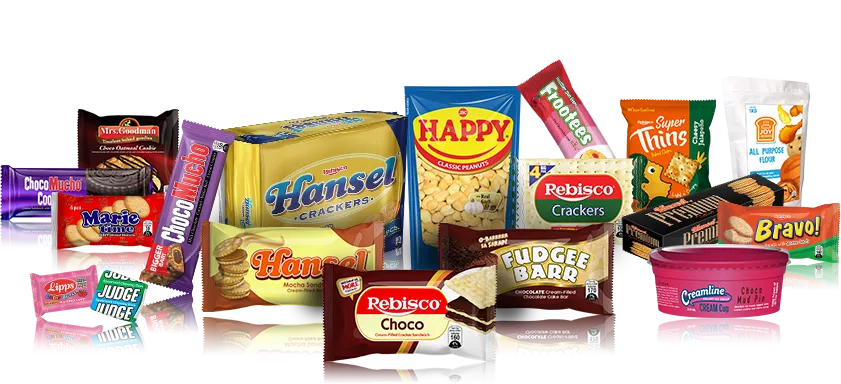
Rebisco’s core lineup includes Rebisco Crackers and Sandwich biscuits, Hansel, Cream-O, Choco Mucho, and Fudgee Barr, produced through the company and its partner firms.
Why Filipinos Love It
More than six decades in business have made Rebisco a trusted, unpretentious name across nearly every snack category, known for delivering reliable taste and value at an accessible price point.
12. SkyFlakes
Brand Overview
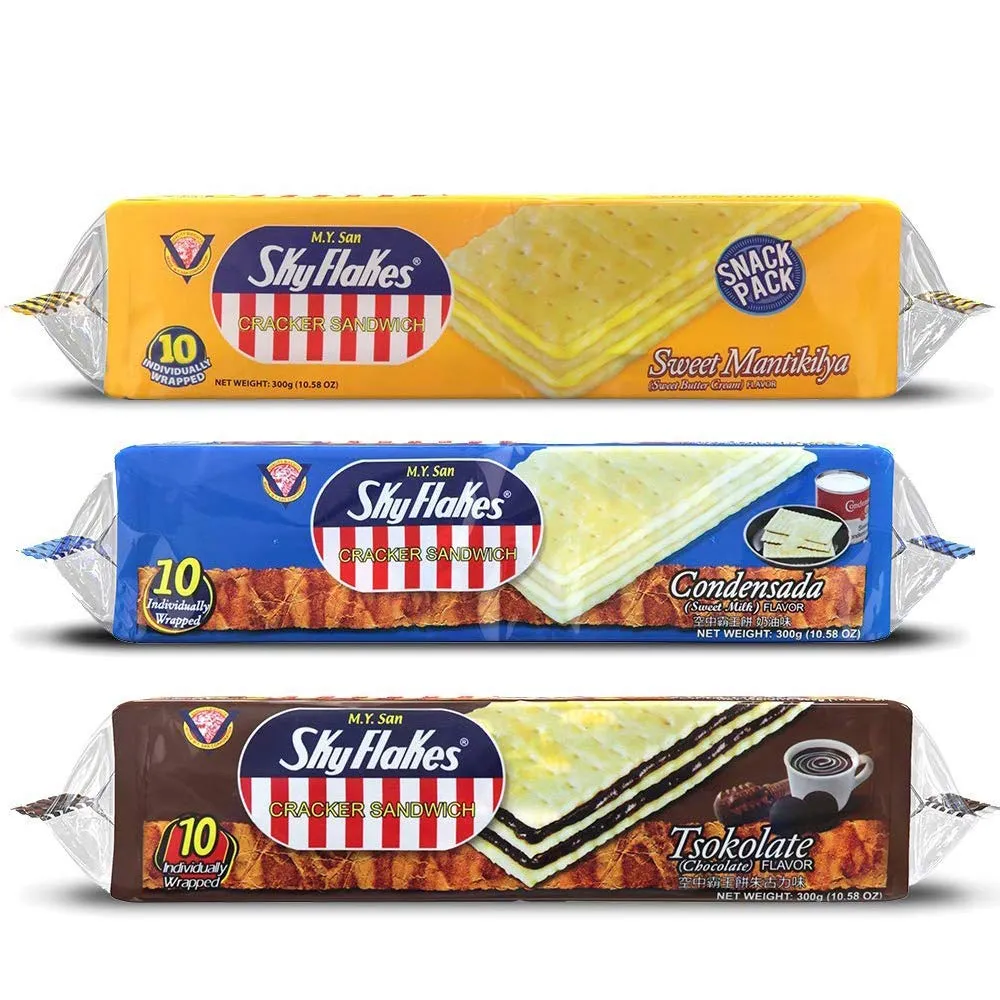
SkyFlakes traces its roots to M.Y. San, a Manila bakery and biscuit company with origins in the early 1900s that introduced the SkyFlakes soda cracker in the early 1960s. The brand is now produced by Monde M.Y. San Corporation, a joint venture that Monde Nissin Corporation formed after acquiring M.Y. San Biscuit, Inc. in 2001.
Popular Products
Beyond the Original cracker, SkyFlakes offers Cracker Sandwich variants filled with chocolate, peanut butter, or condensed milk, plus Cheese, Onion, and Garlic flavors.
Why Filipinos Love It
SkyFlakes has earned a reputation as the cracker Filipinos can count on — plain enough to pair with almost anything, filling enough to curb hunger between meals, and sturdy enough to survive long trips in a balikbayan box.
13. Magic Flakes
Brand Overview
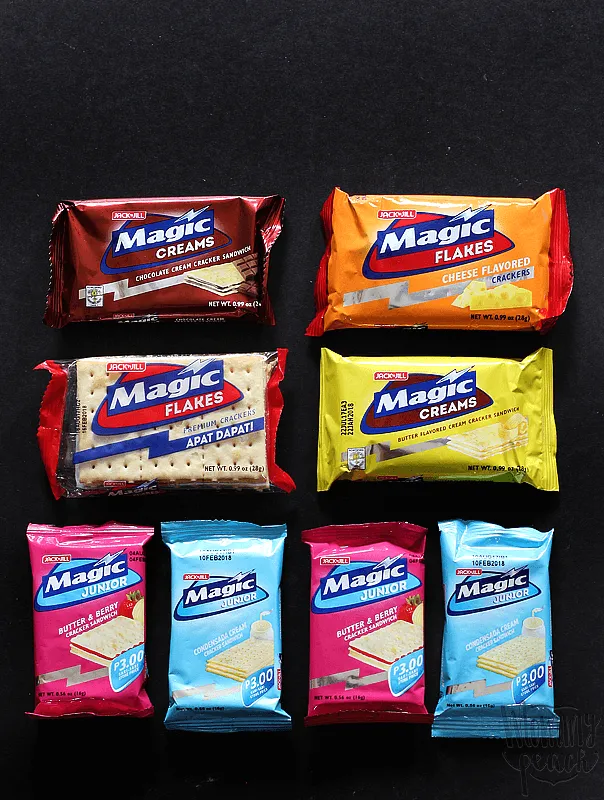
Magic Flakes is Universal Robina’s answer to the soda cracker category, sold under the Jack ‘n Jill brand as a direct alternative to SkyFlakes.
Popular Products
The line includes Magic Flakes Premium plain crackers and Magic Creams, a peanut butter cream-filled cracker sandwich.
Why Filipinos Love It
Magic Flakes has carved out its own loyal following by offering a few extra crackers per pack compared to some rivals, along with a light, flaky texture that fans specifically seek out.
14. Fibisco
Brand Overview
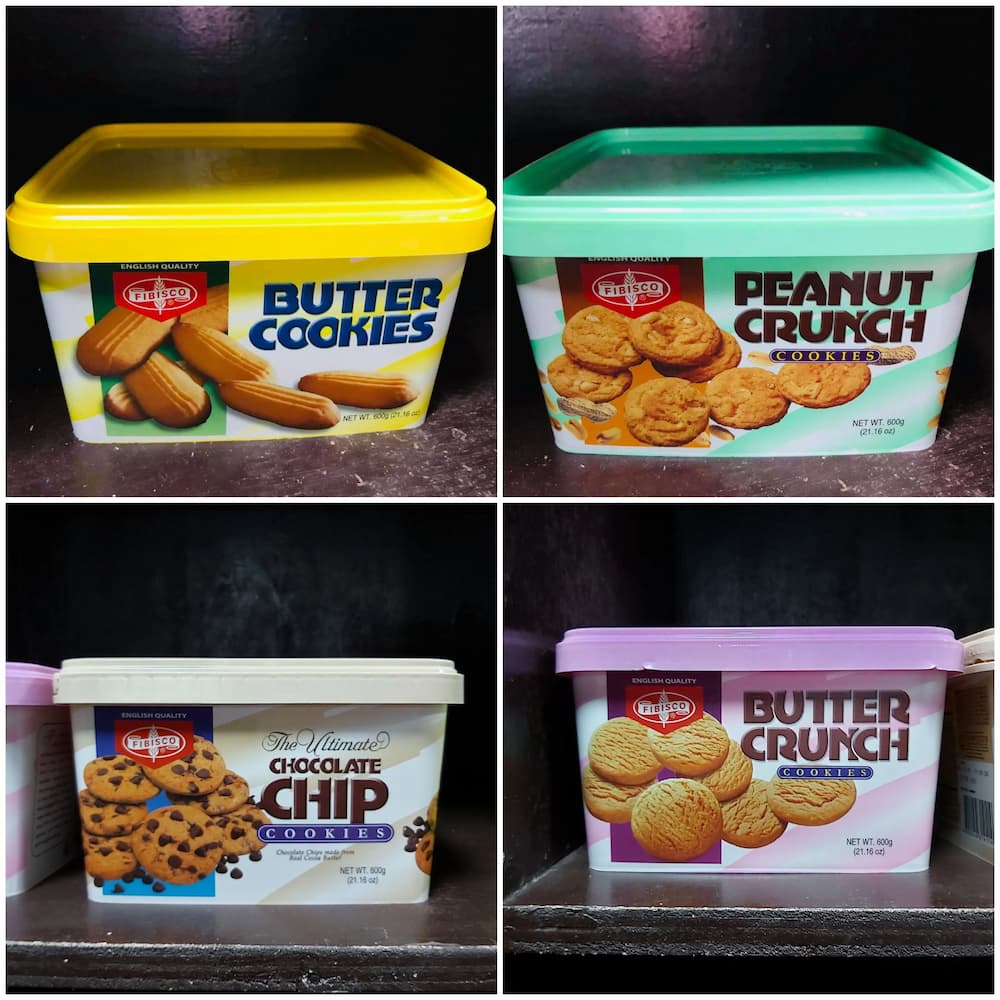
Fibisco, or the Filipinas Biscuit Corporation, was established in January 1959 and later became a division of Commonwealth Foods, Inc. (Comfoods) after a 1968 merger. It was known for producing what it marketed as “English Quality Biscuits,” built using English machinery and consultants.
Popular Products
Fibisco’s best-known items include Choco-Mallows, Marie biscuits, Hi-Ro, Butter Crunch, and Ginger Snaps.
Why Filipinos Love It
Fibisco carries a distinctly old-school charm, tied to memories of its long-running “Englishman” advertising character and the simple, honest biscuits that have stayed on store shelves for generations.
15. Monde
Brand Overview
Monde is a house brand of Monde Nissin Corporation, the food company founded in 1979 that has since grown into one of the Philippines’ largest food and beverage conglomerates, best known for Lucky Me! instant noodles and its biscuit portfolio.
Popular Products
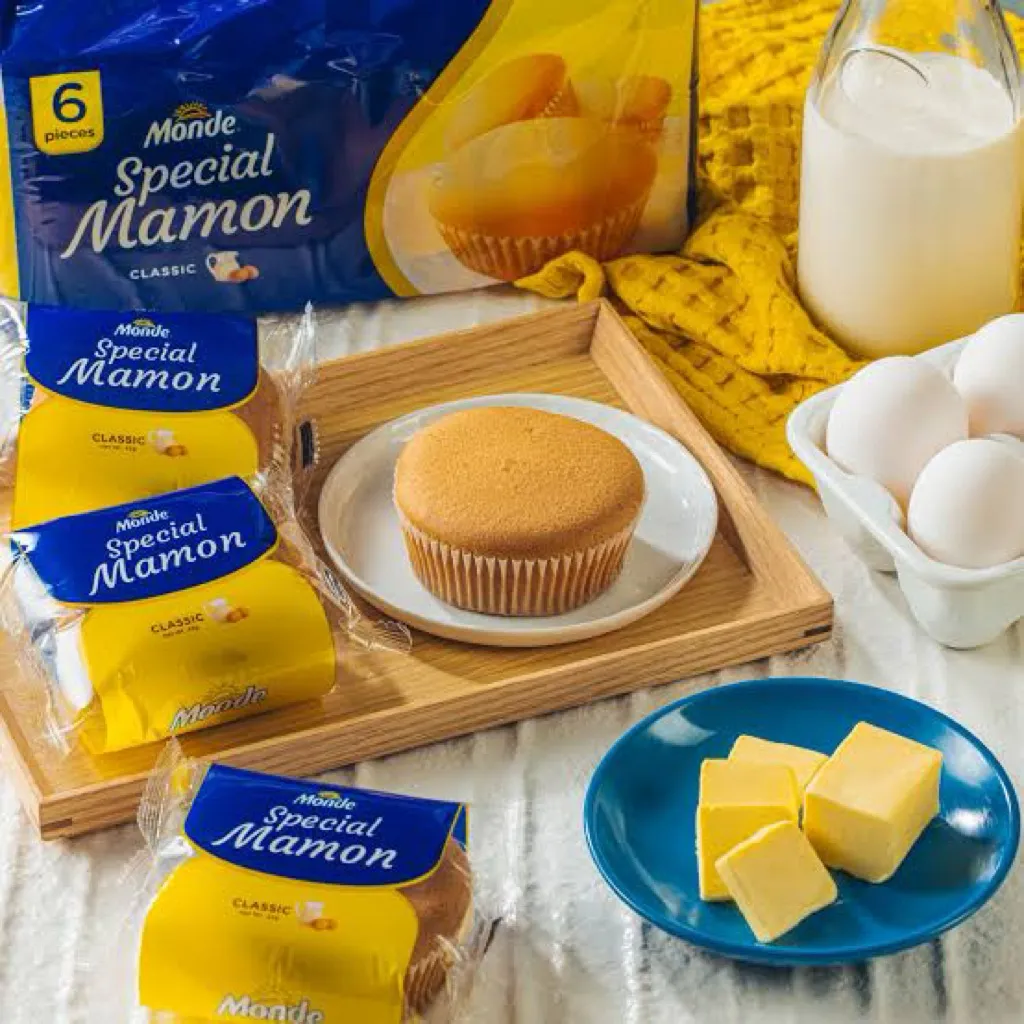
The Monde name covers baked goods and biscuits such as Monde Special Mamon, Butter Cookies, and Nissin-branded wafers.
Why Filipinos Love It
Monde’s baked snacks offer a softer, homier alternative to crunchier chips and crackers, and the backing of a major, well-established food company gives shoppers confidence in consistent quality.
16. Hello! Wafer
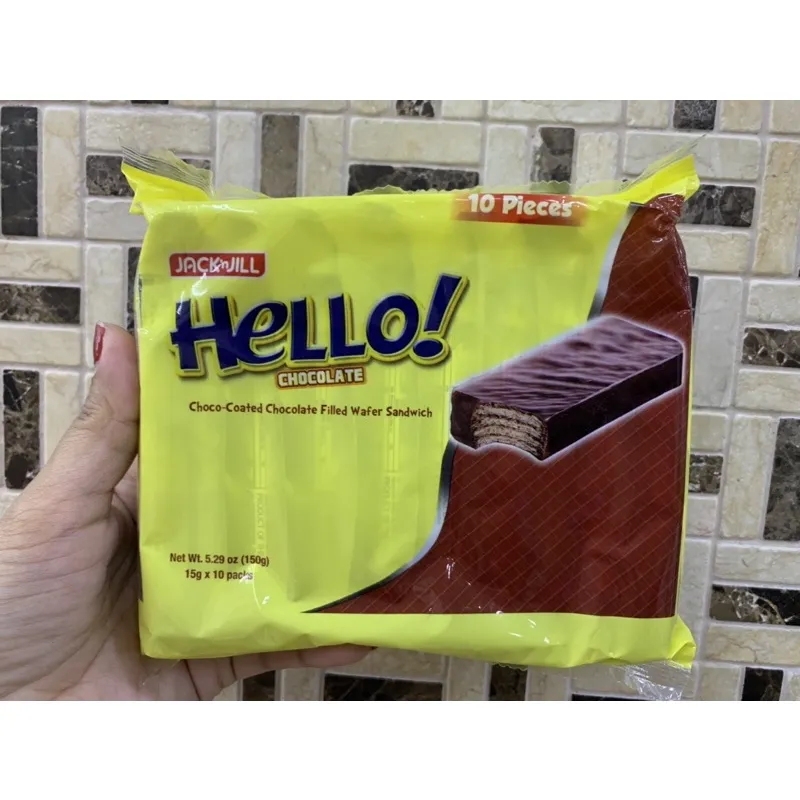
Brand Overview
Hello! is a wafer sandwich brand under Universal Robina’s Jack ‘n Jill lineup, built around crisp wafer layers filled with sweet cream.
Popular Products
Hello! comes in flavors like Chocolate wafer sandwiches and Hello! Desserts variants, such as Choco Strawberry Cheesecake.
Why Filipinos Love It
The combination of crunchy wafer and rich, sweet filling makes Hello! feel like a small indulgence, and its playful branding and steady flavor lineup have kept it popular with younger snackers in particular.
17. Cream-O
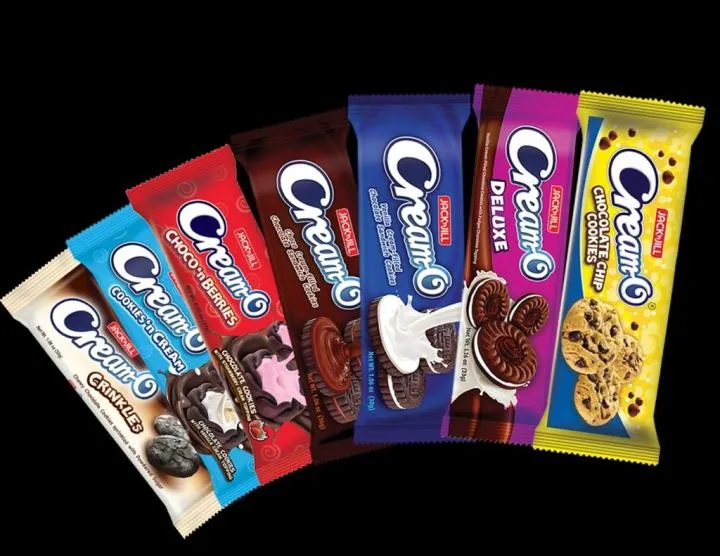
Brand Overview
Cream-O is Rebisco’s chocolate sandwich cookie brand, positioned as a Filipino take on the classic chocolate-and-cream sandwich cookie format.
Popular Products
The lineup includes the original Cream-O Chocolate Sandwich, Chocolate-Coated Vanilla variants, and the Cream-O Cake Bar.
Why Filipinos Love It
Cream-O delivers a dependable, familiar taste at a price point that makes it easy to buy often, and its chocolate-cream combination has made it a lunchbox and merienda staple for decades.
18. Hansel
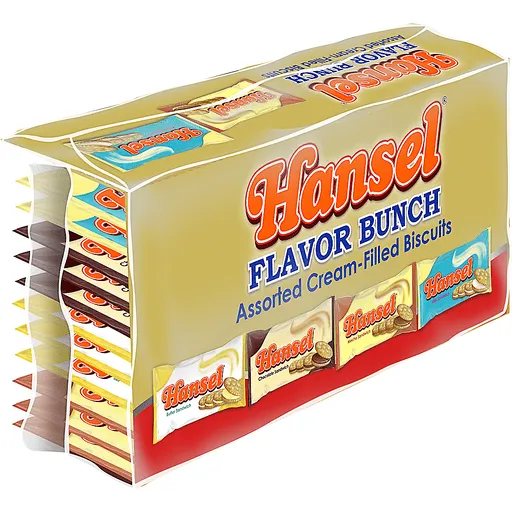
Brand Overview
Hansel is one of Rebisco’s core biscuit brands, built around a soft-crunch cookie sandwich format with a distinctive aroma.
Popular Products
Hansel Sandwich comes in Mocha, Milk, Chocolate, Butter, and Milky Strawberry cream fillings, alongside a Plain Round biscuit variant.
Why Filipinos Love It
Hansel’s salty-sweet flavor balance and soft-yet-crunchy texture have made it a favorite that’s distinct from other biscuit brands, and its family-sized packs make it easy to share.
19. Presto
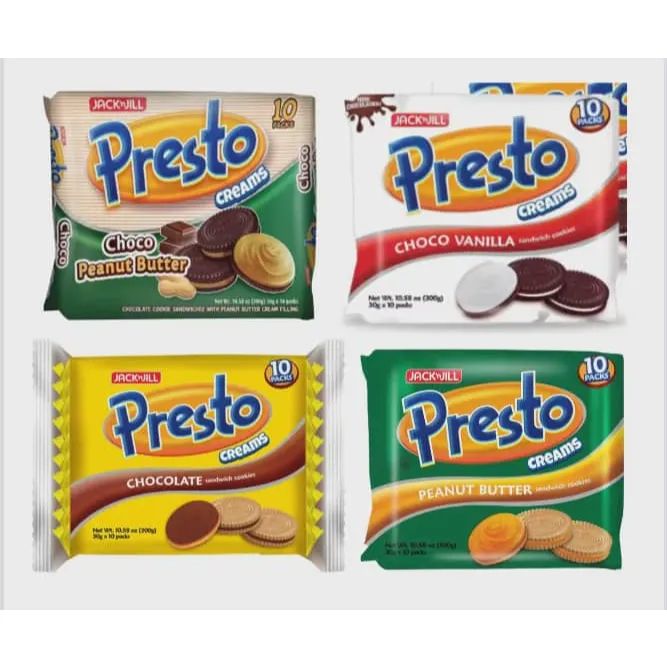
Brand Overview
Presto began in 1968 as its own biscuit, ice cream, and chocolate brand before its cookie line was absorbed into Universal Robina’s Jack ‘n Jill portfolio, where it remains a dedicated favorite today.
Popular Products
Presto Creams, particularly the Peanut Butter sandwich cookie, remain the brand’s signature product, alongside newer variants like Choco Peanut Butter and the chocolate-coated Presto Premium.
Why Filipinos Love It
For many Filipinos, the classic Presto Peanut Butter cookie is tied directly to childhood merienda memories, making it one of the more nostalgia-driven brands on this list.
20. Dewberry
Brand Overview
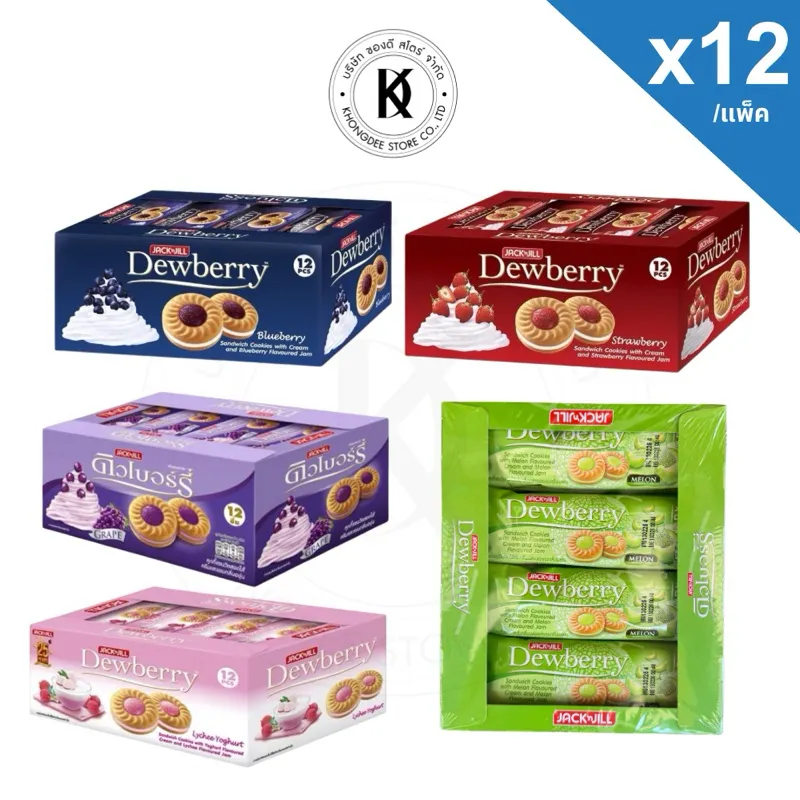
Dewberry is a sandwich cookie brand under Universal Robina’s Jack ‘n Jill lineup, built around a jam-filled twist on the traditional cream sandwich cookie.
Popular Products
Dewberry sandwich cookies come in Blueberry, Strawberry, and Blueberry Cheesecake flavors.
Why Filipinos Love It
The fruity jam filling gives Dewberry a brighter, fresher taste than standard cream cookies, and its colorful packaging and kid-friendly flavors have made it a popular choice for younger snackers and lunchboxes.
21. Fudgee Barr
Brand Overview
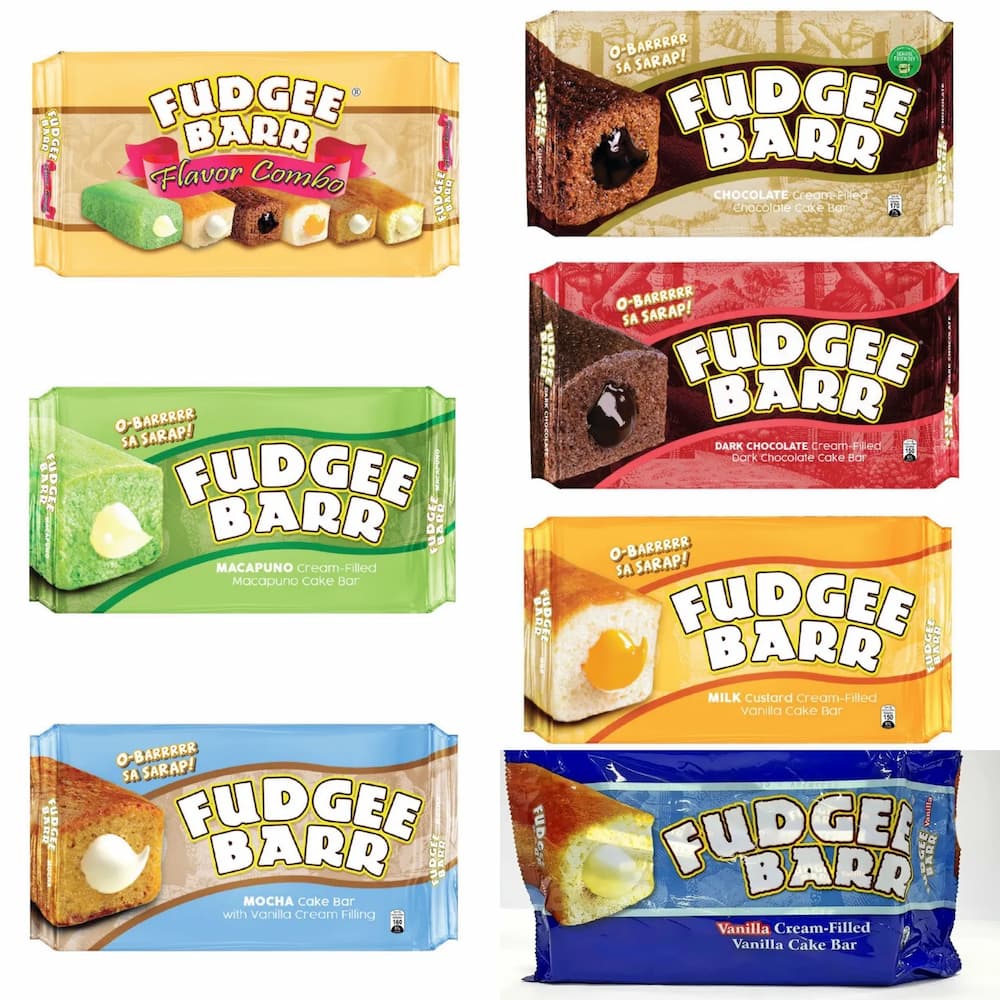
Fudgee Barr was launched in 2004 by Suncrest Foods Inc., a subsidiary of Rebisco, as a soft, individually wrapped filled cake bar meant to serve as an affordable alternative to bakery-bought cakes.
Popular Products
Fudgee Barr comes in Chocolate, Dark Chocolate, Milk, Mocha, Macapuno, Durian, and Salted Caramel flavors.
Why Filipinos Love It
Fudgee Barr gives Filipinos a genuine cake-like experience in a convenient, budget-friendly, individually wrapped format, making it a longtime baon (packed snack) staple that continues to celebrate its nostalgic appeal decades later.
22. Cloud 9
Brand Overview
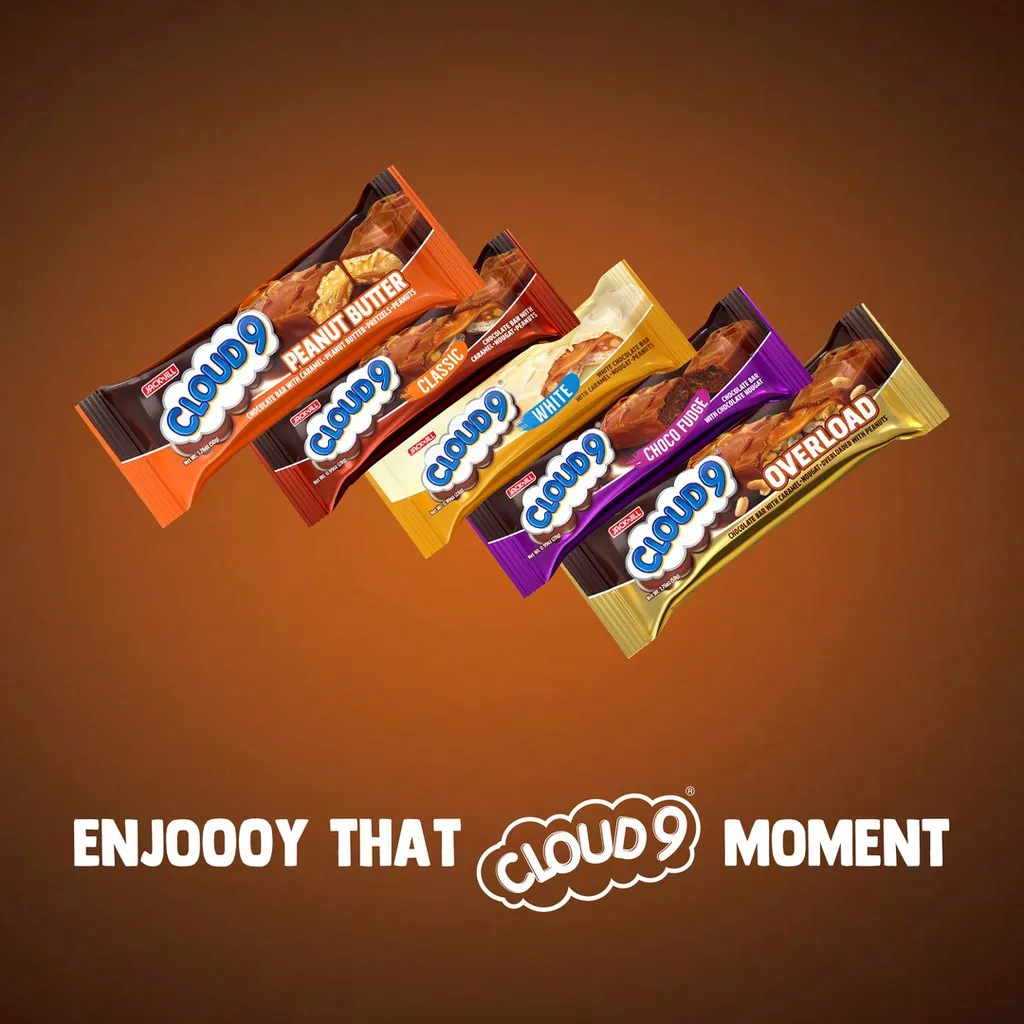
Cloud 9 is Universal Robina’s flagship chocolate brand, built around a chocolate-coated marshmallow bar format.
Popular Products
The core product is the Cloud 9 chocolate-coated marshmallow bar, sold alongside other chocolate variants under the same name.
Why Filipinos Love It
Cloud 9’s affordability and satisfying combination of chocolate and marshmallow have made it one of the most purchased chocolate brands in the country, especially popular across a wide range of income levels.
23. Flat Tops
Brand Overview
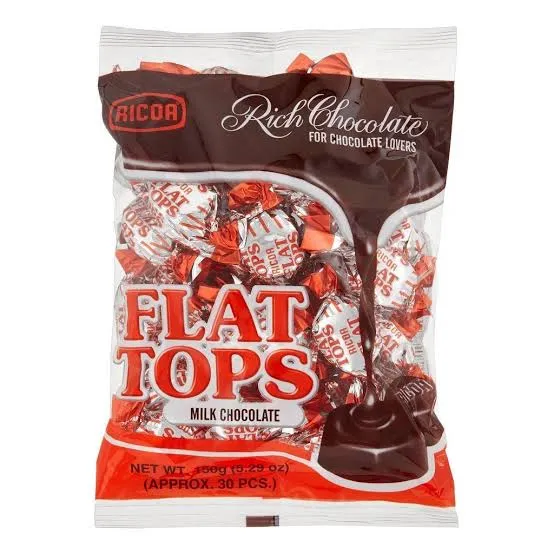
Flat Tops is a chocolate candy brand produced under the Ricoa confectionery division of Commonwealth Foods, Inc. (Comfoods), the same company behind Fibisco biscuits.
Popular Products
Flat Tops is sold as an individually wrapped chocolate-coated candy, typically alongside its companion product, Curly Tops.
Why Filipinos Love It
Flat Tops carries the kind of old-school candy nostalgia that many Filipino adults associate with school-day allowances and neighborhood sari-sari stores, making it a comfort candy for longtime fans.
24. Curly Tops
Brand Overview
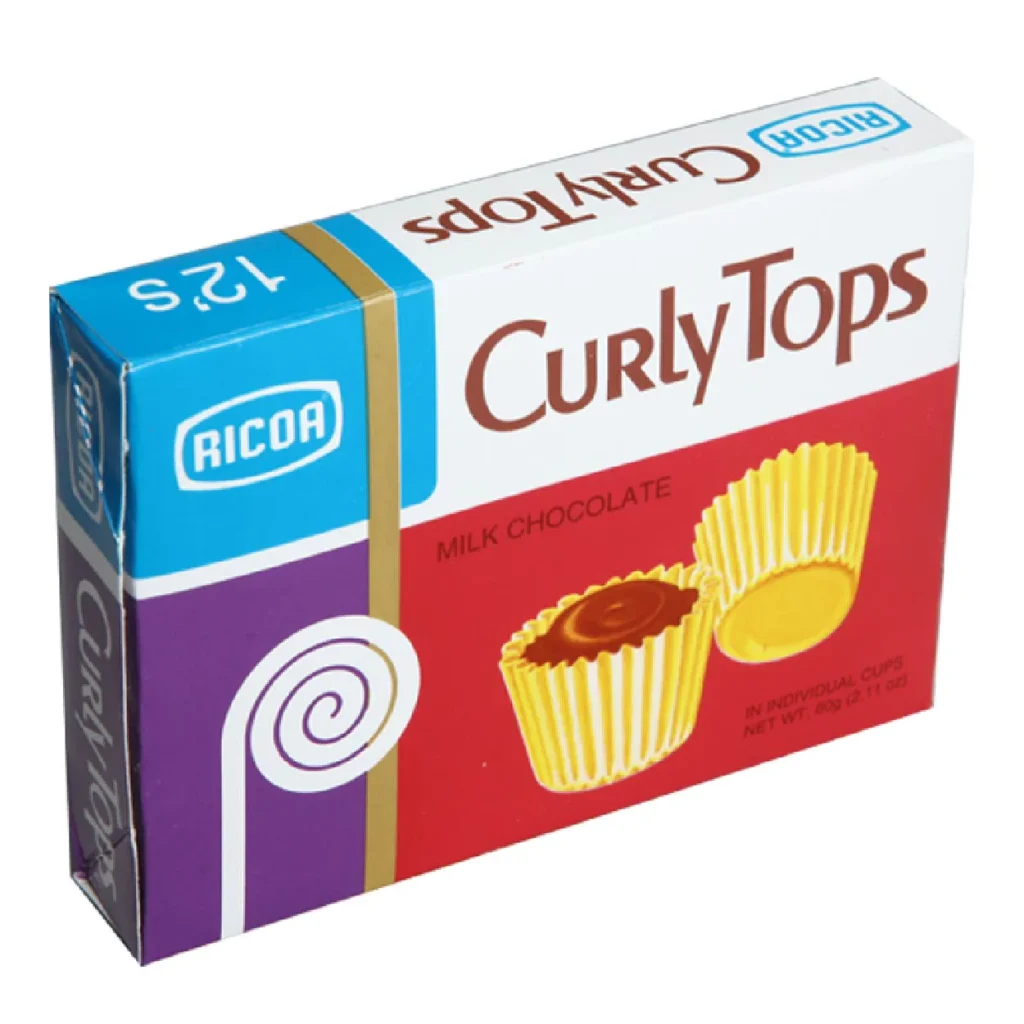
Curly Tops is the companion chocolate candy to Flat Tops, also produced by the Ricoa division of Comfoods and sold with a similarly long-running heritage in the Philippine candy aisle.
Popular Products
Curly Tops is sold as an individually wrapped chocolate candy, distinguished mainly from Flat Tops by its rounded, curled shape.
Why Filipinos Love It
The distinctive shape and simple chocolate flavor make Curly Tops an easy, affordable treat that continues to draw loyalty from consumers who grew up with it.
25. Hany
Brand Overview
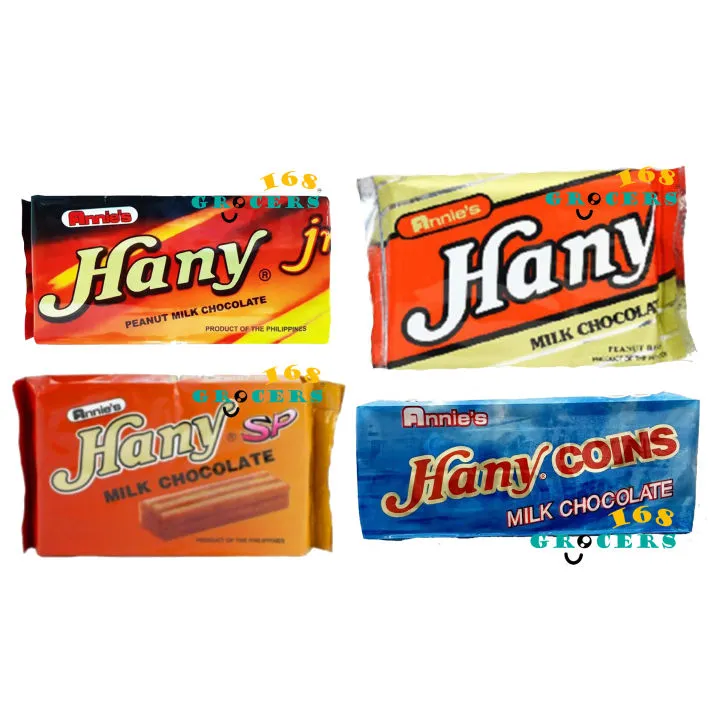
Hany is a peanut-and-chocolate candy bar produced by Annie’s Candy Manufacturing in Cavite, long positioned as the direct rival to the similarly styled Choc Nut.
Popular Products
The brand’s signature item is the Hany Peanut Milk Chocolate bar, sold in the same style of individually wrapped foil packaging as its rival.
Why Filipinos Love It
Hany’s slightly sweeter, more moist take on the classic peanut-chocolate bar has earned it its own dedicated following distinct from Choc Nut fans, proving there’s room in Filipino hearts for both.
26. Choc Nut
Brand Overview
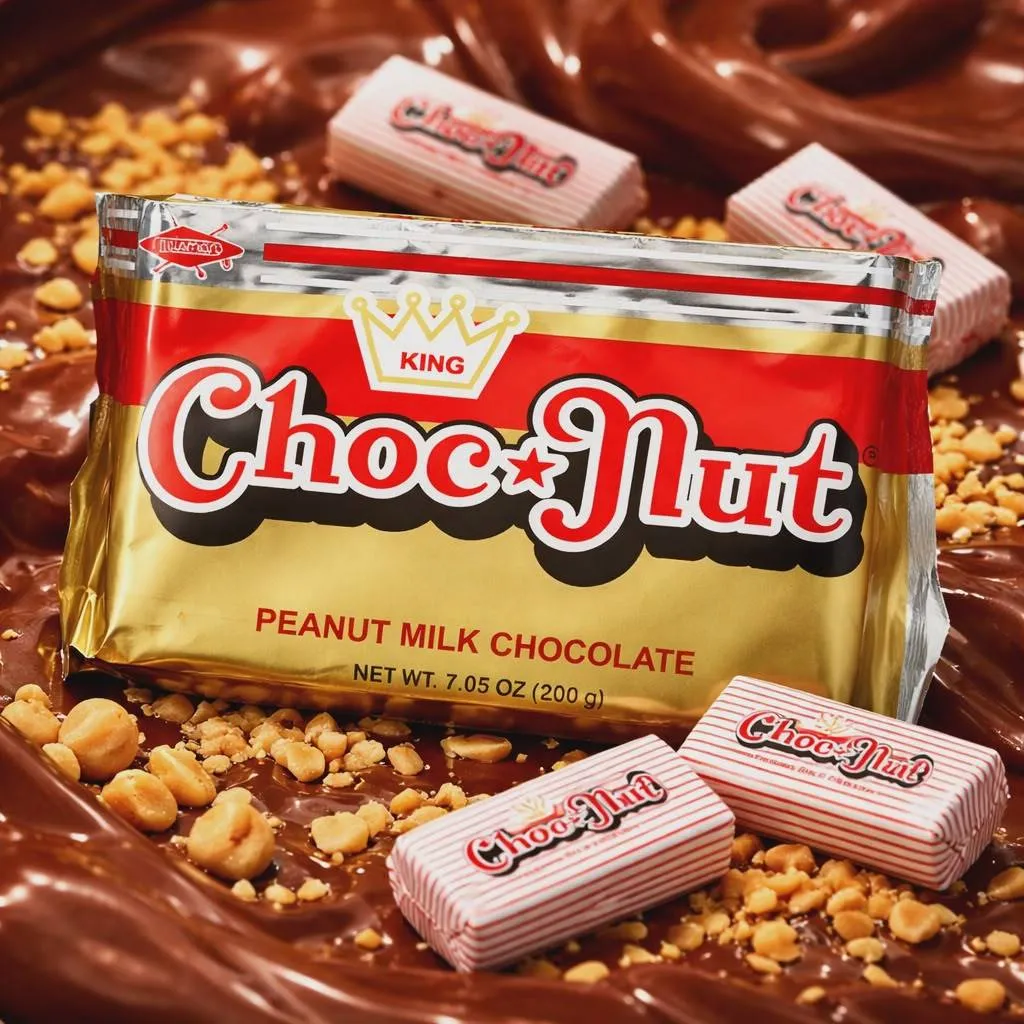
Choc Nut is one of the most iconic candy brands in the Philippines, originally produced by New Unity Sweets Manufacturing Corporation (Unisman) starting in the 1970s and acquired in 2013 by Annie’s Sweets Manufacturing and Packaging Corporation.
Popular Products
The core product remains the original Choc Nut peanut milk chocolate bar, with newer additions like a chocolate peanut spread introduced in 2018.
Why Filipinos Love It
Choc Nut’s crumbly, nutty-chocolate bite has made it one of the most consumed children’s snacks in Philippine history, and its status as a nostalgic national favorite has even drawn international attention from celebrities and food lovers abroad.
27. V-Cut
Brand Overview
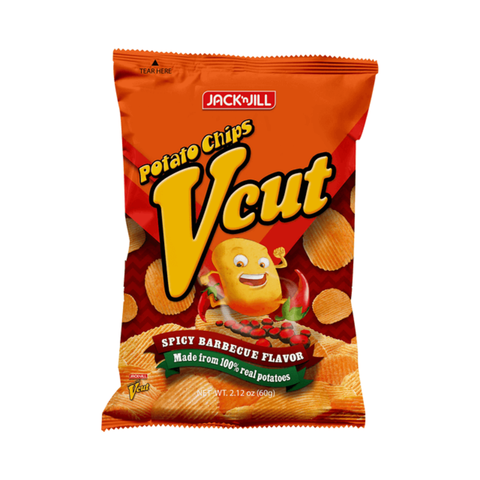
V-Cut is Universal Robina’s wavy, ridge-cut potato chip brand, marketed under Jack ‘n Jill as a crunchier alternative to standard flat-cut chips.
Popular Products
V-Cut comes in Spicy Barbecue, Onion and Garlic, and Cheese flavors, made from what the brand markets as 100% real potatoes.
Why Filipinos Love It
The rippled cut gives V-Cut extra crispness and a sturdier bite, earning it a reputation as the Philippine answer to internationally known wavy potato chip brands.
28. Mr. Chips
Brand Overview
Mr. Chips is a triangular corn chip brand from Universal Robina, sold under the Jack ‘n Jill savory snacks lineup.
Popular Products
Mr. Chips is available in a range of savory flavors typical of the brand’s corn chip category.
Why Filipinos Love It
Its distinct triangular shape and crunch make it easy to recognize on shelves, and it remains a budget-friendly go-to for movie nights, road trips, and everyday snacking.
29. Roller Coaster
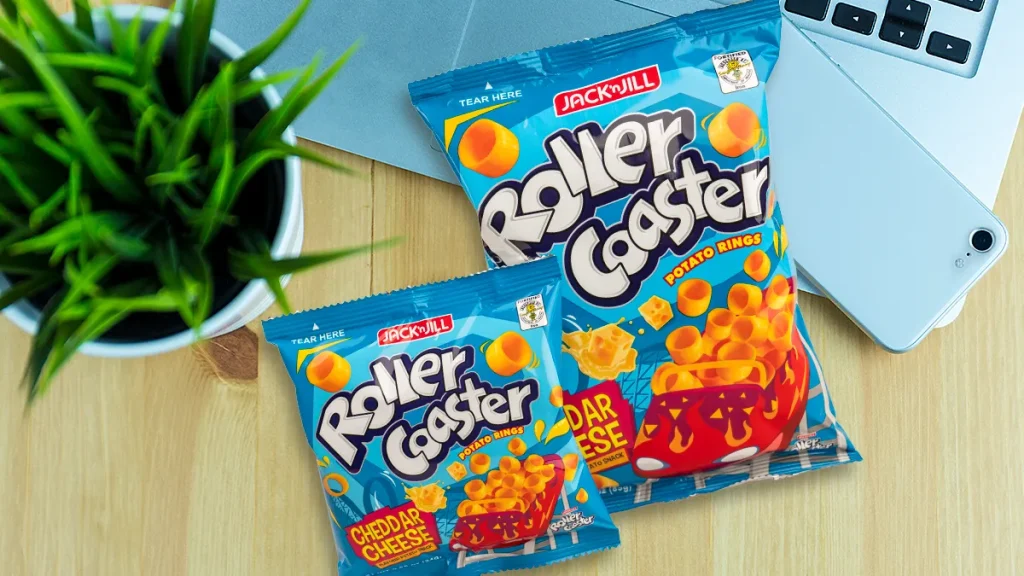
Brand Overview
Roller Coaster is a looped potato snack brand from Universal Robina, sold under the Jack ‘n Jill name and known for its playful ring shape.
Popular Products
Roller Coaster snacks come in various seasoned flavors typical of the brand’s potato snack range.
Why Filipinos Love It
The fun ring shape — the kind kids like to wear on their fingers before eating — gives Roller Coaster a playful identity that sets it apart from more conventional chip shapes.
30. Kornets
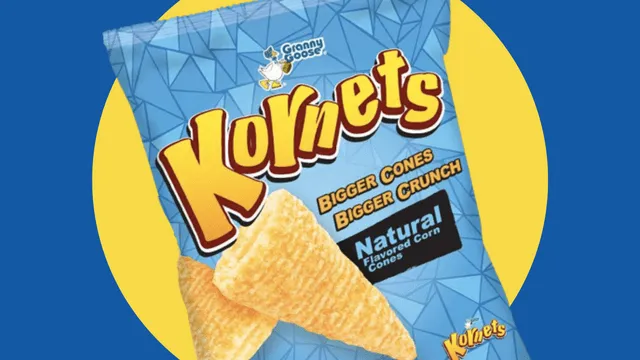
Brand Overview
Kornets began as a corn snack under the Granny Goose brand, produced under license by General Milling Corporation starting in the early 1980s before Universal Robina acquired the Granny Goose snack business in 2008.
Popular Products
Kornets is known for its cone-shaped corn snack, historically available in Natural and Cheese flavors.
Why Filipinos Love It
Kornets built a devoted following thanks to its light, airy crunch and unmistakable cone shape, and it remains fondly remembered as one of the more distinctive corn snacks to come out of the Philippine market.
Types of Popular Snacks in the Philippines
Potato Chips
Potato chips make up one of the most competitive categories in the Philippine snack aisle, led by brands like Piattos, V-Cut, and Oishi Potato Fries. Filipino potato chip brands tend to favor bold, tangy flavors over plain salted versions, with cheese, sour cream, and barbecue consistently ranking among the best sellers.
Corn Snacks
Corn-based snacks are especially popular given the crop’s status as the Philippines’ second most important agricultural product after rice. Brands like Chippy, Clover Chips, Boy Bawang, and Kornets showcase everything from extruded corn chips to fried cornick, often seasoned with garlic, cheese, or barbecue flavoring.
Crackers and Biscuits
This category is dominated by long-running names like SkyFlakes, Rebisco, Magic Flakes, Hansel, and Fibisco. Crackers in particular are treated less as indulgent snacks and more as everyday staples, often eaten plain, dipped in coffee, or paired with spreads.
Chocolate Snacks
Chocolate-based treats span everything from mass-market chocolate bars like Cloud 9 to nostalgic peanut-chocolate candies like Choc Nut and Hany, plus old-school confections like Flat Tops and Curly Tops. Filipino chocolate snacks tend to prioritize affordability and shareability over premium positioning.
Candies
Beyond chocolate, the Philippine candy aisle includes menthol candies, fruit-flavored hard candies, and jelly-based treats from a mix of local and international brands. Candy remains a common giveaway item at parties, fiestas, and school events.
Nuts and Mixed Snacks
Nagaraya, Ding Dong, and Boy Bawang anchor this category, offering peanuts, cornick, and mixed nut blends that double as popular pulutan, or beer and drinking-session accompaniments.
Healthy Snack Alternatives
As health-consciousness grows, more brands are introducing baked instead of fried options, reduced-sodium formulas, and snacks fortified with fiber or protein. This shift reflects a broader trend across the industry toward better-for-you snacking without abandoning the flavors Filipinos already love.
Most Popular Filipino Snack Flavors
Cheese
Cheese is arguably the single most popular snack flavor in the Philippines, appearing across chips, corn snacks, and even biscuits. Its rich, salty profile pairs naturally with the country’s love of bold, savory seasoning.
Barbecue
Barbecue flavoring shows up on nearly every major chip and corn snack brand, from Chippy to V-Cut to Boy Bawang, prized for its smoky-sweet-tangy balance.
Sour Cream
Sour cream is a defining flavor for potato chip brands like Piattos, offering a tangier, creamier alternative to straightforward cheese or barbecue options.
Sweet Corn
Sweet corn flavoring plays up the natural sweetness of corn-based snacks, offering a milder, less savory option compared to garlic or barbecue variants.
Spicy
Spicy and “hot & spicy” variants have grown steadily across categories, from Nagaraya’s Hot & Spicy cracker nuts to spicier takes on classic chip flavors, reflecting a broader appetite for bolder heat.
Adobo
Adobo-flavored snacks draw directly from the Philippines’ most iconic dish, translating its savory, slightly tangy, garlicky profile into cracker nuts, chips, and cornick.
Salted Egg
Salted egg has become one of the most talked-about flavor trends in recent years, showing up in chips, popcorn, and even fusion snack products as brands chase the rich, umami-forward craze.
Chocolate
Chocolate remains a flavor mainstay across biscuits, cake bars, and candies, from Cream-O’s chocolate sandwich cookies to Fudgee Barr’s chocolate cake bar and classic candies like Choc Nut.
How Filipino Snack Brands Became Household Names
Affordable Pricing
Many Filipino snack brands built their reach through “tingi” or sachet-style pricing, offering small packs for just a few pesos. This pricing strategy makes snacks accessible across virtually every income bracket, encouraging frequent, repeat purchases.
Wide Availability
Distribution through sari-sari stores, supermarkets, and now online platforms means popular snack brands are rarely far from reach. Companies like Leslie Corporation have specifically highlighted their presence in well over a hundred thousand retail outlets nationwide.
Memorable Advertising Campaigns
Decades of jingles, mascots, and endorsers — from Fibisco’s “Englishman” character to celebrity-fronted campaigns for brands like Presto and Fudgee Barr — have turned routine product ads into pieces of shared cultural memory.
Product Innovation
Brands that have stayed relevant tend to be the ones willing to update their offerings, whether through new flavors like salted egg and adobo, healthier baked formulas, or entirely new product lines that build on an established brand name.
Strong Brand Loyalty
Many Filipino snack brands benefit from genuine multi-generational loyalty, with parents introducing childhood favorites like Choc Nut, SkyFlakes, or Clover Chips to their own kids, reinforcing brand attachment well beyond simple taste preference.
Expansion Into International Markets
Companies like Liwayway (Oishi) and Universal Robina have taken their snack brands well beyond Philippine borders, building manufacturing operations across Asia, while brands like Boy Bawang and Leslie’s have grown strong export businesses catering to Filipino communities abroad and increasingly to non-Filipino snackers as well.
Business Opportunities in the Philippine Snack Industry
Becoming a Snack Distributor
Established snack manufacturers regularly work with independent distributors to reach new regions or retail channels, offering an entry point for entrepreneurs with existing logistics or retail connections.
Starting a Sari-Sari Store
The neighborhood sari-sari store remains one of the most accessible small business models in the country, and snack brands make up a significant share of typical sari-sari store inventory thanks to their high turnover and small per-unit cost.
Selling Snacks Online
E-commerce platforms and social media marketplaces have opened up new ways to sell snacks directly to consumers, including reselling established brands or curating snack boxes for both local buyers and the overseas Filipino market.
Vending Machine Business
Vending machines stocked with familiar snack brands have grown as a low-overhead business model in offices, schools, and transit hubs, offering steady demand with relatively low staffing requirements.
Wholesale Snack Supply
Buying snacks in bulk directly from manufacturers or authorized wholesalers to supply retailers, canteens, or events can be a scalable business, particularly for entrepreneurs who can secure favorable volume pricing.
Creating Your Own Snack Brand
Some entrepreneurs skip distribution altogether and develop their own snack products, often starting with a specialty or regional item — like a particular flavor of cornick or a local delicacy — before scaling into wider retail distribution.
Things to Consider Before Choosing a Snack Brand
Taste and Flavor Variety
The best snack brands typically offer a range of flavors that go beyond a single signature product, giving consumers reasons to keep exploring within the same brand rather than switching to a competitor.
Ingredients and Nutrition
More shoppers are checking labels for sodium content, added preservatives, and cooking methods (baked versus fried), making ingredient transparency an increasingly important factor in brand choice.
Price
Price sensitivity remains high in the Philippine snack market, and brands that offer both small, affordable packs and larger value-sized options tend to perform best across different shopper budgets.
Availability
A snack brand is only as convenient as its distribution. Wide availability in sari-sari stores, supermarkets, and online channels significantly affects how often a product gets chosen over a less accessible alternative.
Packaging
Resealable packaging, portion-controlled packs, and export-ready formats all influence purchasing decisions, particularly for snacks bought for travel, sharing, or sending abroad.
Brand Reputation
Longstanding brand trust — built through consistent quality, food safety compliance, and years of visibility — continues to carry significant weight with Filipino consumers, especially for snacks bought for children.
Frequently Asked Questions
What are the most popular snack brands in the Philippines?
Jack ‘n Jill, Oishi, Rebisco, SkyFlakes, and Piattos rank among the most widely recognized snack brands in the Philippines, alongside long-running favorites like Clover Chips, Choc Nut, and Boy Bawang.
Which Filipino snack brand is the oldest?
Among the brands featured here, Fibisco (Filipinas Biscuit Corporation), established in 1959, and M.Y. San, the company behind SkyFlakes, which traces its roots to the early 1900s, are among the oldest continuously operating snack businesses in the country.
What are the best-selling chips in the Philippines?
Piattos, Chippy, and V-Cut consistently rank among the best-selling chip brands in the Philippines, thanks to strong flavor variety and Universal Robina’s extensive nationwide distribution.
Which snack brands are made in the Philippines?
The vast majority of brands featured in this guide — including Jack ‘n Jill, Oishi, Rebisco, Leslie’s, Clover Chips, Boy Bawang, Nagaraya, and Choc Nut — are manufactured domestically by Filipino companies, even as several have expanded production overseas.
Are Filipino snack brands available internationally?
Yes. Brands like Oishi, Boy Bawang, Leslie’s, Rebisco, and Universal Robina’s Jack ‘n Jill lineup are exported to Filipino communities across North America, the Middle East, Europe, and other parts of Asia, and several have even built local manufacturing operations abroad.
What snack brands are popular among kids?
Choc Nut, Fudgee Barr, Dewberry, Cream-O, and Hello! are especially popular with children, thanks to their sweeter flavor profiles, fun packaging, and long history as school and baon (packed snack) staples.
Bottom Line
Why Popular Snack Brands Continue to Shape Filipino Food Culture and Consumer Preferences
Snack brands in the Philippines are far more than convenient between-meal treats — they’re tied to memory, identity, and the everyday rhythm of Filipino life. From decades-old names like SkyFlakes and Choc Nut to newer innovations chasing trends like salted egg and healthier baked snacks, these brands continue to evolve while holding onto the affordability, availability, and flavor loyalty that made them household names in the first place. As Filipino companies keep expanding into international markets and experimenting with new products, popular snack brands are likely to remain not just a fixture of local pantries, but an increasingly visible export of Filipino food culture to the rest of the world.