
Pain au Chocolat: What It Is, How It’s Made, Variations, and Business Opportunities
Pain au chocolat — literally “chocolate bread” — is one of the most beloved French pastries, found on bakery counters, café menus, and hotel breakfast buffets around the world. Like its cousin the croissant, it’s built from laminated dough: a yeasted dough folded again and again around thin sheets of butter to create dozens of paper-thin layers. Where the croissant is rolled into its signature crescent, pain au chocolat is folded into a neat rectangle around one or two batons of dark chocolate.
The result is a pastry defined by contrast — a shatteringly flaky, golden-brown exterior giving way to a soft, buttery interior and pockets of melted chocolate in every bite. That combination of texture and flavor has made it a fixture not just in French boulangeries but in cafés, hotels, and specialty pastry shops on nearly every continent.
This guide covers everything you need to know about pain au chocolat: its history and naming debates, the ingredients and technique behind it, twenty popular variations, nutritional information, pairing suggestions, storage tips, common mistakes, and — for anyone thinking about turning a love of baking into a business — the commercial opportunities this pastry offers.
Key Takeaways
- Pain au chocolat is a French pastry made with laminated dough and a chocolate filling.
- It uses the same base dough as a croissant but is folded into a rectangular shape rather than a crescent.
- It’s commonly eaten for breakfast, brunch, or as an afternoon snack alongside coffee.
- Countless modern variations exist, from almond and pistachio to matcha and ube-inspired versions.
- As a high-margin, universally recognized product, pain au chocolat can be a strong revenue driver for bakeries, cafés, and home-based baking businesses.
Table of Contents
What Is Pain au Chocolat?
Pain au Chocolat Meaning
At its core, pain au chocolat is a laminated pastry — the same buttery, many-layered dough used for croissants — wrapped around one or two sticks of dark chocolate and baked until crisp and golden.
Definition of Pain au Chocolat
Technically, it’s a viennoiserie: a category of baked goods that sits between bread and pastry, made from an enriched, yeasted dough that’s laminated with butter through a repeated folding process, then shaped, proofed, and baked.
How to Pronounce Pain au Chocolat
It’s pronounced roughly “pan oh sho-koh-lah.” The “pain” is not the English word for discomfort — it rhymes closer to the French word for bread, said with a nasal “ah” sound.
What Does “Pain au Chocolat” Mean in English?
Translated literally, it means “bread with chocolate” or “chocolate bread.” Despite the name, it has far more in common with a croissant than with a loaf of bread.
Is Pain au Chocolat the Same as a Chocolate Croissant?
Functionally, yes — many English-speaking bakeries sell it under the name “chocolate croissant” because the dough and technique are identical to a plain croissant. The distinction is really one of shape and, in parts of France, of regional vocabulary (see the chocolatine debate below).
History of Pain au Chocolat
Origins in France
Laminated viennoiserie pastries became a staple of French bakeries in the 19th and 20th centuries, evolving out of techniques for working butter into yeasted dough to create flaky, layered textures. Pain au chocolat emerged as bakers began wrapping that same dough around chocolate.
The Influence of Viennese Pastries
The croissant and its relatives are often traced back to Viennese baking traditions that made their way into France, where French bakers refined the lamination process into the buttery style associated with modern croissants and pains au chocolat today.
How Pain au Chocolat Became Popular
As French baking techniques spread and standardized in the 20th century, pain au chocolat became a breakfast staple in French households and a default offering in nearly every boulangerie, eventually spreading internationally alongside croissants and other French pastries.
Pain au Chocolat vs. Chocolatine Debate
In much of France, especially the north and Paris, the pastry is called “pain au chocolat.” In the southwest of France, it’s often called “chocolatine.” The debate over which term is “correct” is a long-running, good-natured linguistic rivalry among French speakers, with no official resolution.
Pain au Chocolat Around the World
The pastry has been adopted well beyond France, appearing under various names and with local twists in bakeries across Europe, North America, Asia, and beyond — a topic covered in more detail later in this guide.
What Makes Pain au Chocolat Unique?
Laminated Dough Structure
The defining feature of pain au chocolat is its laminated dough — layers of dough and butter folded together repeatedly to create dozens of distinct, ultra-thin sheets that puff and separate during baking.
Flaky and Buttery Layers
When baked, the butter between each layer of dough releases steam, pushing the layers apart and creating the pastry’s signature flaky, shattering crust and tender interior crumb.
Chocolate Baton Filling
Unlike chocolate chips or a chocolate spread, traditional pain au chocolat uses chocolate batons — small, firm rectangular sticks of chocolate designed specifically to hold their shape through proofing and baking without fully melting away.
Rectangular Shape
Where a croissant is rolled and curved into a crescent, pain au chocolat dough is cut into rectangles and folded around the chocolate batons, giving it a compact, log-like shape.
Traditional French Baking Techniques
Pain au chocolat relies on precise temperature control, careful folding (the “turns” in lamination), and adequate resting time — techniques passed down through generations of French bakers and taught in classical pastry training.
Pain au Chocolat vs. Croissant
Similarities Between the Two Pastries
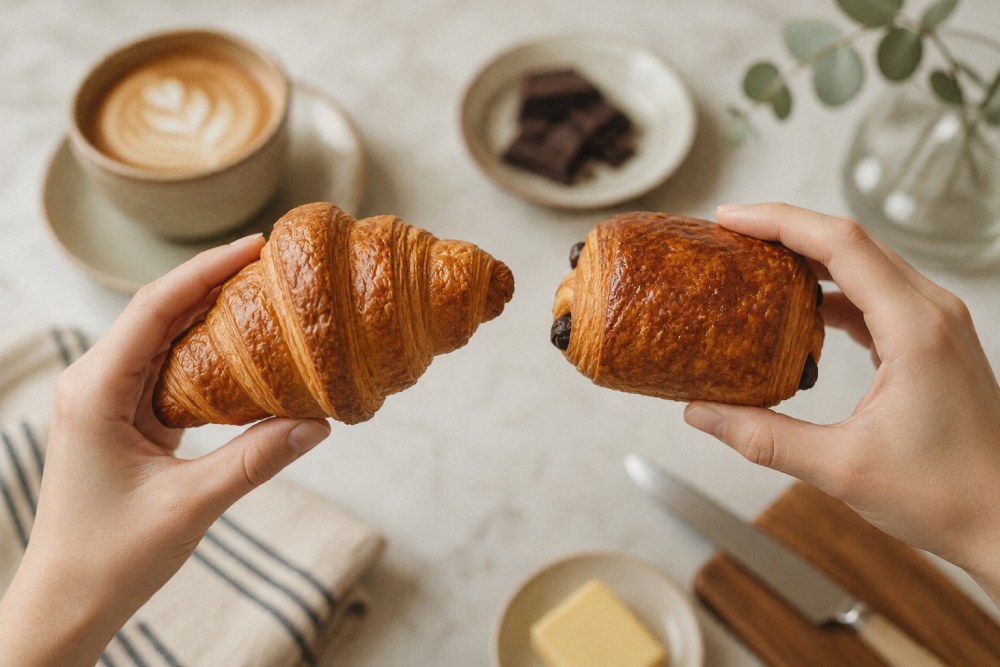
Both pastries start from the same laminated, yeasted dough and go through the same lamination, proofing, and baking process, giving them a nearly identical flaky texture and buttery flavor base.
Differences in Shape
The croissant is rolled from a triangle into a crescent; pain au chocolat is folded from a rectangle around chocolate batons into a straight, log-like shape.
Differences in Filling
The plain croissant has no filling, while pain au chocolat always contains chocolate — typically one or two batons per pastry.
Differences in Texture
Because the chocolate adds moisture and weight to the center, pain au chocolat can have a slightly denser middle than a plain croissant, though the exterior layers remain equally flaky.
Which One Is More Popular?
Both are bakery staples, but preference often comes down to personal taste — the croissant is a savory-leaning blank canvas, while pain au chocolat’s built-in chocolate makes it the sweeter, more indulgent choice for many customers.
Ingredients Used in Pain au Chocolat
Flour
A strong bread flour or all-purpose flour with moderate protein content provides the structure needed to hold up through lamination and proofing.
Butter
High-fat, European-style butter (typically 82%+ fat) is essential for lamination — it stays firmer at room temperature, making it easier to laminate without breaking through the dough.
Yeast
Active dry or instant yeast leavens the dough, working alongside the lamination process to create both rise and the pastry’s airy internal structure.
Sugar
A modest amount of sugar sweetens the dough itself and helps with browning during baking.
Salt
Salt balances the sweetness and butter richness while also strengthening the dough’s gluten structure.
Milk
Milk enriches the dough, contributing to a softer crumb and helping achieve a deep golden color when baked.
Chocolate Batons
Purpose-made chocolate batons (sometimes called chocolate sticks) are firmer and less prone to fully melting than standard chocolate bars, keeping their shape inside the pastry.
Egg Wash
A brushed-on mixture of egg and water (or milk) gives the baked pastry its glossy, deep golden-brown finish.
How Pain au Chocolat Is Made
Step 1: Preparing the Dough
Mix flour, yeast, sugar, salt, milk, and a small amount of softened butter into a smooth, elastic dough, then let it rest briefly before chilling.
Step 2: Creating the Butter Layer
A block of cold butter is pounded and shaped into a flat, even square or rectangle (the “beurrage”) that will be encased in the dough.
Step 3: Laminating the Dough
The butter block is enclosed inside the rolled-out dough, then the combined dough-butter package is rolled out and folded — typically using a series of “letter folds” — to build up dozens of alternating layers.
Step 4: Chilling and Resting
Between folds, the dough is chilled to keep the butter firm and prevent it from merging into the dough, which is essential for distinct layers to form.
Step 5: Rolling and Cutting
After the final fold, the laminated dough is rolled out to an even thickness and cut into rectangles sized for individual pastries.
Step 6: Adding the Chocolate
One or two chocolate batons are placed along the edge of each dough rectangle.
Step 7: Shaping the Pastry
The dough is folded over the chocolate — often in a few tight rolls — to fully enclose the batons and create the pastry’s compact rectangular shape.
Step 8: Proofing
Shaped pastries are left to proof in a warm, humid environment until visibly puffy, allowing the yeast to do its final rise before baking.
Step 9: Baking
An egg wash is brushed over the proofed pastries, which are then baked at a high temperature until deeply golden brown and fully flaky throughout.
Traditional Pain au Chocolat Recipe
Ingredients
- Bread flour
- Whole milk
- Instant yeast
- Granulated sugar
- Fine salt
- Unsalted, high-fat European-style butter (for both the dough and the butter block)
- Chocolate batons
- Egg and a splash of water or milk (for the egg wash)
Equipment Needed
A stand mixer or mixing bowl, a rolling pin, a bench scraper, plastic wrap or a proofing container, a baking sheet, parchment paper, and a pastry brush.
Preparation Time
Including mixing, laminating, and multiple chilling periods, active and resting preparation time typically spans several hours to a full day.
Baking Time
Once proofed, pastries generally bake for a relatively short window at high heat — just long enough to turn deep golden brown and cook through without over-drying the layers.
Step-by-Step Instructions
Follow the nine-step process outlined above: mix and rest the dough, prepare the butter block, laminate through repeated folds and chills, roll and cut the dough, add the chocolate, shape the pastries, proof, and bake.
Common Baking Mistakes
See the dedicated section below for a full breakdown of pitfalls to avoid.
20 Popular Pain au Chocolat Variations
1. Classic French Pain au Chocolat
Overview: The traditional version, made exactly as described above with plain laminated dough and dark chocolate batons.
Main Ingredients: Laminated dough, dark chocolate batons, egg wash.
Flavor Profile: Buttery, flaky, and richly chocolatey without added sweetness beyond the chocolate itself.
2. Mini Pain au Chocolat
Overview: A bite-sized version of the classic, popular for catering, brunch spreads, and grab-and-go bakery cases.
Key Ingredients: Same as the classic, portioned smaller.
Flavor Profile: Identical to the classic but in a lighter, snackable portion.
Difficulty Level: Moderate — shaping small portions neatly takes practice.
Best Pairings: Espresso or a small cappuccino.
Business Potential: Excellent for catering trays, hotel buffets, and impulse-buy bakery displays.
3. Double Chocolate Pain au Chocolat
Overview: Uses two chocolate batons instead of one for an extra-rich center.
Key Ingredients: Laminated dough, two chocolate batons.
Flavor Profile: More intensely chocolatey and slightly sweeter than the classic.
Difficulty Level: Easy adaptation of the traditional recipe.
Best Pairings: Milk or a mellow latte to balance the richness.
Business Potential: A simple upsell item marketed as a “deluxe” or “double” option.
4. Dark Chocolate Pain au Chocolat
Overview: Made with high-cocoa-percentage dark chocolate for a more intense, less sweet profile.
Key Ingredients: 60–70% dark chocolate batons.
Flavor Profile: Bittersweet and rich, with pronounced cocoa notes.
Difficulty Level: Same as classic.
Best Pairings: Black coffee or espresso.
Business Potential: Appeals to customers seeking a “premium” or less-sweet option.
5. Milk Chocolate Pain au Chocolat
Overview: Substitutes milk chocolate for dark chocolate, creating a sweeter, creamier pastry.
Key Ingredients: Milk chocolate batons.
Flavor Profile: Sweet, creamy, and approachable — a favorite among children.
Difficulty Level: Easy.
Best Pairings: Hot chocolate or a sweet latte.
Business Potential: Popular in family-oriented cafés and bakeries.
6. White Chocolate Pain au Chocolat
Overview: Uses white chocolate batons for a distinctly sweet, vanilla-forward filling.
Key Ingredients: White chocolate batons.
Flavor Profile: Sweet, buttery, and mild compared to dark or milk chocolate versions.
Difficulty Level: Easy.
Best Pairings: Fruity teas or a light latte.
Business Potential: A novelty item that stands out visually and on menus.
7. Almond Pain au Chocolat
Overview: Filled or topped with almond cream (frangipane) in addition to chocolate, often finished with sliced almonds.
Key Ingredients: Chocolate batons, almond cream, sliced almonds, powdered sugar.
Flavor Profile: Nutty, sweet, and rich — reminiscent of a chocolate almond croissant.
Difficulty Level: Moderate to advanced due to the added almond cream component.
Best Pairings: Cappuccino or a nutty herbal tea.
Business Potential: A premium, higher-priced bakery case staple.
8. Pistachio Pain au Chocolat
Overview: Incorporates pistachio cream or paste alongside the chocolate filling, often topped with crushed pistachios.
Key Ingredients: Chocolate batons, pistachio cream, crushed pistachios.
Flavor Profile: Nutty, slightly sweet, and visually striking with its green-flecked top.
Difficulty Level: Moderate to advanced.
Best Pairings: Cardamom coffee or a light green tea.
Business Potential: A trend-driven, social-media-friendly premium item.
9. Hazelnut Pain au Chocolat
Overview: Adds hazelnut cream or chopped hazelnuts to the chocolate filling.
Key Ingredients: Chocolate batons, hazelnut cream or chopped hazelnuts.
Flavor Profile: Nutty and rich, similar to a classic chocolate-hazelnut spread flavor.
Difficulty Level: Moderate.
Best Pairings: Hazelnut latte or espresso.
Business Potential: Strong appeal to fans of chocolate-hazelnut flavor combinations.
10. Nutella Pain au Chocolat
Overview: Swaps or supplements the chocolate batons with a swirl of chocolate-hazelnut spread.
Key Ingredients: Chocolate-hazelnut spread, laminated dough.
Flavor Profile: Extra sweet, creamy, and indulgent.
Difficulty Level: Easy.
Best Pairings: Milk or a sweet cappuccino.
Business Potential: A crowd-pleasing, easily marketed variation, especially with younger customers.
11. Salted Caramel Pain au Chocolat
Overview: Adds a ribbon of salted caramel alongside the chocolate filling.
Key Ingredients: Chocolate batons, salted caramel sauce.
Flavor Profile: Sweet and salty, with a gooey caramel contrast to the flaky pastry.
Difficulty Level: Moderate — caramel needs to be added carefully to avoid leaking during baking.
Best Pairings: Caramel latte or black coffee.
Business Potential: A popular limited-time or seasonal offering.
12. Raspberry Chocolate Pain au Chocolat
Overview: Combines chocolate with a layer of raspberry jam or fresh raspberries.
Key Ingredients: Chocolate batons, raspberry jam or fresh raspberries.
Flavor Profile: Sweet-tart and fruity, balancing the richness of the chocolate.
Difficulty Level: Moderate.
Best Pairings: Fruit tea or a light-roast coffee.
Business Potential: Works well as a spring or summer seasonal special.
13. Strawberry Chocolate Pain au Chocolat
Overview: Similar to the raspberry version, using strawberry jam or fresh strawberries alongside chocolate.
Key Ingredients: Chocolate batons, strawberry jam or fresh strawberries.
Flavor Profile: Sweet and fruity with a familiar, crowd-pleasing berry-chocolate combination.
Difficulty Level: Moderate.
Best Pairings: Iced coffee or fruit-infused tea.
Business Potential: A strong seasonal or Valentine’s Day promotional item.
14. Matcha Pain au Chocolat
Overview: Incorporates matcha (green tea powder) into the dough or a matcha cream filling alongside chocolate.
Key Ingredients: Matcha powder, chocolate batons, matcha cream (optional).
Flavor Profile: Earthy and slightly bitter matcha balanced against sweet chocolate.
Difficulty Level: Advanced, due to incorporating matcha into the dough without disrupting lamination.
Best Pairings: Green tea or a matcha latte.
Business Potential: A strong draw for matcha-focused cafés and Instagram-driven bakeries.
15. Coffee-Flavored Pain au Chocolat
Overview: Infuses the dough or a filling layer with coffee or espresso flavor alongside the chocolate.
Key Ingredients: Espresso powder or coffee extract, chocolate batons.
Flavor Profile: Bittersweet, aromatic, and rich — a natural pairing with the pastry’s chocolate.
Difficulty Level: Moderate.
Best Pairings: A straightforward black coffee or espresso, doubling down on the flavor theme.
Business Potential: An easy tie-in for coffee shops looking to highlight their beans.
16. Orange Chocolate Pain au Chocolat
Overview: Adds orange zest or a thin layer of orange marmalade alongside the chocolate.
Key Ingredients: Orange zest or marmalade, chocolate batons.
Flavor Profile: Bright and citrusy, cutting through the richness of the butter and chocolate.
Difficulty Level: Moderate.
Best Pairings: Black tea or fresh orange juice.
Business Potential: A popular winter-holiday seasonal flavor.
17. Vegan Pain au Chocolat
Overview: Made using plant-based butter, dairy-free milk, and vegan chocolate batons to fully replace animal products.
Key Ingredients: Plant-based butter, non-dairy milk, vegan chocolate.
Flavor Profile: Close to the classic, though texture can vary depending on the plant-based butter used.
Difficulty Level: Advanced — plant-based butters behave differently during lamination and require adjusted technique.
Best Pairings: Oat milk latte or black coffee.
Business Potential: Opens the product to a growing vegan and dairy-free customer base.
18. Whole Wheat Pain au Chocolat
Overview: Substitutes some or all of the flour with whole wheat flour for a heartier, more rustic pastry.
Key Ingredients: Whole wheat flour, chocolate batons.
Flavor Profile: Nuttier and denser than the classic version, with a more rustic bite.
Difficulty Level: Advanced — whole wheat flour affects gluten development and lamination.
Best Pairings: Herbal tea or a simple black coffee.
Business Potential: Appeals to health-conscious customers looking for a “better-for-you” pastry.
19. Protein Pain au Chocolat
Overview: Modifies the dough or filling to boost protein content, often marketed toward fitness-focused consumers.
Key Ingredients: Protein flour blends or protein-enriched fillings, dark chocolate batons.
Flavor Profile: Similar to the classic, though texture can be slightly denser depending on the protein additive used.
Difficulty Level: Advanced — balancing protein additives with lamination takes recipe testing.
Best Pairings: Black coffee or a protein-fortified latte.
Business Potential: A niche but growing category for health-and-fitness-oriented bakeries and cafés.
20. Filipino-Inspired Ube Pain au Chocolat
Overview: Incorporates ube (purple yam) flavoring or cream alongside the chocolate filling, giving the pastry a vivid purple hue and distinct flavor.
Key Ingredients: Ube extract or ube jam, chocolate batons.
Flavor Profile: Sweet, subtly vanilla-like, and visually striking, paired with rich chocolate.
Difficulty Level: Advanced — incorporating ube without disrupting the dough’s lamination requires care.
Best Pairings: Milk tea or a mild latte.
Business Potential: A distinctive, culturally resonant offering with strong visual appeal for bakeries targeting Filipino and broader Southeast Asian markets, as well as novelty-seeking customers elsewhere.
Why Pain au Chocolat Is Popular
Perfect Breakfast Pastry
Its combination of carbohydrates, fat, and a touch of sweetness makes it a satisfying, energy-dense way to start the day.
Ideal Coffee Pairing
The pastry’s buttery richness and chocolate filling pair naturally with the bitterness of coffee, making it a default companion order at cafés.
Rich Yet Balanced Flavor
Unlike overly sweet desserts, pain au chocolat balances buttery, slightly savory pastry with just enough chocolate to feel indulgent without being cloying.
Premium Bakery Appeal
Its association with French baking tradition gives it a premium, artisanal image that customers are often willing to pay more for.
International Recognition
Decades of exposure through French bakeries, hotel breakfasts, and global café chains have made pain au chocolat instantly recognizable to consumers worldwide.
Nutritional Information
Calories
A standard pain au chocolat typically falls in the range of roughly 250–350 calories, depending on size and butter content.
Carbohydrates
As a laminated dough pastry, it’s relatively high in carbohydrates, generally in the range of 25–35 grams per pastry.
Protein
Protein content is modest, typically around 5–7 grams per pastry, coming mainly from the flour, milk, and egg wash.
Fat Content
Due to the butter used in lamination and the chocolate filling, fat content is significant, often 15–20 grams per pastry.
Sugar Content
Sugar levels vary by recipe and chocolate type but generally range from 8–15 grams per pastry.
Factors Affecting Nutrition
Size, butter quality and quantity, type of chocolate, and any added fillings (cream, caramel, jam) all significantly affect the final nutritional profile.
Is Pain au Chocolat Healthy?
Nutritional Benefits
It provides quick energy from carbohydrates and fat, along with small amounts of protein and, depending on the chocolate used, some antioxidant compounds from cocoa.
Potential Drawbacks
Its high butter and sugar content mean it’s calorie-dense and best enjoyed in moderation rather than as a daily staple.
Portion Control Tips
Opting for mini versions, splitting a pastry, or pairing it with protein-rich foods can help moderate portion size within a balanced diet.
Healthier Alternatives
Whole wheat or protein-enriched versions, or simply enjoying a mini portion, can offer a lighter take on the classic.
When to Enjoy It as Part of a Balanced Diet
As an occasional breakfast treat or weekend indulgence alongside protein and fruit, pain au chocolat can fit comfortably into a generally balanced eating pattern.
Best Drinks to Pair With Pain au Chocolat
Coffee
A classic, well-balanced pairing — coffee’s bitterness cuts through the pastry’s buttery richness.
Espresso
A short, intense espresso complements the concentrated chocolate flavor without overwhelming it.
Cappuccino
The milky foam softens the pastry’s richness, making for a smooth, balanced combination.
Latte
A latte’s creaminess pairs well with sweeter variations, like milk or white chocolate versions.
Hot Chocolate
For a fully indulgent pairing, hot chocolate doubles down on the chocolate theme — best suited to a leisurely treat rather than an everyday pairing.
Tea
Black or green tea offers a lighter, more delicate pairing that lets the pastry’s flavors stand out.
Fresh Orange Juice
The acidity and brightness of orange juice provide a refreshing contrast to the pastry’s richness.
Milk
A simple, classic pairing — especially popular with children and with milk or white chocolate variations.
Pain au Chocolat Around the World
France
The pastry’s home country, where it remains a daily breakfast staple sold in nearly every boulangerie.
Belgium
Closely tied to France’s baking traditions, Belgian bakeries commonly offer pain au chocolat alongside their own famous chocolate products.
Canada
Popular in French-influenced regions like Quebec, where it’s sold under both “pain au chocolat” and “chocolatine” depending on local usage.
United Kingdom
Widely available in cafés and supermarkets, often labeled as a “chocolate croissant” for broader recognition.
United States
A common offering in French-style bakeries, specialty coffee shops, and increasingly in mainstream grocery store bakery sections.
Australia
Found in café culture-heavy cities, often featured in artisan bakeries alongside other European pastries.
Philippines
Popular in bakeries and cafés, with local bakers sometimes introducing regional flavor twists, such as ube-inspired versions.
Middle East
Increasingly available in upscale hotel bakeries and Western-style cafés across major cities in the region.
Where to Buy Pain au Chocolat in the Philippines
National Bakery Chains
The French Baker is the most widely available option, with branches across the country and pain au chocolat priced around ₱100 per piece. It also offers online ordering through region-specific storefronts, including a dedicated site for delivery within Clark, Pampanga.
Tiong Bahru Bakery, a Singapore-founded viennoiserie chain, opened its first Philippine branch in Taguig in January 2025, with pain au chocolat as one of its signature items alongside its croissants and kouign amann.
Metro Manila
Manila’s French-bakery scene offers several well-regarded options:
PAUL Boulangerie et Patisserie at Powerplant Mall in Makati, an established French chain known for its classic pain au chocolat and croissants;
Butterboy Bakehouse, a Manila-born bakery café with multiple locations known for pain au chocolat made with several batons of dark chocolate, plus creative twists like pistachio-cream versions;
Wildflour Café, a popular all-day brunch and bakery spot with branches including Greenhills; and
Workshop Bespoke Bakery by Le Petit Souffle, known for French pastries alongside its cakes and desserts. Shopping mall bakery counters, including outlets inside SM Supermalls, also regularly stock pain au chocolat from chains like French Baker.
Angeles City, Clark, and Pampanga
For readers closer to Central Luzon, several local spots carry pain au chocolat:
Appétisant on Malabanias Road in Angeles City sells a well-reviewed version for around ₱100;
Bread Dawn Bakery & Cafe in Angeles City is known for European-style breads and a flaky pain au chocolat;
Bakers Champ, with branches at SM City Clark, SM City Pampanga (Mexico), and S8 Mall in San Fernando, lists pain au chocolat among its premium pastry offerings; and
The French Baker’s Clark-area storefront offers delivery within Clark, Pampanga.
Grocery Stores and Supermarkets
Bakery counters inside major supermarket chains — including SM, Robinsons, and similar grocery retailers — often carry fresh pain au chocolat from in-house or partner bakeries, making it one of the more accessible options for a quick purchase alongside regular grocery shopping.
Ordering Online or via Delivery Apps
Beyond dedicated bakery websites like French Baker’s online stores, food delivery platforms such as GrabFood and foodpanda list many of the bakeries above, making it possible to have pain au chocolat delivered directly rather than visiting in person.
Bakery listings, branch locations, and prices change often, so it’s worth confirming current availability and hours directly with a bakery or on its official page before making a special trip.
How to Store Pain au Chocolat
Room Temperature Storage
Freshly baked pain au chocolat is best eaten within a day, kept in a paper bag or loosely covered container to preserve crispness without trapping moisture.
Refrigeration
Refrigeration isn’t generally recommended, as it can dry out the pastry and dull its flaky texture faster than room-temperature storage.
Freezing Instructions
Baked pastries can be frozen in an airtight container or bag for longer storage, while unbaked, shaped pastries can also be frozen and baked directly from frozen when needed.
Reheating Methods
A short stint in a preheated oven restores crispness far better than a microwave, which tends to make the layers soft and chewy.
Maintaining Flakiness
Avoid airtight, humid storage at room temperature, and always reheat in an oven or toaster oven rather than a microwave to preserve the pastry’s signature crunch.
Common Mistakes When Making Pain au Chocolat
Overworking the Dough
Excessive handling develops too much gluten, resulting in a tough, chewy pastry rather than a tender, flaky one.
Using the Wrong Butter
Low-fat or soft butter can melt into the dough during lamination instead of staying in distinct layers, flattening the final texture.
Skipping Resting Periods
Not chilling the dough between folds causes the butter to warm and merge with the dough, reducing the number of distinct flaky layers.
Poor Lamination Technique
Uneven rolling or folding creates inconsistent layers, leading to pastries that puff unevenly in the oven.
Overproofing
Letting the dough proof too long can cause the layers to collapse or the butter to leak out during baking.
Underbaking
Pulling pastries out too early leaves the interior doughy and prevents the layers from fully crisping.
Using Low-Quality Chocolate
Cheap chocolate can seize, leak excessively, or lack the flavor needed to balance the buttery dough.
Pain au Chocolat for Bakery Businesses
Why It Is a High-Margin Bakery Product
Ingredient costs are relatively low compared to the price the pastry commands, especially given its premium, artisanal perception among customers.
Café Menu Opportunities
Pairing pain au chocolat with signature coffee drinks creates natural bundling and upsell opportunities.
Hotel Breakfast Menus
Its universal recognition and easy reheating make it a popular staple on hotel breakfast buffets worldwide.
Frozen Ready-to-Bake Products
Selling par-baked or frozen unbaked pastries allows other businesses — or home customers — to bake fresh on demand, extending shelf life and market reach.
Premium Pastry Packaging
Attractive, branded packaging can elevate perceived value for gifting, corporate orders, or retail sale.
Selling Pain au Chocolat Online
E-commerce and delivery platforms allow bakeries to sell frozen or shelf-stable versions beyond their immediate local customer base.
Pain au Chocolat Business Ideas
Artisan Bakery
A dedicated bakery built around traditional French viennoiserie, with pain au chocolat as a signature item.
Home-Based Pastry Business
Small-batch production sold through local markets, social media, or pre-order systems, requiring lower startup costs than a storefront.
French-Themed Café
A café concept built entirely around French pastries and coffee culture, using pain au chocolat as a flagship offering.
Coffee Shop Add-On Product
Adding pain au chocolat to an existing coffee shop’s menu as a pairing item, without needing to build a full bakery operation.
Wholesale Supply to Cafés
Producing pain au chocolat in bulk to supply smaller cafés and restaurants that don’t have in-house baking capacity.
Pastry Catering Services
Offering pain au chocolat and other viennoiserie for corporate breakfasts, weddings, and other catered events.
Cost and Pricing Considerations
Ingredient Costs
Flour, yeast, and sugar are relatively inexpensive, while high-quality butter and chocolate batons make up the bulk of per-unit ingredient cost.
Labor Costs
Lamination is labor- and time-intensive, requiring skilled hands and multiple resting periods, which should be factored into pricing.
Equipment Requirements
A commercial-grade mixer, a dough sheeter (for higher volume), proofing space, and reliable ovens are the core equipment investments for a bakery producing pain au chocolat at scale.
Suggested Retail Pricing
Pricing generally reflects both ingredient and labor costs alongside local market expectations for premium bakery items, positioning pain au chocolat as a mid-to-premium priced offering relative to simpler baked goods.
Profit Margin Estimates
Given relatively modest ingredient costs relative to retail price, pain au chocolat can offer strong margins once labor and overhead are efficiently managed, particularly at scale.
Frequently Asked Questions
What is pain au chocolat? It’s a French laminated pastry made from croissant-style dough folded around one or two batons of chocolate.
What does pain au chocolat mean? It translates literally to “chocolate bread,” though the pastry is much closer to a croissant than to bread.
Is pain au chocolat the same as a chocolate croissant? Essentially yes — “chocolate croissant” is the common English name for the same pastry, made with the same dough and technique.
Why is it called pain au chocolat? The name reflects its basic composition: laminated “bread” (pastry) filled with chocolate, a naming convention consistent with other French viennoiserie.
What is the difference between pain au chocolat and chocolatine? They’re the same pastry — “chocolatine” is simply the regional term used in southwestern France, while “pain au chocolat” is more common elsewhere in the country.
What chocolate is used in pain au chocolat? Traditionally, firm chocolate batons designed to hold their shape during proofing and baking, usually dark chocolate.
How do you pronounce pain au chocolat? Roughly “pan oh sho-koh-lah,” with a nasal vowel sound in “pain.”
Can pain au chocolat be frozen? Yes — both baked pastries and unbaked, shaped dough can be frozen, with unbaked dough often baked directly from frozen when needed.
Is pain au chocolat served hot or cold? It’s most commonly served warm or at room temperature shortly after baking, when the layers are at their flakiest.
Can I make pain au chocolat at home? Yes, though it requires patience — the lamination process involves multiple rounds of rolling, folding, and chilling over several hours.
How long does pain au chocolat stay fresh? It’s best enjoyed within a day of baking, as the flaky texture degrades relatively quickly compared to denser baked goods.
Is pain au chocolat a good bakery business product? Yes — its universal recognition, premium perception, and relatively favorable margins make it a strong addition to bakery, café, and hotel menus.
Bottom Line
Pain au chocolat combines buttery laminated pastry and rich chocolate into one of France’s most iconic baked goods, making it a favorite among pastry lovers and a strong product opportunity for bakeries, cafés, and food entrepreneurs.